dailynewsnblog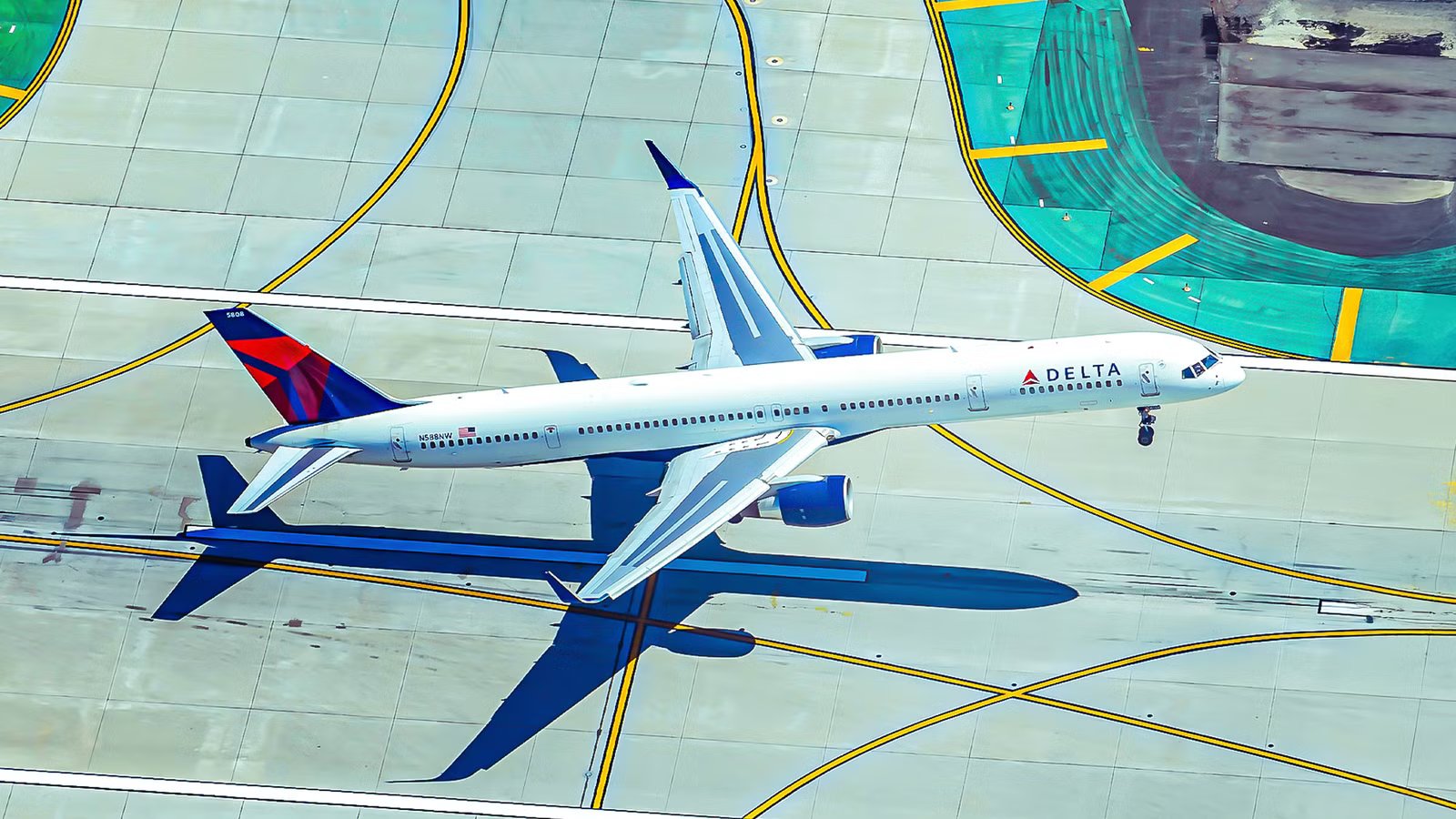
 Delta Air Lines entered 2026 with one of the strongest operational reputations in the industry, having been named North America’s most punctual airline by Cirium for a fifth consecutive year. Yet new US Department Of Transportation (DOT) data shows a striking reversal in one important measure: cancellations. Delta’s domestic network canceled 19,150 flights between January and June 2026, compared with just 9,696 during the same period last year — an increase of 98%.
The deterioration was not simply the result of Delta flying more. Its domestic schedule grew just 3%, from 792,127 to 816,084 flights, while its cancellation rate climbed from 1.22% to 2.35%. However, another DOT measure paints a surprisingly different picture: Delta’s network on-time rate actually improved from 78.70% to 79.33%, ranking second among the major US airline networks. So what happened to cause the surge in cancellations?
Delta’s Cancellation Rate Nearly Doubled

The increase affected both Delta mainline and the regional airlines flying under the Delta Connection brand. Mainline cancellations more than doubled from 4,913 to 10,647, a 116.7% increase, while cancellations among branded partners rose 77.8% from 4,783 to 8,503. Mainline’s cancellation rate consequently climbed from 0.99% to 2.09%, while the regional rate rose from 1.62% to 2.77%.
Delta Network Metric | H1 2025 | H1 2026 | Change |
|---|---|---|---|
Scheduled flights | 792,127 | 816,084 | +3.0% |
Canceled flights | 9,696 | 19,150 | +97.5% |
Cancellation rate | 1.22% | 2.35% | +1.13 pts |
Mainline cancellations | 4,913 | 10,647 | +116.7% |
Regional partner cancellations | 4,783 | 8,503 | +77.8% |
On-time rate | 78.70% | 79.33% | +0.63 pts |
It was a difficult half-year for the wider industry too: US carriers canceled a total of 85,998 flights, up from 59,244, while the overall cancellation rate rose from 1.57% to 2.23%. But Delta deteriorated much faster. Its increase in cancellations accounted for more than a third of the entire industry’s increase, despite Delta representing only around one-fifth of reported scheduled flights.
Simple Flying already noted the airline’s unusual reliability problems earlier this year as its cancellation performance slipped down the DOT rankings. Yet the striking counterpoint is punctuality. Delta’s network delivered 79.33% of flights on time, up 0.63 percentage points year over year and behind only  Alaska Airlines at 80.51%. Delta mainline performed even better at 80.26%, the best result among all reporting carriers. That suggests that Delta’s issue was less about routine day-to-day punctuality than about its ability to recover once disruption began.
Delta itself acknowledged that distinction. In an April memo to more than 17,000 pilots, as reported by the Atlanta Journal Constitution, Delta SVP of Flight Operations Ryan Gumm said recovery performance to major events had been inconsistent. He identified aircraft and crew availability alongside weather and air traffic control disruption as causes requiring attention.
“Improving Delta’s operational resilience is extremely important, and has the full attention of the senior-most leaders in the organization.”
Why Did Delta Cancel So Many Flights?

Weather certainly played a substantial role in the cancellations. Winter Storm Fern brought snow, freezing rain and ice across a huge portion of the United States in January, with a particularly high impact on Delta’s hubs at  Hartsfield-Jackson Atlanta International Airport (ATL),
  New York JFK Airport (JFK), and
  Boston Logan International Airport (BOS). Reuters noted that Delta proactively reduced its schedule and canceled hundreds of flights as conditions deteriorated, which led to more than 15,000 US cancellations due to the storm.
February brought another major blow. A powerful Northeast blizzard on February 23 resulted in Delta canceling approximately 20% of its flights on a single day, according to Reuters. March also saw severe weather across the eastern U.S.; Simple Flying reported widespread disruption affecting major airline hubs. Delta’s monthly DOT on-time rate fell to 74.9% in March before rebounding above 80% during each of April, May and June.
But weather does not tell the whole story. An internal Delta memo indicated that cancellations attributed to staffing had risen to more than ten times historical levels and were responsible for around 35% of mainline cancellations. Delta also saw pilots’ acceptance of open trips beyond their regular schedules fall from roughly 37% to 2% year over year, making it significantly harder to fill last-minute gaps after disruption.
Those weaknesses became particularly visible in early May, when Delta canceled about 500 flights over several days, more than ten times the rate of  American Airlines and
  United Airlines. What is notable is that the issues have continued right through into July, with nearly 5,000 flights in a single month, more than three times the rate of
  Southwest Airlines.
Delta has apologized for the unusually high cancellations and attributed them to “crew resources.” But the various episodes illustrate the problem particularly well: bad weather or ATC restrictions could initiate a disruption, but Delta’s crew availability and scheduling issues severely hinder its ability to rebuild operations afterward.
Delta Is Building More Resilience Into Its Operation

In response to these challenges, Delta has already started adding more staffing margin. The airline told Business Insider it was increasing pilot reserve levels and accelerating pilot hiring, rather than depending as heavily on pilots voluntarily accepting open trips. According to the Air Line Pilots Association (ALPA), Delta has hired 1,200 pilots so far in 2026, and the union currently projects 2,200 new pilot hires for all of 2026.
Crew scheduling is also receiving additional resources. Delta says it has increased its crew tracker and scheduler workforce by 15% since summer 2025, while adding experienced leaders to its day-of-operations team, and working to improve response times when pilots need reassignment. Gumm acknowledged that Delta’s operation had become substantially more complex while some scheduling and trip-coverage practices had failed to evolve at the same pace.
Delta Action | Operational Risk Addressed |
|---|---|
Increase pilot reserves | Last-minute uncovered flights |
Accelerate pilot hiring | Greater staffing buffer |
15% more crew schedulers/trackers | Faster disruption recovery |
More experienced day-of-ops leadership | Quicker crew reassignment |
AI-assisted crew forecasting | Anticipate replacement needs |
AI-enabled maintenance forecasting | Improve aircraft availability |
Technology is also becoming another important part of the solution. Delta says it is evaluating artificial intelligence to help Crew Scheduling identify where replacement crews are likely to be needed before shortages occur. TechOps planners are already using an AI-enabled tool designed to predict maintenance requirements and improve aircraft availability and schedule reliability — directly targeting two of the controllable weaknesses highlighted by management.
For Delta, therefore, the first-half figures are less a story of an airline suddenly becoming chronically late than of one becoming more vulnerable when things go wrong. The challenge for the second half of 2026 will be whether additional reserves, more scheduling resources and improved technology can prevent the next storm or ATC disruption from cascading into another wave of cancellations.