dailynewsnblog
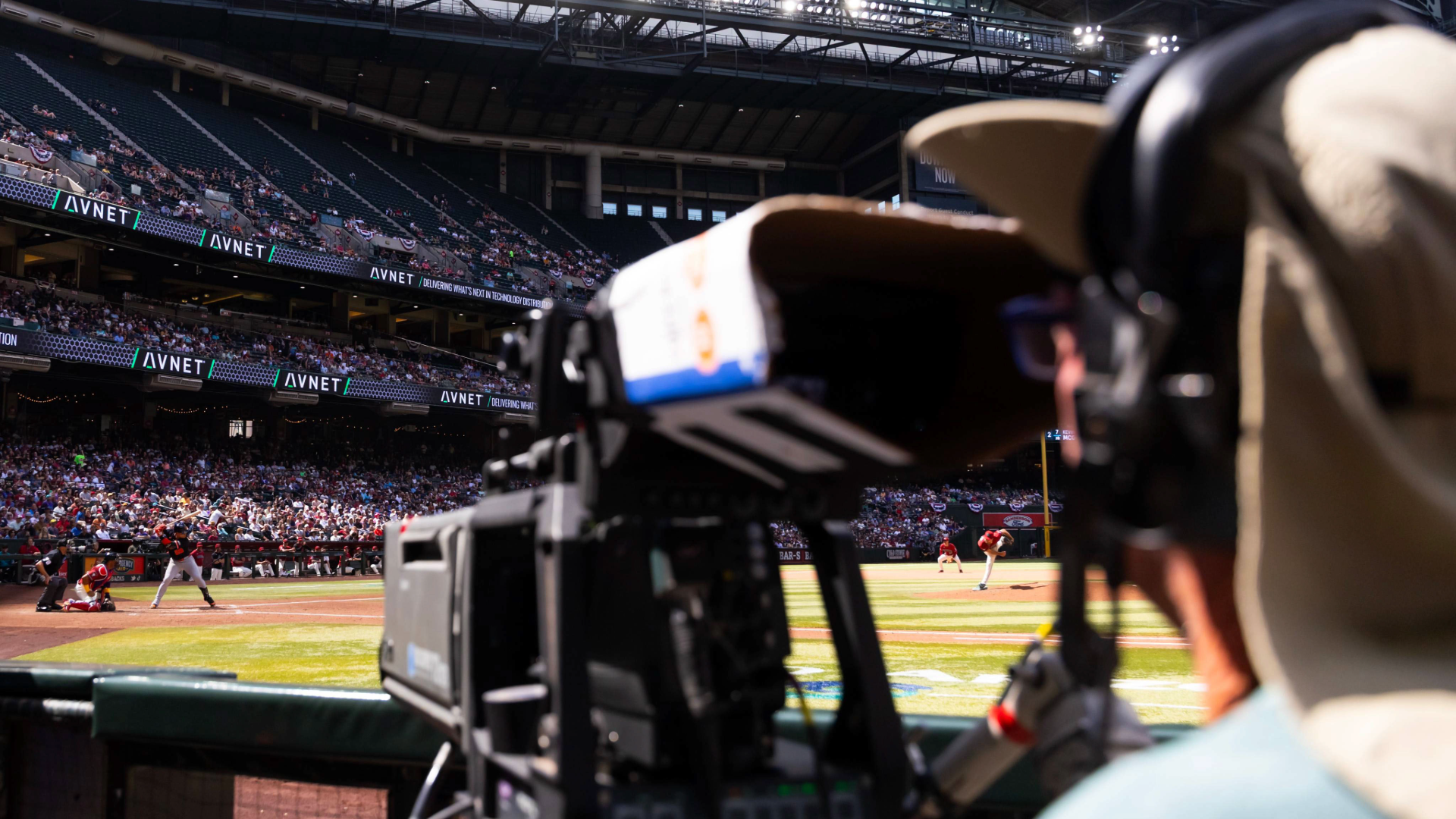
The deeper the 2026 Major League Baseball season gets and the longer negotiations on a new collective bargaining agreement fail to yield much shared ground, the more likely a lockout and compromised 2027 season are.
The leading impediment to a new CBA and an on-time and fully intact 2027 is the salary cap. Team owners and the league are seriously pushing for one for the first time since 1994, and the players and their union remain steadfast in their opposition to a capped system. If the owners continue to insist on a payroll cap, then we’re headed for a long and possibly damaging lockout. The implementation of a payroll cap requires a nonexistent, fledgling, or broken and largely obsequious players’ union, and the MLBPA is plainly none of those things. Professional athletes are both the labor force and the product, and the MLBPA is perhaps the last major union that recognizes the power in that.
So, the owners are all but guaranteed to lock the players out in early December when the current CBA expires, and if the insistence on a cap persists, then that labor stoppage will devolve into a labor war. The pains the league has undertaken to propagandize their efforts to implement a cap — with both ad spots aimed at fans and written content — suggest this is more than just the kind of unrealistic asks common in early negotiations.
At this point, it’s worth examining why the owners say they want a cap and why they truthfully want a cap. They say they want a cap because of the revenue and spending gaps between the large-market powerhouses in MLB and the small-market clubs at the bottom of the payroll hierarchy. This, obviously, is really about the Dodgers, who, as of the recent trade deadline, have surpassed the Mets as the league’s top spender and are angling for a third straight World Series title — a feat that hasn’t been achieved since the 1998-2000 Yankees. Lay aside for the moment that the Dodgers’ organizational excellence goes far beyond their player payroll and that they’d probably still be the gold standard even in a capped system. Also ignore that their roster is getting long in the tooth and their current window likely won’t be quite so open for much longer.
As for why owners really want a cap, it’s a mingling of motivations toward the same end: more money. The belief within MLB is that not having a cap is causing franchise values to lag those of capped-league clubs in the NFL and NBA. Perhaps this is true, even if the recent record sale of the Padres loudly says otherwise. There’s also the ever-present desire of ownership to suppress wages and labor costs. Yes, the league posits that a capped system would provide the players a larger percentage of league revenues, but that’s because the league is restricting the definition of baseball-related revenues in a way that allows such misleading claims.
But let’s take them at their dubious word for the sake of discussion. Let’s assume the owners and their leading employee, commissioner Rob Manfred, are genuinely worried about revenue and spending gaps in MLB right now and want a way to narrow those gaps. Let’s then pretend that’s what animates their desires for a payroll cap. There’s another way to achieve that end, and it’s one that has a much better chance of not compromising the 2027 season and thus disaffecting paying customers. That other, possibly bloodless path leads toward a revised system of sharing local revenues.
A ‘solution’ without a real problem
Local revenues comprise each team’s local media revenues (meaning, mostly, their broadcast agreements), gameday revenues such as ticket sales and parking and concession income, stadium-related income like naming rights and advertising, local sponsorships, and merchandise sales at the local level. In MLB, such revenues are shared but not shared equally. Under the current system, each club contributes 48% of its local revenues to a central pool, which is then distributed equally. This has the effect of transferring a share of local revenues from large-market franchises to small-market ones. Indeed, teams at the low end of the continuum receive enough in revenue sharing to cover cash payroll and then some. That said, MLB teams don’t share as much of their local revenues as their counterparts in the league to which they’re so often compared: the NFL.
To be sure, such comparisons are daft, at least when it comes to notions of parity and competitive balance. Much of the NFL’s seeming parity flows from its structure. If MLB played roughly one-tenth of its current regular-season schedule, let a higher percentage of teams into the playoffs, had a one-and-done postseason format throughout, and regularly gave easier schedules to weaker teams, then the framing of these discussions would look very different. At that, MLB’s parity is perfectly fine, current aberrant Dodgers run notwithstanding. There is, however, one important difference between MLB and the NFL that’s germane to the current discussion. That, again, is how the NFL shares its revenues.
Since the early 1960s, the NFL has shared national revenues equally among teams. (By comparison, the NFL didn’t implement a cap-and-floor system until 1993, so you be the judge of what’s really driving revenue parity in the league.) The NFL is a league propped up by lucrative national broadcast contracts, and all 32 teams get the same-sized slice. There’s even some sharing of ticket sale revenue, which makes up part of the local revenue pool in the NFL. The national revenues, though, are the driver.
Speaking of which, here, via Sportico, is how much each league depends upon national revenues, meaning, mostly, money from those aforementioned national broadcast contracts:
- NFL: 66% of total revenue from national revenue sources;
- MLB: 26% of total revenue from national revenue sources.
That’s a huge difference, and it’s at the heart of MLB’s revenue disparities. MLB is of course aware of this, and Manfred and the owners are angling to package all teams under a single suite of national broadcast contracts and share those revenues equally. Already, almost half the league is under the MLB umbrella when it comes to local broadcasts, thanks to the popping of the regional sports network bubble and the bankruptcy of Main Street Sports Group. If fully realized, this effort to “nationalize” baseball broadcasts — to take control of each team’s broadcasting rights — would make the league’s revenue breakdown look more like the NFL’s.
What’s the practical effect of this? A major flattening of those revenue disparities that the cap is designed to address. The major source of those disparities is the cavernous differences among local broadcast contracts. This is keenly relevant to the Dodgers. Under former owner/saboteur Frank McCourt, the Dodgers were in bankruptcy proceedings when McCourt sold them to the current owners, the Guggenheim Group. As a consequence of those court proceedings and a resulting settlement with the league, the Dodgers, after signing an $8.35 billion deal with Time-Warner, were obligated to share a much smaller percentage of their local broadcast revenues than other teams were. The Dodgers on average take in $334 million per year in local broadcast revenues, and that figure grows a bit each year since the contract is backloaded (by the end of it, their annual take will be more than $500 million). By contrast, the Marlins in recent years made less than $50 million each year in local broadcast monies, and even the flagship Yankees take in less than half of what the Dodgers do on an average annual basis, at least in terms of local broadcast revenues. Call it the “Dodgers Exception” if you like. It’s not only giving the Dodgers much greater financial latitude, but it’s also keeping money out of the revenue-sharing pool. That Dodgers broadcast contract runs through 2038, by the way, with a higher payout each year.
So MLB, in pushing for a cap, is reacting to one team with a revenue situation that will presumably never be replicated again. Nationalizing such broadcasts would eliminate that competitive advantage because it would require MLB to buy out the Dodgers’ contract and or purchase the Dodgers’ regional sports network. That brings us to the CBA negotiations to date.
How we got here
On May 28, MLB formally proposed, alongside a cap, the equal sharing of local revenues among all 30 teams. The day prior, the union proposed expanding revenue sharing to the extent that every small-market team would be guaranteed a minimum of $240 million in revenue each year. This amounts to a meaningful level of common ground, and it came quite early in the process of face-to-face negotiations. That means there is indeed a pathway to expanded revenue sharing, which is in marked contrast to the cap, on which there is zero agreement and probably never will be unless the owners move off that demand. This is where the focus should be if CBA negotiations are to be fruitful before the 2027 season is imperiled.
To repeat the point, converting local broadcast revenues — the source of so much of MLB’s revenue divides — into national revenues, which are shared equally, would result in a major transfer of revenues from large-market teams to small-market teams. At the same time, league control of all teams’ broadcast rights would put an end to the Dodgers Exception chronicled above. Major-market teams would then have less spending capacity, and their small-market counterparts would have more. That would mean the league’s stated goal of more balanced revenues and spending would be achieved without the protracted and perhaps deeply damaging labor strife that a sustained cap push will cause.
Owners are broadly and perhaps unanimously in favor of the nationalization scheme. We know that because, as noted, MLB proposed exactly that in the process of formal negotiations with the union, and such a drastic change would not have been proposed at all without a sturdy consensus of team owners behind it. Right now, though, those revenue-sharing changes are attached to the demand for a cap, and therein lies the first obstacle.
The handful of teams at the top of the local broadcast revenue food chain are likely agreeing to centralize those revenues only in exchange for a salary cap. After all, they’d be giving up a lot of money under a national broadcast model, and they could recoup much of it by having their payrolls limited and sharply reduced by a cap. Absent a cap, they’re going to want something else back in exchange for agreeing to that national broadcast model that Manfred seeks by 2028, when the current national TV contracts all expire. Perhaps an outsized share of the forthcoming expansion fees would sate the Dodgers, Yankees, and other high-spenders. Perhaps teams would be permitted to keep a larger share of the gameday revenues, as the union has proposed (the motivation from the players’ standpoint is to provide incentive for teams to attract fans to the ballpark via more competitive rosters). Perhaps the prospect of a major windfall coming from those centralized contracts would be enough. Or perhaps Manfred and the large remainder of owners will embrace the reality that they can ratify a new CBA with just 23 votes. While unanimity is preferred, it’s possible to forge a new labor agreement over the objections of the highest-earning clubs.
Another necessity for expanded revenue sharing is accountability. Too many revenue-sharing recipients right now pocket much of the money coming their way via those streams and don’t put it toward improving the on–field product. On top of that, the lengthy and poorly codified grievance process for such abuse doesn’t give the union proper means to address it. The union has proposed a floor to the existing competitive balance tax, which is certainly a reasonable ask considering the ceiling has been in place for years and basically functions as a soft cap. The problem with floors is that teams, in order to clear a bar, would probably wind up shopping in the middle class of free agents, where boondoggles lie, just to satisfy the rule without measurably improving the quality and competitiveness of the roster.
This is where more creative paths may be in order. Maybe long-term extensions for homegrown talents earn a small-market team a “salary multiplier” effect in which they get credit toward the floor that exceeds the actual yearly payout for those players. Maybe teams, in lieu of signing “get me over the line” mediocrities on the market, can pay additional money into the league’s pre-arbitration bonus pool at a discounted rate — say, a $1 million deposit gets them a $1.5 million payroll floor credit or something similar. Those are just alternatives, though, and teams would of course be free to clear the bar the old-fashioned way. A significant increase in the minimum salary will also help on this front, as it will necessarily increase the bare minimum payroll a team can run and thus bring them closer to any floor. All of this is not for the writer to sort out, which is a good thing for all involved parties.
So, yes, there is a way for MLB to achieve what it claims it wants to achieve without any self-immolating fight over a salary cap. That’s why owners and players should focus their discussions on how to achieve a deeper revenue-sharing system and a more balanced distribution of resources across the game. Or maybe, you know, MLB wants a capped system for reasons that have nothing to do with parity and competitive balance.
If the league is willing to proceed honestly, there’s a way forward — one that repairs the league’s financial structure without a bloody brawl over a cap.