dailynewsnblog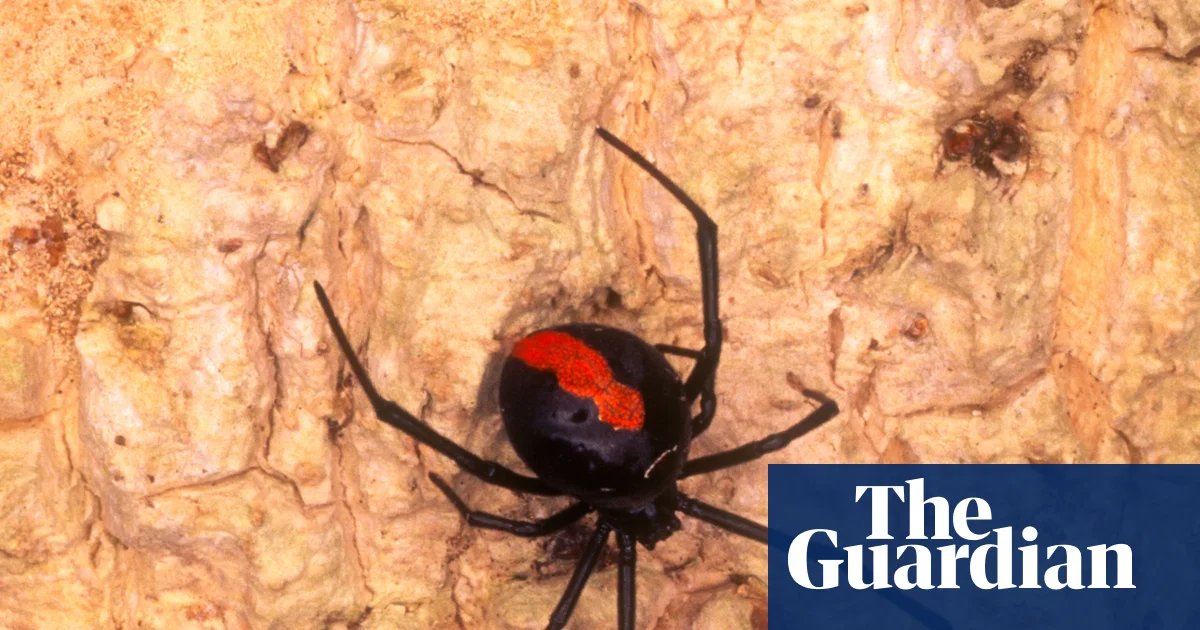
If you think you’ve had a bad one-night stand, spare a thought for the male redback spider, whose sole reproductive partner eats him after sex.
Male redbacks appear to invite this cannibalism through a “self-sacrificial somersault”, with new research shedding light on the genetic basis of the behaviour.
The redback, also known as the Australian black widow, is one of two monogynous widow spider species – meaning that males typically only mate with a single female.
During copulation, a male redback uses his pedipalps – two arm-like appendages – to transfer sperm to the larger female’s two sperm storage organs. He also somersaults into the jaws of the female.
“He’s pumping sperm, he flips his abdomen right over into her mouthparts and then he constricts his abdomen … to make it hard for the female to get a purchase on his abdomen. That lets him survive the first mating,” said Cor Vink, an associate professor and spider expert at Lincoln University in New Zealand.
The self-sacrificial flip is thought to help maximise reproductive success, but the males risk being eaten before they are able to transfer sperm to the female’s second storage organ.
To avoid becoming a post-coital meal, previous research has found that some males have developed the survival tactic of mating with immature females not yet experienced in eating their partners.
The venomous redback spider is widespread throughout Australia and has been unintentionally introduced to other countries including New Zealand, Japan and the United Arab Emirates.
Redbacks are closely related to the New Zealand katipō, which do not engage in sexual cannibalism. “In the katipō, the male inseminates the female and runs off the web – that’s the same for most widow spiders,” Vink said. “The term widow is actually a misnomer.”
Of the 31 species of widow spider, male sacrificial behaviour is only usually observed in redbacks and brown widows.
In a study published in Biology Letters on Wednesday, German researchers investigated the genetic basis for why redback males perform a “self-sacrificial somersault” during mating, but katipō males do not.
after newsletter promotion
To do so, they bred female katipō with male redbacks to determine how many offspring inherited the somersaulting behaviour. Close to half of their third-generation offspring also somersaulted, leading the scientists to conclude that the behaviour was linked to a specific location on the spider’s X chromosome.
“It is quite remarkable that a highly complex phenotype such as somersaulting, which may lead to partial reproductive isolation, can have such a simple genetic basis,” the researchers noted.
In New Zealand, Vink has found evidence that interbreeding between native katipō and invasive redbacks occurs in the wild. “This is a concern because we could lose our endemic protected species just through hybridisation,” he said.
Vink, who sourced the katipō spiders for the study but was not otherwise involved in the research, described the work as an “elegant paper” that shed light on the redback’s “weird mating behaviour”.
Katipō are thought to have diverged genetically from redbacks about 100,000 years ago. “It’s really neat that they’ve lost this behaviour in 100,000 to 200,000 years,” Vink said.
“The more we know about the interbreeding, the more we know about what we can do to combat redbacks and katipō interbreeding in New Zealand,” he added.