dailynewsnblog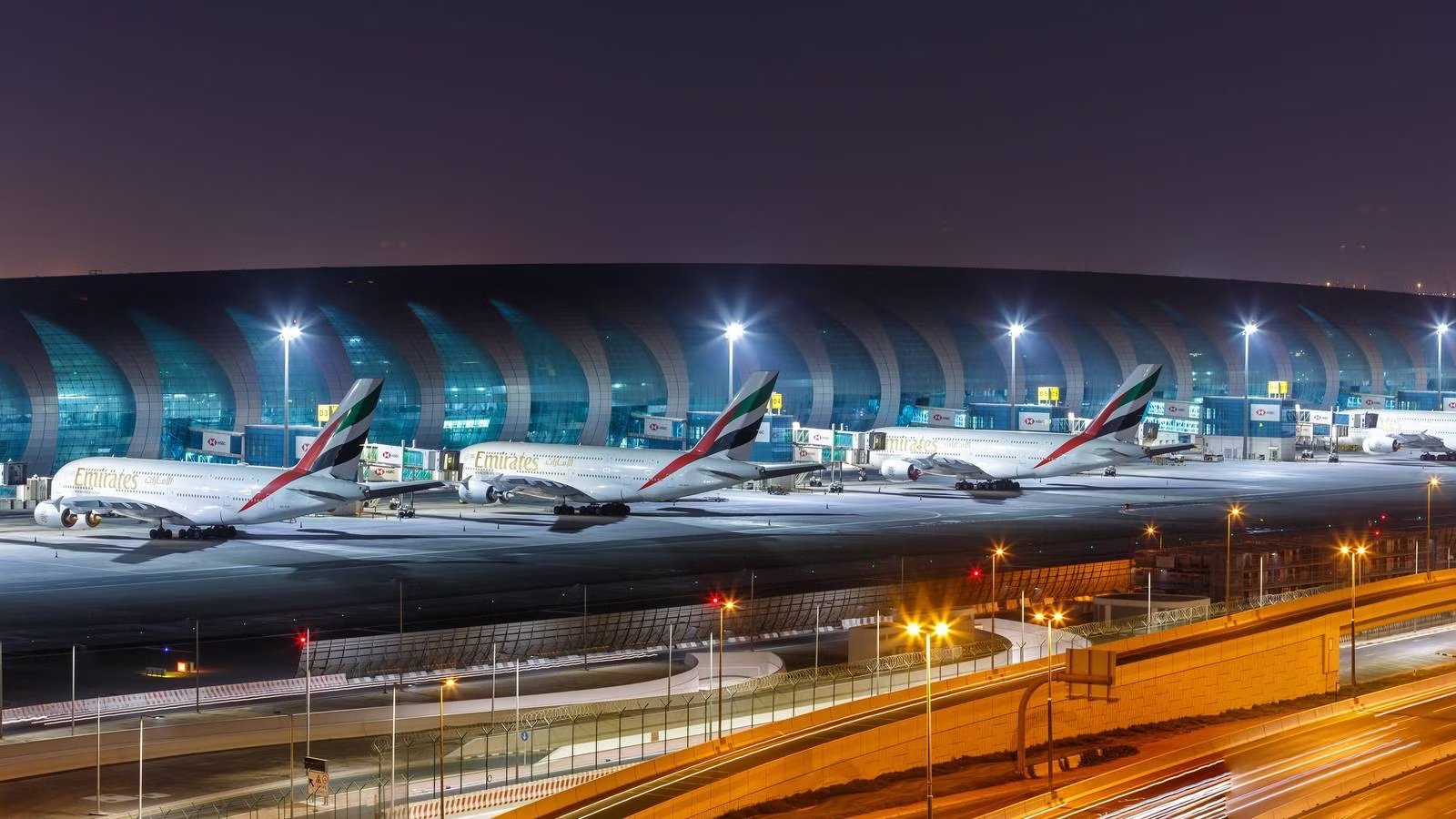
For decades,  Hartsfield-Jackson Atlanta International Airport (ATL) has been known as the world’s busiest airport. The Georgia hub consistently handled more passengers than any other airport on the planet, thanks largely to its enormous domestic network and its position as the primary connecting hub for
  Delta Air Lines. Yet in 2026, another airport claimed one of aviation’s most recognizable titles, with
  Dubai International Airport (DXB) overtaking Atlanta in scheduled seat capacity and reshaping how the industry measures scale.
At first glance, the change appears surprising because Atlanta still processed more than 100 million passengers in 2025, compared with Dubai’s record 95.2 million. The explanation lies in the difference between passenger totals and available airline seats. Dubai’s international hub model, centered on large widebody aircraft operated by  Emirates and supported by
  flydubai, has reached a point where each departure carries substantially more seats than the average flight leaving Atlanta. That structural difference has finally shifted one of aviation’s most closely watched rankings.
Monthly Seat Capacity Tells A Different Story

The milestone arrived in January 2026, when Dubai International Airport offered approximately 5.5 million scheduled seats during the month, compared with roughly 4.9 million at Atlanta. While Atlanta had narrowly retained the annual seat-capacity lead throughout 2025, finishing with approximately 63.1 million seats against Dubai’s 62.4 million, the margin had already become remarkably small after years of steady growth in the UAE.
The distinction is important because seat capacity measures the number of airline seats scheduled for sale rather than the number of passengers who actually travel. Passenger throughput depends on how many travelers board aircraft throughout the year, while seat capacity reflects the supply airlines place into the market. An airport can therefore offer more seats without necessarily carrying more passengers over an entire year, particularly if load factors differ or if one airport serves far more connecting traffic than another.
This explains why Atlanta could still lead the world in annual passenger numbers while simultaneously losing the seat-capacity crown. The two statistics measure different aspects of airport activity, and in 2026 they began pointing to different global leaders.
Widebody Aircraft Change The Mathematics

The biggest factor behind Dubai International Airport’s rise is not the sheer number of flights but the size of the aircraft operating them. Hartsfield-Jackson Atlanta International Airport remains one of the busiest airports anywhere in terms of aircraft movements, yet much of its schedule consists of domestic narrowbody aircraft such as the Boeing 737 and Airbus A321. These aircraft typically carry between 150 and 220 passengers depending on their configuration.
Dubai operates under an entirely different model. Emirates has built its network around the Boeing 777-300ER and Airbus A380, both of which carry significantly more passengers than the average narrowbody. A Boeing 777 can accommodate well over 300 passengers, while an Airbus A380 often carries more than 500 passengers. Even before considering additional airlines serving Dubai, each departure from the airport frequently represents substantially more available seats than a typical departure from Atlanta.
That arithmetic becomes increasingly significant when repeated across hundreds of daily departures. An airport does not necessarily need more flights to surpass a competitor in seat capacity if each flight transports considerably more passengers. As Emirates continued expanding long-haul services and maintaining one of the world’s largest fleets of widebody aircraft, Dubai steadily increased the average number of seats available per movement until it finally overtook Atlanta. The latest data from ch-aviation shows that the Dubai-based carrier has a total of 270 aircraft in its fleet:
Aircraft | Number In Fleet | Number On Order |
|---|---|---|
Airbus A350-900 | 27 | 46 |
Airbus A380 | 116 | – |
Boeing 777-200LR | 10 | – |
Boeing 777-300ER | 117 | – |
Boeing 777-8 | – | 35 |
Boeing 777-9 | – | 235 |
Boeing 787-8 Dreamliner | – | 20 |
Boeing 787-9 Dreamliner | – | 15 |
Two Airport Models Built For Different Markets

Atlanta and Dubai represent two very different approaches to building a global aviation hub. Atlanta’s dominance has long been driven by the enormous size of the US domestic market. Thousands of passengers arrive from smaller US cities before connecting onto other domestic or international flights. Frequency is essential in this system, which explains why airlines operate numerous departures throughout the day using narrowbody aircraft. The busiest routes from the airport in 2025, according to data from the US Bureau of Transportation Statistics, are outlined in the table below:
Ranking | Destination | Passengers |
|---|---|---|
1 | Orlando International Airport (MCO) | 1,352,000 |
2 | LaGuardia Airport (LGA) | 1,115,000 |
3 | Fort Lauderdale-Hollywood International Airport (FLL) | 1,090,000 |
4 | Tampa International Airport (TPA) | 975,000 |
5 | Paris Charles de Gaulle Airport (CDG) | 972,000 |
Dubai’s business model focuses almost entirely on international connectivity. Located between Europe, Asia, Africa, and Oceania, the airport functions as a transfer point linking continents rather than individual domestic cities. Instead of operating many smaller aircraft between nearby destinations, Emirates concentrates passengers from dozens of markets before carrying them on long-haul services aboard very large aircraft.
Catch what other flight trackers miss
Emergency squawks, holds, NOTAMs — live signals, no signup.
Open tracker
Catch what other flight trackers miss
Emergency squawks, holds, NOTAMs — live signals, no signup.
Open tracker
This network design naturally produces higher seat totals per departure. Travelers flying between cities such as Manchester (MAN) and Sydney (SYD), Johannesburg (JNB) and Tokyo (NRT), or Milan (MXP) and Bangkok (BKK) may all connect through Dubai, allowing Emirates to consolidate demand onto fewer but much larger aircraft. Atlanta’s domestic focus creates higher flight frequencies, while Dubai’s international strategy generates greater seat density. The result is that both airports remain exceptionally busy, but they achieve that status through fundamentally different operating philosophies.
International Growth Continues To Strengthen Dubai

The January 2026 ranking was not an isolated event. Dubai continued expanding its lead in international seat capacity throughout the year, reinforcing the idea that the change reflected a structural shift rather than a temporary fluctuation. By July 2026, the airport offered approximately 4.35 million international seats, representing an 18% increase compared with the same month a year earlier.
Much of that growth continues to come from Emirates and flydubai, whose complementary networks increasingly feed one another. Emirates provides extensive long-haul connectivity across six continents, while flydubai strengthens regional links throughout the Middle East, Central Asia, Eastern Europe, and parts of Africa. Together, the two airlines maximize connecting opportunities through Dubai and support higher passenger volumes across both short-haul and long-haul markets.
Across the wider Middle East region, airports like Abu Dhabi International Airport (AUH), and  Doha Hamad International Airport (DOH) collectively support more than 3,000 daily flights, many of them operated by widebody aircraft serving intercontinental routes. Rather than relying on a single local market, the region’s aviation strategy depends on attracting transfer passengers traveling between distant regions. That approach has proven remarkably resilient as international travel continues to recover and expand.
Dubai itself handled a record 95.2 million passengers during 2025 and projects approximately 99.5 million passengers during 2026. Even if Atlanta remains slightly ahead in annual passenger throughput, the gap continues narrowing while Dubai’s seat capacity keeps increasing.
Why Atlanta Still Leads In Passenger Numbers

Although Dubai now leads in scheduled seat capacity during key reporting periods, Atlanta remains unmatched in several operational categories. Processing more than 100 million passengers annually requires extraordinary efficiency across terminals, security checkpoints, baggage systems, and aircraft operations. The airport continues benefiting from an unmatched domestic route network that distributes passengers throughout the US while supporting international services across multiple continents.
Passenger throughput also reflects how effectively airlines fill available seats. Even if another airport schedules more capacity, Atlanta can remain ahead in passenger numbers if airlines consistently achieve high load factors and maintain exceptionally frequent operations. The airport’s role as Delta Air Lines’ largest hub ensures a constant flow of travelers connecting between domestic destinations that have no equivalent in Dubai’s network.
Another factor is flight frequency, as business travelers often prioritize multiple daily departures over larger aircraft, allowing airlines to schedule several narrowbody flights rather than a single widebody service. That approach increases convenience even though it may not maximize seats per departure. Atlanta’s operating model has therefore remained highly effective despite losing one specific ranking.
The airport also benefits from serving one of the world’s largest aviation markets, where domestic demand remains consistently strong regardless of fluctuations in international travel. That stability has helped Atlanta retain its leadership in annual passenger throughput even as Dubai expands more rapidly in available capacity. The airline with by far the largest market share in Atlanta is Delta Air Lines, as shown by data from the US Bureau of Transportation Statistics:
Ranking | Airline | Market Share |
|---|---|---|
1 | Delta Air Lines | 80.0% |
2 | Frontier Airlines | 6.4% |
3 | Southwest Airlines | 3.9% |
4 | American Airlines | 2.5% |
5 | United Airlines | 1.8% |
What The Ranking Says About Global Aviation

Dubai’s emergence as the world’s largest airport by scheduled seat capacity represents more than a statistical curiosity. It illustrates how international aviation has evolved over the past two decades, with Middle Eastern carriers successfully building global connecting networks that compete directly with traditional hubs in North America and Europe. The combination of favorable geography, large fleets of widebody aircraft, and carefully coordinated connecting banks has produced an airport capable of generating enormous capacity without matching Atlanta’s number of daily aircraft movements.
Equally important, the change highlights why aviation rankings require careful interpretation. Describing an airport as being the busiest in the world depends entirely on the metric being measured. Passenger throughput, aircraft movements, cargo volumes, and scheduled seat capacity all capture different aspects of airport activity, and leadership in one category does not automatically translate into leadership in another.
For years, ATL comfortably topped nearly every discussion surrounding airport size, but the 2026 seat-capacity crossover demonstrates that the balance is becoming more nuanced. Atlanta continues to board more passengers, while Dubai International Airport now schedules more airline seats during key reporting periods because its widebody-centered network places significantly more capacity into every departure.