dailynewsnblog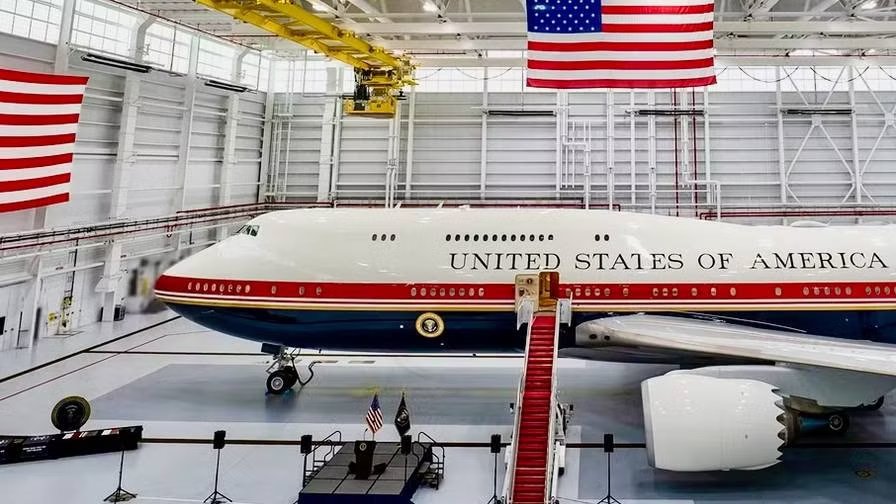
Boeing has recorded another $280 million in cost overruns on the VC-25B program. This adds to billions of dollars in losses on the fixed-price contract to replace the VC-25A Air Force One fleet. At the same time, the expected delivery date for the first aircraft remains unchanged from the previous estimate for 2028, and the second is expected to follow in 2029. In 2017, the renegotiation of the contract with Boeing was presented as a win for the US taxpayer.
But the truth is much more complicated. Those taxpayers are now paying for a much more expensive interim solution through the VC-25 Bridge aircraft, and it is unclear how much more in other contracts where the Air Force needs to offer Boeing a better deal. The combined $5.5 billion in losses on the Air Force’s VC-25B and NASA’s Starliner programs have left Boeing extra wary of Air Force contracts. Boeing has also been stung by fixed-price contracts with the KC-46 Pegasus tanker, T-7A Red Hawk, and MQ-25 Stingray programs. This carries consequences for later Air Force programs.
Boeing’s VC-25B Losses Now Top $3 Billion

Boeing has announced its half-year financial results with a section reading, “Defense, Space & Security second quarter revenue was $7.5 billion driven by higher volume. Operating margin was (0.2) percent in the quarter. Results include $280 million of losses on the VC-25B program primarily driven by an investment in additional production and certification resources. The company continues to anticipate first delivery in 2028.”
Overall, Boeing reported a loss for the period of $428 million. But the continuing losses on the Air Force One VC-25B replacement once again highlight the disaster it has been for Boeing, the Air Force, and for Trump’s first-term re-negotiations. Boeing has now recorded taking $3 billion in cumulative losses to convert the two Boeing 747-8s into fully-equipped VC-25B presidential transports. Boeing had previously recorded $2.8 billion in losses in 2024; the extra $280 million pushes it over $3 billion.
Originally, the USAF had awarded Boeing a risk-reduction contract for the Presidential Aircraft Replacement (PAR) program in January 2015. The Air Force later moved away from the original assumption of new-build aircraft and selected two partially completed Boeing 747-8 airframes originally built for Transaero but left undelivered after the airline’s collapse. Those two jets were sitting in storage without a buyer. Boeing agreed to convert those jets as a cost-saving measure instead of building new purpose-built Boeing 747-8s for the Air Force.
Trump’s Decision To Renegotiate The Contract

In Trump’s first term, he personally weighed in to pressure Boeing to renegotiate the VC-25B program to a lower-cost, fixed-price deal. In December 2016, then president-elect Trump tweeted that the bill for the new Air Force One jets was “out of control, more than $4 billion.” He also tweeted, “Cancel order!” After taking office in 2017, he re-negotiated the deal with Boeing CEO Dennis Muilenburg. The $4 billion referred to the estimated total program cost and not necessarily Boeing’s contract value.
As part of the negotiation, Boeing was to use two already-built, but undelivered Boeing 747-8s that had been built for the Russian airliner Transaero before it collapsed. In February 2018, the White House announced it had reached a fixed-price deal capped at about $3.9 billion for the two aircraft and related work. At the time, it was claimed that this would save the taxpayers over $1.4 billion. Trump presented it as a winning deal.
Select VC-25A replacement data points | Estimated or stated costs (per Boeing, USAF, NYT) |
|---|---|
Initial VC-25B program cost (2017) | $4 billion |
Renegotiated fixed price contract | $3.9 billion |
Claimed 2018 savings | $1.4 billion |
Boeing VC-25B losses (2026) | $3 billion |
VC-25 Bridge retrofit cost | $934 million (claimed transferred by NYT in 2025), publicly acknowledged $400 million |
Purchase of two Lufthansa 747-8s | $400 million (related to the broader VC-25 program) |
In July 2018, the Air Force reported, “The U.S. Air Force awarded a contract to The Boeing Company to design, modify, test, certify and deliver two presidential, mission-ready aircraft by 2024. This contract action formalizes President Trump’s agreement reached with Dennis Muilenburg, Boeing chairman, president, and CEO, Feb. 20, 2018. This sets $3.9 billion as the price for the two completed Air Force One replacement aircraft, saving the taxpayers over $1.4 billion.” However, it would turn out to be a disastrous deal for all parties.
Delaying The Delivery Of VC-25Bs

It is a somewhat cliché observation that cost-cutting, corner-cutting, and taking shortcuts are more expensive and longer once all is said and done. It should be noted that it is not unusual for commercial-built aircraft to be converted into military aircraft. The Royal Air Force E-7 Wedgetails are ex-passenger jets, the new Egyptian presidential 747-8 is a retrofitted aircraft built for Lufthansa (never delivered), and the presidential Korean jet is ex-Korean Air.
Catch what other flight trackers miss
Emergency squawks, holds, NOTAMs — live signals, no signup.
Open tracker
Catch what other flight trackers miss
Emergency squawks, holds, NOTAMs — live signals, no signup.
Open tracker
But the scale of specialization and modification for the VC-25Bs to serve as the Air Force’s presidential aircraft is immense. If Boeing had purpose-built, modified new-build 747-8 airframes specifically for the VC-25B mission, it could have installed military wiring, structural modifications, planned cable routes, and more as the aircraft was built. Boeing appears to have underestimated the complexity of converting completed airliners.
Boeing has to reinforce areas, add EMP hardening, install defensive systems, aerial refueling, and defensive systems that the aircraft were not designed for. Other factors for the delays include the COVID-19 disruptions, onerous security clearance issues for subcontractors, the discovery of improperly installed wiring, and some suppliers going bankrupt.
The Massive Cost To US Air Force

While the contract may be fixed at $3.9 billion, the program has still arguably cost the Air Force billions relative to the outlook before the renegotiated deal in 2016. The aircraft were meant to be delivered in 2024, but that has been pushed back to 2028. This has forced the Air Force to keep its old and expensive-to-maintain Boeing 747-200s (VC-25As) in service for longer. These aircraft need to receive extra unplanned and expensive work to keep them flying for as long as they are needed.
Worse, Trump returned to office in his second term and went shopping for an interim VIP jet. Qatar agreed to donate its surplus Boeing 747-8i luxury VIP jet ostensibly free of charge. In 2025, The New York Times reported that the Air Force was pulling around $1 billion from its next-generation Sentinel IBCM program to hurriedly retrofit the jet, now called the VC-25 Bridge.
Some observers noted at the time that it would be impossible to completely retrofit the aircraft to a true VC-25 standard with hardened structures, in-air refueling, defensive measures, etc. In mid-2026, Trump flew it for the first time. In July, he flew it to the NATO summit in Turkey. After the US Secret Service found credible reports that an attack on it was being planned by Iran and/or its proxies, they flew Trump out on the backup older VC-25A aircraft, which is thought to have more advanced self-defense measures.
A Costly Mistake For The Air Force

As of the time of writing, the VC-25 Bridge has been pulled from service and is expected to receive more upgrades over the next month. It is unclear how many hundreds of millions more these upgrades will cost. The VC-25 Bridge is only expected to remain in service until the new purpose-built VC-25B is delivered (expected 2028).
This will mean that the Air Force is likely to spend well over $1 billion on the VC-25 Bridge to keep it in service for only around two years, depending on exactly when the VC-25B becomes available. But all of this is happening in a larger context; Boeing also accepted a fixed-price contract for its now-troubled CST-100 Starliner space capsule. Boeing has also lost over $2.5 billion on that program.
These deals where the Air Force managed to push the risks onto Boeing have consequences. Boeing executives have repeatedly said they will not repeat these mistakes. Boeing’s experience with fixed-price losses has made the company more cautious about future programs, potentially affecting how it negotiates contracts such as the F-47, E-7, T-7A and MQ-25. With the fixed-price E-4B Nightwatch replacement program (SAOC), the Air Force was left with little choice but to award the contract to Sierra Nevada Corporation after Boeing dropped out.
Importance Of Long-Term Focused Partnership

It is unclear to what extent Trump’s efforts to save some high-profile money on the VC-25B program have caused Boeing to suffer billions in losses, delayed the program, and forced the Air Force to pursue an expensive interim solution. There were many contributing factors, and these are known internally to Boeing. But the renegotiated deal also influenced Boeing’s willingness to compete for fixed-price programs and potentially affects future contract negotiations. The $13 billion SAOC contract with SNC is potentially an example.
Dave Calhoun later succeeded Muilenburg as Boeing CEO, and in 2022, he said, “Air Force One I’m just going to call a very unique moment, a very unique negotiation, a very unique set of risks that Boeing probably shouldn’t have taken, but we are where we are, and we’re going to deliver great airplanes.”
For the Air Force, Boeing is not a contractor to be pushed around and bullied. The two are deeply interdependent after decades of cooperation. Other contractors like SNC, Northrop Grumman, and Lockheed Martin provide competition, but Boeing is an indispensable pillar of the US aerospace sector and the country’s defense base. The VC-25B debacle illustrates a broader challenge in defense procurement: transferring risk to contractors may appear attractive in the short term, but excessive risk can ultimately reduce competition, increase costs, and weaken the industrial base the government relies upon.