dailynewsnblog
The years after the COVID-19 pandemic have been tumultuous in the airline industry. While some airlines are succeeding, many are also struggling or have failed altogether, and strikingly, demand for new planes is up while manufacturers cannot keep up. Narrowbody jets are generally being produced at high rates that meet demand (although engines are a constraint), but the discrepancy between supply and demand is most striking with widebody airliners.
The Boeing 777X has been delayed for over six years, which has been tremendously problematic for its customers. However, there are issues with nearly every widebody airliner in service today because Airbus and Boeing can’t build their planes fast enough. The result is that, as travel demand continues to rise, airlines are unable to expand quickly and are having to slow down fleet renewal projects. The world is running out of widebody aircraft as older examples begin aging out and new planes continue to arrive slowly. What’s more, there’s not much indication that the factors causing the delays will be resolved anytime soon.
The Current State Of The Widebody Market

Currently,  Boeing and Airbus are both selling two widebody products. On the Airbus side, the manufacturer is currently selling the A330neo and the A350, with the A330neo being available as the A330-800 and A330-900, while the A350 is sold as the A350-900, the A350-1000, as well as the still-in-development A350F. Meanwhile, Boeing is also selling two widebodies, consisting of the 787 family (787-8, 787-9, 787-10), as well as the 777 family (777F, 777-8, 777-8F, 777-9). However, the 777X variants are not yet being delivered, a major constraint for Boeing.
Regarding backlogs, Airbus has 298 A330neos still meant to be delivered, while there are 870 A350s still on order. Meanwhile, Boeing has 1,145 787s still remaining, whereas there are 657 777Xs that have been ordered and 41 777F remaining. With current production rates, these aircraft are all essentially sold out until the 2030s, meaning that airlines who want to obtain additional widebody airliners this decade will either need to seek out leased examples or go to the used markets.
As it stands, Airbus is currently producing four A330neos per month and won’t increase production rates until 2029, when the rate will reach five. The A350 was meant to reach ten per month in 2026, but is currently limited to six due to supply chain constraints. Airbus aims to build 12 A350s per month starting in 2028. Meanwhile, Boeing is building eight 787s per month and aims to reach ten per month, but is aiming to build potentially up to 16 in the future, while the 777 is currently being built at a rate of three to four units per month.
Supply Chain Constraints In Aviation

This is the new hot topic in aviation post-COVID because of how severely these issues have impacted the industry. Production slowdowns during the pandemic and retirements of skilled workers left suppliers ill-equipped to address the rising demand for new planes after the pandemic, while a general shortage of raw materials has added to the issues. Suppliers cannot produce components quickly enough, which is resulting in reduced production rates that can’t easily be boosted.
The Airbus A350 has recently been seriously affected by supply chain issues. Airbus was aiming to build ten per month by now, but the former Spirit AeroSystems plant in Kinston, North Carolina, that produces the aircraft’s center fuselage and wing spars has been suffering from transition challenges and short staffing. As a result, the aircraft is only being built at a rate of six per month. In addition, there have been manufacturing issues associated with the main deck cargo door for the A350F.
Incoming New Widebody Airliners | Projected Entry Into Service |
|---|---|
Airbus A350-1000ULR | First half of 2027 |
Boeing 777-9 | Second quarter of 2027 |
Airbus A350F | Second half of 2027 |
Boeing 777-8F | 2029 |
Boeing 777-8 | Development paused |
Delivery timelines from General Electric and Rolls-Royce have contributed to delays, and all programs have been affected by supply chain constraints. Until recently, the Boeing 787’s production rate has been significantly reduced due to quality control issues, with output dipping to four aircraft per month in 2024, but the company has been focusing on resolving its production challenges and is working on a second final assembly line (FAL) for the program. Production is currently stable at eight and will eventually increase.
The Impact Of The Boeing 777X

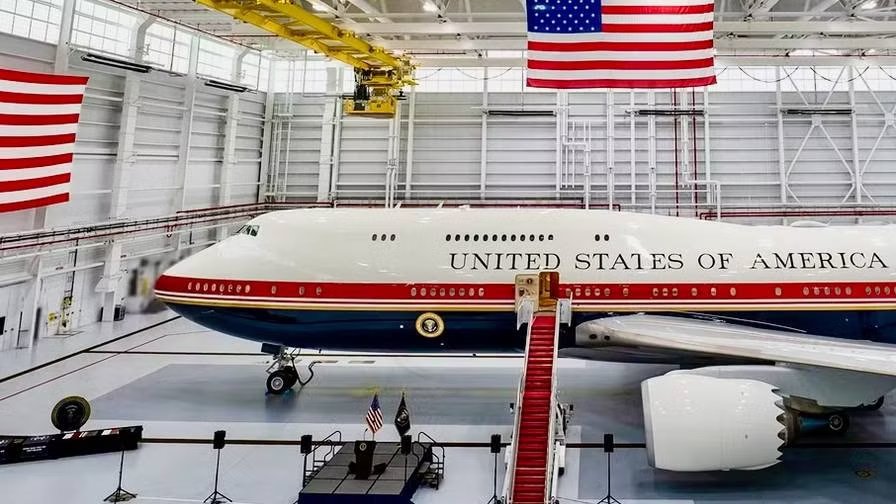
Boeing planned to begin delivering the 777-9 in 2020, but the type’s development and certification have suffered delay upon delay. It’s expected that the 777-9 won’t enter service until 2027, which has proven hugely problematic for its customers. There aren’t a lot of 777-9 customers, but some airlines have ordered the aircraft type in huge numbers, and the aircraft’s customers are planning to use it as their future flagship. Emirates has ordered 235 777-9s, Qatar Airways has ordered 90, and Cathay Pacific holds orders for 35 examples.
Emirates president, Sir Tim Clark, has previously remarked that he expected to have received over 100 777-9s by now, whereas he currently has zero. Cathay Pacific and Qatar Airways both planned to debut new premium cabins on the 777-9, but issues with the program have led the carriers to introduce them on other aircraft types earlier. In addition, this has also led 777X customers to keep older-generation airliners for longer than intended, such as Emirates’ older 777s or Lufthansa’s 747-400s.
To make matters worse for 777X customers, Boeing now has over 30 777-9s that have already been built and will require extensive modifications to bring them up to the current production standards. Boeing has already scrapped one example, and Emirates has rejected the first ten units that it was originally meant to receive, due to the reworks required. Reportedly, another unnamed customer has refused to take early-production examples of the 777-9, resulting in more delivery delays.
Issues With Seat Deliveries And Certification

Seat suppliers have been particularly hard hit by supply chain challenges, and this has led to significant delays with new widebodies as a whole. Once again, the suppliers are unable to deliver their product on time, and airliners can’t enter commercial service without their seats. Lufthansa experienced major problems with its Allegris cabins; its initial A350s with the cabins came without their Collins Aerospace-supplied first class suites, while its 787s had their Collins-supplied business class seats delayed.
Lufthansa has been criticized for the complexity of its Allegris cabins due to the number of suppliers involved, but it’s hardly the only carrier that has been impacted. Air India initially planned to install the Safran Unity on its Airbus A350-1000s and Boeing 777-300ERs, but the airline has instead elected to go with the Recaro R7 on the A350s and Collins Aerospace Elevation on the 777s, reportedly due to supply chain issues. Air New Zealand planned to debut its new business class seats, based on the Safran Visa, in 2024, but the seat came out in 2025 instead.
Cabin Class | Allegris Seat Manufacturer |
|---|---|
First Class | Collins Aerospace |
Business Class | Collins Aerospace (Airbus A330, Boeing 787) Stelia Aerospace (Airbus A350, Boeing 747) Thompson Aero Seating (Boeing 777) |
Premium Economy | ZIM Aircraft Seating |
Economy | Recaro |
But in addition to delivery delays, suppliers have also been struggling with certification on new seats. This is particularly problematic with business class seats, which have become increasingly complex, and combined with heightened regulatory scrutiny, has led to certification delays. This was a major factor behind the delays in Lufthansa’s 787s, and it still cannot sell every Allegris business class seat on its 787s due to certification challenges. These challenges have also impacted long-range narrowbodies with lie-flat business class suites.
The Results And The Future

In a striking reflection of the current widebody market, it was recently reported that  United Airlines may be interested in acquiring 20 early-production Boeing 777-9s. It now appears that United is unlikely to take these planes, but it shows what is increasingly becoming important in the market. The 777-9 simply isn’t a clean fit within United’s fleet, but one of the main benefits is that this would have given United 20 large widebodies far sooner than it could otherwise receive them if it ordered new examples from Boeing or new Airbus A350s.
Airlines have been keeping their aircraft far longer than originally anticipated;  Lufthansa is still flying the A340 and 747-400 because their replacements haven’t been arriving as scheduled, while
  Emirates is retrofitting Boeing 777s with new business class and premium economy seats that would have presumably been retired had it received 777-9s on time.
  Delta Air Lines and Qantas have both had their first A350-1000s delayed, while 787 customers have been burned by delivery delays for years until recently.
Today, more commercial airliners are leased than owned, and the leasing sector has become increasingly popular in part because airlines can obtain their planes sooner than going directly to the manufacturer. Increasing order backlogs mean that new widebodies will become pricier with longer wait times, and there’s no indication that the supply chain constraints affecting the entire industry will be resolved anytime soon.
Catch what other trackers miss
Emergency squawks, holds, NOTAMs — live signals, no signup.
Open tracker
Catch what other trackers miss
Emergency squawks, holds, NOTAMs — live signals, no signup.
Open tracker