dailynewsnblog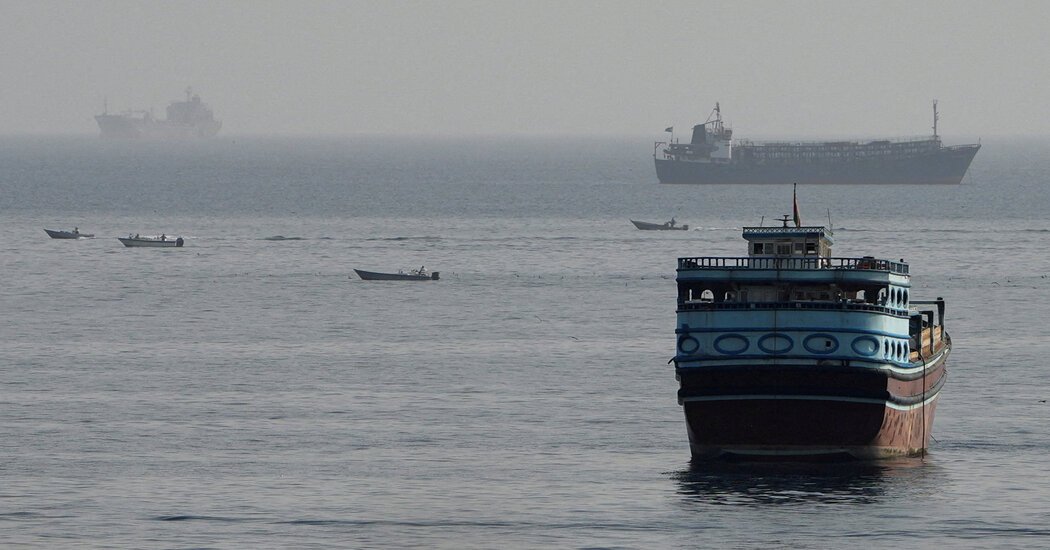
Iran’s demands for reopening the Strait of Hormuz, as laid out in a statement on Saturday, are largely what President Trump had already agreed to do in the memorandum of understanding that was signed on June 17 and quickly fell apart. But Iran sees control over the strait as its best chance of getting Mr. Trump to deliver on those promises — and is not willing to give it up just yet.
For Iran, analysts suggest, denying Mr. Trump the ability to claim victory over the strait is the most efficient lever to persuade him to recommit to those agreements and to implement them. Keeping the strait largely closed keeps energy prices high and is also a way to ensure that Persian Gulf states, which depend on the strait for exports, will also encourage Washington to return to the memorandum.
The level of mistrust between Iran and the United States is so high that Tehran wants to ensure it gets the economic relief it has been promised, to enable reconstruction, before it gives up even partial control over the strait, said Esfandyar Batmanghelidj, founder of the Bourse & Bazaar Foundation, a think tank focused on economic diplomacy.
“Iranian officials are concerned that if the strait opens, Trump would walk away from this conflict without feeling the need to resolve it,” he said. “They want to use the strait as a commitment mechanism to ensure Trump implements the various provisions of the MOU.”
Ali Vaez, Iran project director for the International Crisis Group, compared the strait to a “sword of Damocles over Trump.”
“Iran wants to front-load benefits without surrendering its main leverage, which is Hormuz,” Mr. Vaez said.
On Sunday, Mr. Trump told Axios that he believes that Iran will eventually come around because of economic distress and inflation. He did not threaten new military action against Iran, saying, “We are low-keying it.”
Iran’s demands were listed on Saturday by Mohammad Bagher Zolghadr, the secretary of Iran’s Supreme National Security Council. He called for the United States to lift its naval blockade and sanctions on Iran’s oil and petrochemical exports, withdraw the U.S. military from around Iran, pay war reparations and release frozen Iranian assets, as well as end attacks on Iran’s allies in the region, including Lebanon, and threats against the country.
All those demands, except for reparations, are spelled out in the 14-point June memorandum. Most of the agreement’s terms were violated within weeks, with even Mr. Trump declaring the deal “over.”
The demand for reparations is also a familiar one, and Iranian officials have said in local media that the issue is a bargaining chip to get as much sanctions relief from Washington as possible, Mr. Vaez said.
Iran’s negotiations with Oman on how traffic would move through the strait once it is open are essentially done, Mr. Vaez said. But Iran wants to tie the strait to the restoration of the memorandum, which would require further talks with the United States, he said. Any talks on the future of Iran’s nuclear program, which is one of the main reasons Mr. Trump said he began this war, are dependent on a restoration of the memorandum.
On Sunday, speaking to journalists, Foreign Minister Abbas Araghchi of Iran said, “Talks with Oman on the Strait of Hormuz are progressing well and in final stages as experts are working on maps.”
He continued, “However, an agreement with Oman does not mean reopening the strait, which remains dependent on fulfilling conditions conveyed through mediators.”
Part of the confusion stems from divisions within the Iranian system about how to proceed, which has led to the emphasizing of these demands, said Sanam Vakil, the director of the Middle East and North Africa program at Chatham House, the London think tank.
Some officials see diplomacy as the best path to economic reconstruction, she said. While others, the hard-liners, “are so skeptical and paranoid that they would prefer to hold on to their leverage rather than think of the economy,” gambling that Mr. Trump will not resume the war.
But the Iranians also see Washington as divided, she said, with some officials pushing for diplomacy and others for more bombing, and Mr. Trump “blowing one way or another.” There are also those in Washington who believe that once the strait is open, Mr. Trump would be tempted to walk away from the whole issue and leave Iran’s highly enriched uranium buried in the ground.
The Iranians “don’t want to do this for free,” Ms. Vakil said. “The strait is not about fees, it’s about control and leverage for the rest of the package.”
And it is about trust, Mr. Batmanghelidj said. Iran could have made more extreme demands, he said, but has chosen to try to return to the memorandum as the basis for a permanent end to the war. “What matters less is the particular figure or amount or concession, but what the U.S. can do to prove to Iran that it can make good on any of these commitments.”
The memorandum of understanding “is the floor from which everyone will try to build a structure for a deal,” Ms. Vakil said. “But we’re far away from that.”