dailynewsnblog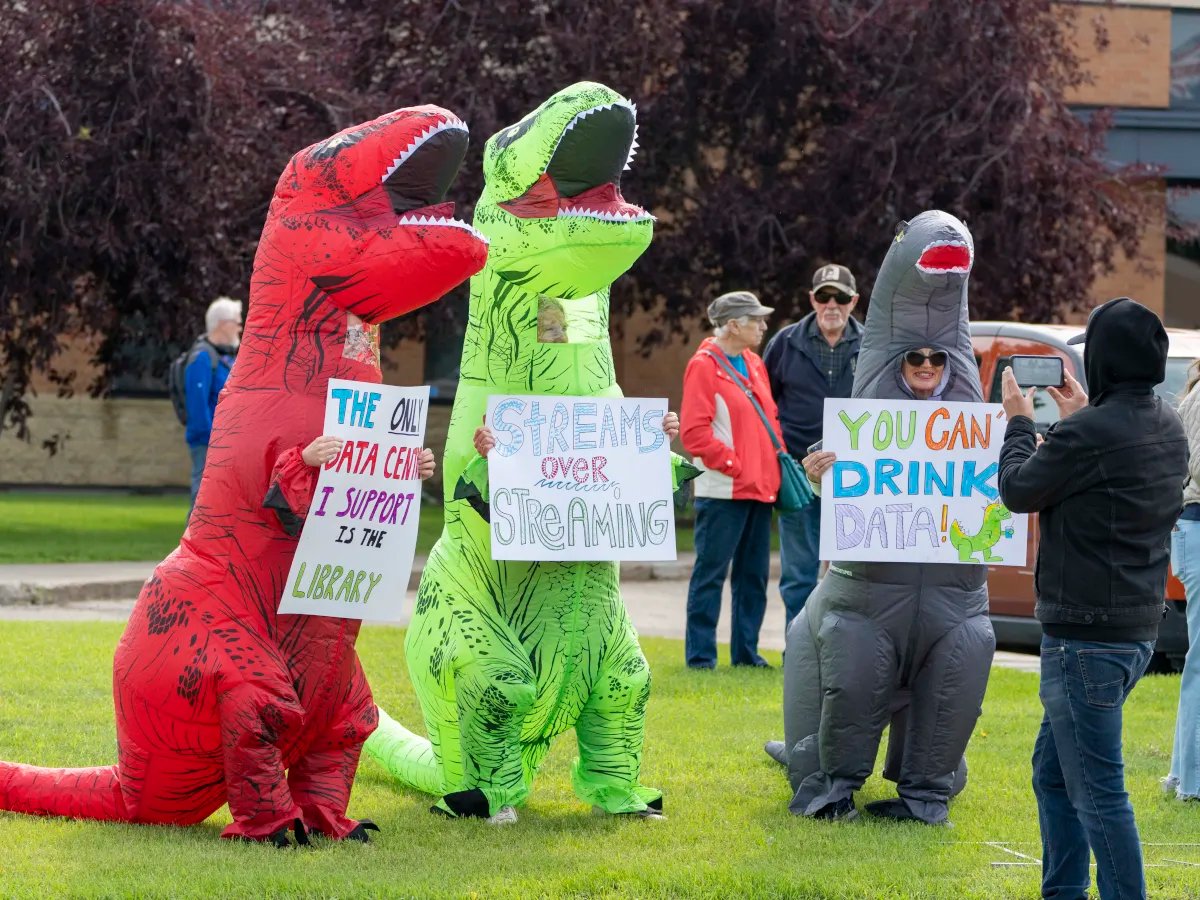
There’s a good chance you came across this column after it was shared on social media or elsewhere online, which means reading these words relies on the processing power of data centres. But as dependent as we’ve become on dedicated information technology facilities to sustain our very virtual modern world, the proliferation of data centres has inspired a backlash. Some of it is plain Luddite resentment of technology, especially the bogeyman of artificial intelligence. And most of it is poorly informed, raising overblown worries about power and water consumption.
Data centre investors should certainly fund their projects without taxpayer subsidies. But the facilities are part of the future, even if opposing them is big political business across the partisan spectrum. Last month, U.S. Rep. Alexandria Ocasio-Cortez told a congressional committee: “Ask Peter Thiel, ask Elon Musk, ask Mark Zuckerberg if they want one of these data centres in their own backyard,” before detailing the alleged horrors of an xAI complex in Memphis.
It’s true, of course, that those tech giants, like most people, would probably prefer to not live next door to a data centre. Unmentioned by the New York socialist, though, is that most people would even more strongly oppose living in proximity to a chemical refinery, steel mill or pig farm. Many objections people raise to data centres apply to these types of facilities, as well. That, of course, is why most people choose to live away from industrial and commercial operations, even though factories and farms are necessary for our civilization.
Notably, Colossus, the Memphis data centre to which Ocasio-Cortez objects, is located on a pre-existing industrial site. “The Electrolux site seemed ideal to xAI: in an industrial zone, proximate to a power plant and a wastewater facility,” Time reported last year. And while the congresswoman frets about the complex’s “methane turbines,” those were installed so the facility can generate the electricity it needs without overburdening the grid — a common complaint about data centres.
Alanna Hnatiw, the mayor of Sturgeon County, a municipal district on the outskirts of Edmonton, raised similar concerns about noise, power and water usage, in response to a planned data centre in Alberta.
Those objections are typical. In a recent piece on the evolution of the opposition to data centres into “a new political movement,” Politico noted that the anger is, in part, “rooted in concerns about the millions of gallons of water per day data centres can draw or the vast amounts of electricity they require.” Opponents frequently worry that building new data centres will increase demand for electricity and raise prices for all users.
But that fear is misplaced. “There is no statistically significant correlation between the number of data centres in a state and its current electricity prices,” the Institute for Energy Research reported in March. “In fact, prices in the top 10 data centre states are virtually identical to the average across other states.”
Contrary to common concerns, the institute’s researchers found that, “Across all 50 states, states where electricity sales grew faster from 2015 to 2025 paid less, not more, for electricity.”
The Independent Institute’s Paige Lambermont believes this is because “spreading the fixed costs of the power grid across new entrants can help lower costs.” New data centres help pick up the substantial costs of power-grid infrastructure and fund maintenance, as well as increased power generation.
Concerns about water usage are similarly overblown, writes AI researcher Andy Masley. He points out that data centres require water, electricity or both for cooling servers. Closed-loop cooling systems return around 90-95 per cent of their water to the system for treatment but involve greater power consumption and complexity than older evaporative systems, according to the Florida Water & Pollution Control Operators Association. The right balance for any given facility depends on the availability of local resources.
While many skeptics claim the water consumption of individual data centres is equivalent to that of a small town, that’s not saying much. Looking at forecasts of water consumption in 2030, Masley estimates that, “The water all American data centres will consume onsite in 2030 is equivalent to … eight per cent of the water currently consumed by the U.S. golf industry” or “the water usage of 260 square miles of irrigated corn farms, equivalent to one per cent of America’s total irrigated corn.” That’s not to say that specific data centres can’t strain local resources, but the same can be said of any large-scale operation.
What helps make data centres a bigger flash-point than electric vehicle plants or chicken processors are separate but related worries about artificial intelligence. People look at data centres and think less about their accounting software and social media accounts than about fears of doom resulting from the rise of self-aware computers. Frankly, these fears echo the machine-smashing Luddites of the 19th century.
While she’s generally supportive of the economic boost expected from the planned Edmonton-area data centre, Mayor Hnatiw also voiced worries about “generative AI” using that processing capacity. Likewise, Politico quoted anti-data centre activists on the left and the right who fret over AI and tie their objections to the facilities to demands for regulation of artificial intelligence. A Democratic state lawmaker in Tennessee even cited the Luddites as a model.
George Mason University economist Tyler Cowen considers these fears misplaced and sees AI and the data centres they require as a potential net boon to human prosperity. He warns that if the U.S. or other governments restrict AI and data centres, “progress would continue with open source models in China, and eventually in other parts of the world as well.” Those areas that resist calls to regulate will gain the jobs, the technology and potentially (think China) access to the information running through data centres.
Which is to say that data centres aren’t problem-free, but their challenges are the same as those for any sort of intensive commercial activity. If you want a civilization, you embrace the trade-offs civilization requires and deal with the real — not imagined — problems that arise.
National Post