dailynewsnblog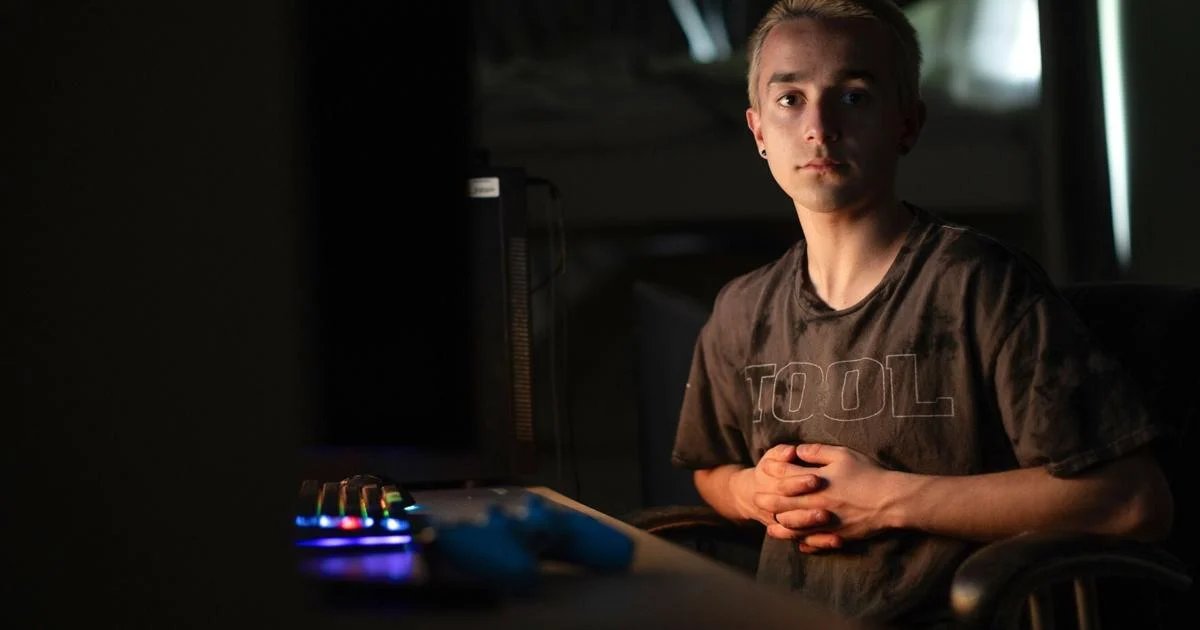
Aiden was 13 and scrolling TikTok when he came across a bizarre video.
It was riddled with obscure symbols and military imagery — a black sun, fighter jets from the Second World War — but also a goofy UFO with “funny-looking people.” Amused, Aiden tapped the “love” icon.
Then he started to see more.
A man wearing a Nazi SS uniform (a notorious security force that ultimately ran the death camps), against a similar whimsical backdrop. A video that talked about “Hyperborea,” a mythical realm said to be the ancient homeland of the “Aryan race.”
Aiden says he felt like he’d entered a hidden sanctum.
“I didn’t know what it was at the time, but I was being indoctrinated into far-right-wing Nazi propaganda,” Aiden said.
He started soaking up antisemitic conspiracy theories, especially about the Rothschild family “controlling the world.”
Most parents are familiar with dangers of the internet for youth, including addiction, insomnia, body dysmorphia and online predators. It’s why many governments, including Canada’s, are proposing social media bans for teens under 16.

While it resonates with some, others say social media companies and influencers are trying to
Increasingly, youth radicalization is also on the radar of experts and authorities. Bad actors are targeting teens, especially boys, and more youth are carrying out ideologically motivated acts of violence.
Aiden, whose parents asked for his last name to not be used for privacy reasons, was among a group of boys who recently spoke to the Star about the toxic content they encounter online, including racist, misogynistic and violent videos and images, often in the form of memes.
They also talked about how they found their way back from some of the internet’s darkest corners.
How ‘irony poisoning’ weakens resistance
Not every child who encounters extremist content online will fall prey to radicalization, nor will every teenager who consumes hateful content be influenced by it. But there is an inherent danger. An RCMP report found that minors are “increasingly normalizing violent behaviour in online groups,” including joking about terrorist attacks, which complicates authorities’ efforts to identify “genuine online threats.”
Stephanie Carvin, an extremism and national security expert, uses the term “irony poisoning.” It describes what can happen when someone consumes memes and jokes that are ostensibly framed as sarcastic, dark humour. Over time, some people come to subconsciously adopt the beliefs.
“The whole goal of irony poisoning is it kind of weakens your resistance to any idea of right or wrong,” said Carvin, an associate professor of international relations at the Norman Paterson School of International Affairs at Carleton University.
“It’s supposed to be funny,” she added. “But underlying it is a real through thread of hate that connects to these conspiracy theories. And when you see these memes time and time again, eventually it starts to affect your worldview.”

Aiden, 17, was part of a group of teenage boys who spoke to the Star about some of the toxic content they encounter online, including racist, misogynistic and violent videos and images, often in the form of memes.
Chad Hipolito for the Toronto Star
Developing hatred toward Jews, LGBTQ
Aiden, now 17, says the videos he saw often skirted the line between “edgy content” and outright hate. He recalls a video showing the pristine Swiss Alps, with an out-of-context statistic about Black crime in America slapped over top. Others complained about “immigrants taking all the jobs.”
For a time, Aiden says, he accepted some of these views and was particularly antagonistic toward Jews and the LGBTQ community.
“I hated on certain groups for reasons that I cannot begin to explain now,” he said. “If someone had started pressing me about why I thought those views, I would have folded very quickly.”
Aiden kept his thoughts mostly to himself, but said he felt a “general animosity towards gay people” and tried to avoid interacting with people of colour.
That’s when he came across an organization called Next Gen Men that would change his life.
How Next Gen Men helped turn things around
Next Gen Men runs a server on Discord. It’s a platform that started as a place for young people to game together, but has morphed over the years into a much broader communication platform.
Next Gen Men is moderated by adults who try to push back against online misogyny and other forms of hate, while promoting positive masculinity and mental health.
Aiden said he learned about Next Gen Men through his mother, who was oblivious to some of the views he was harbouring.
Initially, he said, he just wanted to find friends to play Minecraft with.
What he found was a non-judgmental community where he could be his authentic self, full of teens like him — confused, aggrieved, frustrated.
Aiden said the server offers “a layer of anonymity” behind it, which makes it easier to be vulnerable in a way he can’t always with his friends in “real life.”
He described a rough patch he was going through a few years ago and finding relief after talking about it with friends from the server for hours.
“I don’t think I could have walked over to my friend, my neighbour, even that I’ve known since I was five, and told them about that,” Aiden said.
“There are some bonds there that I feel like my parents just don’t understand.”
Aiden joined the Next Gen Men server to find guys his age to game with, but said the conversations turned him into a more accepting and mature person.
Through discussions facilitated by Next Gen Men, gaming, and interacting with people from the same groups he demonized, Aiden said, he began to recognize his prejudices and rejected them.
“Hearing about experiences that people have had in real life, like especially the LGBTQ members of the server, about the blatant hatred and animosity they received for no reason … (I realized) clearly my views do way more harm than good,” he said.
“I think that just completely, as well the general interaction with everyone in the server, reshaped me,” he added. “And now I hate the way I used to think.”

Logan Pedwell-Rezaifard, 18, a member of the Next Gen Men Discord server and Grade 12 student in Toronto. He had noticed an insidious trend among his peers known as “looksmaxxing.”
Sophie Bouquillon/Toronto Star
A sanctuary from toxic social media
For Logan Pedwell-Rezaifard, the Next Gen Men server is a sanctuary from some social media platforms that have “a lot of negativity,” as well as toxic Discord servers where gamers will jokingly yell racial slurs.
He added that joining the server has made him more outgoing, confident and empathetic.
“I’m not just comfortable talking about my emotions, but I’m also better equipped to handle other people’s emotions.”
Post-pandemic, Pedwell-Rezaifard, 18, found he wasn’t as confident before. He wasn’t playing sports or exercising during lockdown, his acne had flared up, and he wasn’t feeling good about how he looked.
Pedwell-Rezaifard experienced some body image issues, like many boys his age, but he noticed a more insidious trend gaining popularity among his peers — looksmaxxing.
“Looksmaxxing” can range from encouraging boys and young men to work out and dress well, to suggesting they pursue cosmetic surgery and even “bone smashing” to achieve a better facial structure. He told of one peer who became borderline obsessed with looksmaxxing and “became really resentful and hateful of other kids at our school.”
“For him it was way more negative, because there’s also a side of looksmaxxing that’s you’re just genetically inferior if you don’t have the genes to have the perfect face or the perfect body,” he said.
Carvin said the looksmaxxing trend overlaps with the manosphere, a loose collection of influencers and online forums that promote a narrow view of traditional masculinity and sometimes venture into criticizing feminism, “woke” culture and the LGBTQ community.
She added it can be nearly impossible to distinguish between who is posting “edgy” memes for laughs or clicks, versus those who are pushing content for malicious reasons, including radicalization, but also financial incentives. (Many looksmaxxing influencers promote products they contend will make boys more attractive.)
“There are true believers who are actively trying to create (extremist) content which appeals particularly to young men.”
Presenting an alternative to the manosphere
Next Gen Men started the NGM Alliance Discord server in response to the pandemic, to engage with boys who were spending much of their time online.
“The focus on countering online misogyny and radicalization became more central over time, as we saw what boys were encountering” online, said Stephanie Wright, manager of youth programs and partnership at Next Gen Men.
They wanted, organizers say, a foil to the manosphere. Next Gen Men also holds in-person meet-ups.
Wright said the online gaming space has been an “effective entry point” to get youth to join the Next Gen Men server.
“That initial stage of gaming and hanging out and posting silly little things does eventually lead to a deeper sense of connection and vulnerability within the space,” which allows the boys to open up about more difficult topics, Wright said.
The boys swap jokes and memes and discuss gaming, but also topics such as mental health, relationships, substance use and online hate.
The server administrators try to unpack and overturn problematic views that youth might express, instead of a punitive approach. (They’ve never banned anyone from the server.)
The server has separate channels for discussing topics such as school or relationships, and there is a support channel where youth can access mental health supports, with rules in place to ensure it stays a safe space.
Research shows about 27 per cent of Gen Z (people born between 1997 and 2012) report they don’t have a close friend, in what some have called a “loneliness epidemic.”
“A lot of times the boys are like, I feel like I’ve lost friends, and I don’t have them anymore at school,” Wright said. “But I have my online friends.”
“It’s about how can we support them in this online environment and help get them to a place where they can take those lessons into their in-person relationships?”
A call for help in fighting harmful content
Carvin said parents, schools and the social media and gaming companies themselves all have a role to play in addressing harmful and hateful content, but also praised Next Gen Men’s approach.
“How do we scale that up? A Discord server is great, but we need multiple centres for this.”
Ghayda Hassan, a professor of clinical psychology at the University of Quebec in Montreal, previously told the Star that childhood trauma, isolation and “looking for belonging” are risk factors for youth adopting extremist beliefs. Healthy relationships and family support are protective factors.
Aiden, meanwhile, says that today he’s “quite possibly one of the most accepting people you’ll ever meet.”
But he worries about his younger brother, who he said frequently encounters neo-Nazi memes on various social media platforms. He said he agreed to tell his story because he wants teens and parents to understand how easy it is to be influenced by extremist content online.
“Recently it’s gone very mainstream,” Aiden said. “This is something that I really want to get out there.”