dailynewsnblog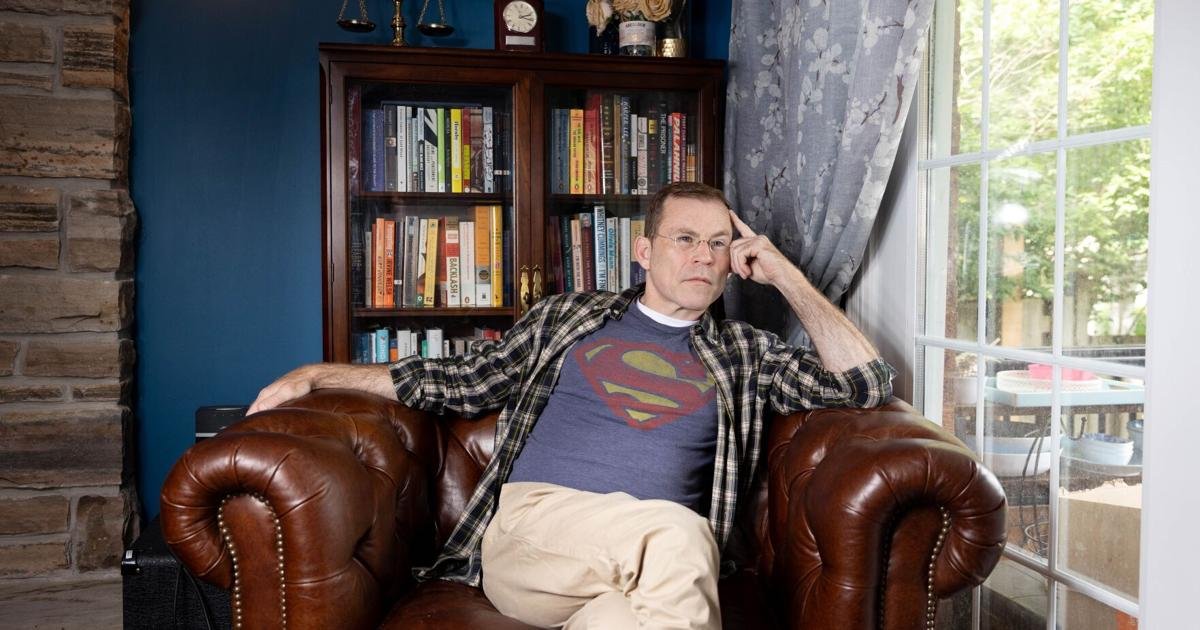
The trial of Becky Hamber and Brandy Cooney was a place of unrelenting darkness.
Week after week, a Milton courtroom heard how the Burlington couple starved and neglected a 12-year-old boy until he died in his basement room, hungry, cold and alone. First responders, teachers and even physicians shed tears while testifying.
They were, as the judge later wrote, “scarred people.”
Many murder trials are difficult to watch, but few are as horrifying. And, as the months wore on, it was impossible not to observe the trial without wondering what kind of person could advocate for the women who withheld food as punishment, zip-tied the boy and his little brother into wetsuits and helmets and exchanged thousands of vile text messages. “Loser,” Hamber wrote in one, adding later, “hope he gets an infection.”
At the defence table sat Monte MacGregor, known for taking on cases that seem unwinnable.

In court on Friday, the boy’s grandmother recalled the agony of seeing his tiny child-size coffin — “He was unrecognizable. In no way did he look
In court on Friday, the boy’s grandmother recalled the agony of seeing his tiny child-size coffin — “He was unrecognizable. In no way did he look
The Toronto lawyer has done so many murder trials he’s lost count. In the past few years, there was a drug dealer who opened fire on a car of teenagers, killing a 12‑year‑old boy walking nearby with his mother; a teen radicalized by his incel ideology who stormed a spa and stabbed a young mother to death with a 17‑inch sword; and, most recently, there was Hamber and Cooney.
To many observers, his client list is a roster of monsters — or worse. So it’s no surprise MacGregor, 52, is accustomed to being asked, “How can you do this?”
He is, after all, one of the busiest “murder lawyers” in Ontario.
“It’s like I always tell the jury,” he told the Star last fall during a break in proceedings at the Milton trial. “My job is to ensure that if someone is guilty, they’re guilty of the right thing.”
‘The ability to talk and never shut up’
Outside of court MacGregor is approachable, polite and relaxed enough to wear a Superman T-shirt and palm tree socks for a Star photographer, under framed posters for “To Kill a Mockingbird,” “12 Angry Men,” and “The Advocate,” classic legal dramas exploring themes of justice, prejudice and morality.
But the Belleville native did not begin his career in criminal law.
He worked as a bank teller, and a radio announcer, an experience that left him with a gift: the “ability to talk and never shut up,” he jokes. He’s honed it with a passion for listening to great speeches: favourites include U.S. Senator Robert Kennedy after Martin Luther King’s assassination and Lou Gehrig’s farewell address at Yankee Stadium.
Called to the bar in 2003, MacGregor started in corporate finance at a law firm in Ottawa, where he helped edit the Bank Act and stared out the window at Parliament Hill from a comfortable office. But after speaking at the funeral of a close friend who died at just 30, he realized he could no longer pretend to care about finance. Delivering the eulogy — and feeling himself connect with mourners in a way his day job never allowed — was, he said, “probably the most rewarding thing I had done in my life.”
“To be able to move people so significantly just by speaking, watching them laugh out loud and cry in sadness and the echoing silence when I finished because of the powerful emotional nature of the tribute … It was an incredibly rewarding almost incomparable feeling,” he said.
He moved to Toronto and never looked back.
Decades ago, when Toronto’s legal community was far smaller, it was easier for a defence lawyer to become a recognizable figure. And they were, almost without exception, men. As the profession expanded, the landscape changed. The number of lawyers has grown exponentially, high‑profile trials are rarer and even in the cases that do capture public attention, few Torontonians could name the defence counsel involved. A shrinking media pool hasn’t helped.
All of this means the lawyers who handle long, difficult trials often work out of sight. Their cases receive limited coverage and in a crowded media environment with short attention spans, their contributions rarely break through. But that doesn’t mean they aren’t there, taking on the bleak files and the seemingly impossible defences.
What sets Monte MacGregor apart is his willingness to take on cases many defence lawyers quietly avoid, coupled with an unusual openness about his own humanity. He’s unafraid to acknowledge the pain suffered by the victims at the centre of his files, an instinct that runs counter to the stereotype of defence lawyers as closed off or detached.
An era of legal warfare
This doesn’t mean he lacks bite when needed. Cross-examinations often require defence lawyers to set aside the gentler parts of themselves in a way that can unsettle observers in the courtroom or readers following a case.
During his cross-examination of the dead child’s younger brother in the Hamber-Cooney trial, MacGregor argued a difficult line of defence, suggesting the boy’s testimony might have been influenced by a $4-million lawsuit filed by his biological family.
The 13-year-old denied it, and the trial moved on but some observers were outraged. “Obscene,” wrote one Star reader. Another accused MacGregor of trying “to paint this child as some sort of directed opportunist.”
Said another: “Wow, defending the indefensible.”
What they did not see came months later at a hearing in early July, when MacGregor rose to address the now 14-year-old boy. “What an incredible amount of strength, courage, it takes to be here in this building and in this courtroom,” he told him.
“I am hopeful and confident that you will flourish going forward.”

Lawyers Monte MacGregor (right) and Nabeel Sheiban speak outside the Superior Court in Milton on May 5, following a decision in the trial for a Burlington couple accused of first-degree murder of a 12-year-old boy in 2022.
Nick Iwanyshyn
The boy lifted his hand in acknowledgment.
In an era of legal warfare, where lawyers often attack the integrity of each other, MacGregor has earned an unusual reputation with his colleagues in the defence bar, prosecution and the bench. Mention MacGregor’s name and almost everyone says he’s a skilled lawyer and a nice guy. MacGregor “really does believe in the goodness of everyone,” said fellow defence lawyer Leora Shemesh.
They were co-counsel on a murder case a few years back. Every morning, she remembers MacGregor offered the judge a robust “Good morning, Your Honour,” and every morning the judge ignored him.
When Shemesh asked why he’d bother, MacGregor told her he wasn’t going to change who he is. What mattered was the judge understood he respected the office and what it represents, even if the courtesy wasn’t returned.
The nice-guy reputation is no act, but it also isn’t without purpose. Although MacGregor said he worries sometimes that he “makes too many concessions” — he’s talking about moments in a trial where he acknowledges a point, and doesn’t fight every battle, allowing the Crown to have something rather than objecting or pushing back — he believes in the approach.
He explains that the best defence he can give is to be diligent, respectful and never lose sight of the gravity of the process, especially the suffering of those most affected.
Many lawyers consider long murder trials “practice killers.” They swallow months of time, pay less than other work and can collapse without warning, leaving empty hours and after all that, you may lose.
The work is mentally demanding in a way MacGregor finds energizing, not draining. One of the benefits of a lengthy trial is the ability to develop “really good relationships,” be it the judge, the Crown attorneys, the officers in charge, “or you make that connection with the jury.”
Dignified and meaningfully compassionate
MacGregor cites as a fictional role model Atticus Finch, the lawyer in “To Kill a Mockingbird” a novel set in 1930s Alabama.
He points to the moment after the jury convicts a Black man falsely accused of raping a white woman when Finch gathers his papers and walks out of the courtroom, the gallery rises in silence, a collective acknowledgment of his integrity even in defeat. It’s the kind of respect MacGregor hopes to earn: not for winning, but for carrying himself with steadiness and principle through the hardest cases.
“I’m trying to convince 12 people to agree with me and make an extraordinarily difficult decision,” he wrote in a text message last month from London, England. “I want them to hopefully like and appreciate me, but more than that I need them to believe and trust me. That means trying to be authentic and fight as best you can in a dignified and meaningfully compassionate matter, while not compromising your objective.”
Recently, a trauma counsellor stopped him in the hallway at downtown Superior Court of Justice, colloquially known as “361” for its address on University Avenue.
He didn’t know her, but she knew his work. He recalled she spent 10 minutes trying to convince him he would be an ideal patient and could use her help “because of all the cases I do.”
‘It’s about putting forward the fight’
Ultimately, at the end of the Hamber-Cooney murder trial, Justice Clayton Conlan found Hamber (and her wife) guilty of first-degree murder and other offences, rejecting the defence MacGregor and lawyer Nabeel Sheiban mounted. Both women are now planning to appeal and a different set of lawyers are preparing arguments.
MacGregor said he’s not some overzealous defence lawyer who thinks everyone he represents is innocent when “that’s just not the reality.” Still, he argued — and still believes — that the Crown failed to prove Hamber intentionally starved the boy.
He also forcefully questioned the role of the Children’s Aid Society and others in the lead-up to the boy’s death and he is the main reason that part of the story came to light as it did — the missed visits required by law, the fact physicians missed the boy’s shocking state of health, the unaddressed complaints about the couple’s parenting methods, and — only after the boy’s death — the consequences for several workers who had a responsibility for him.
Brenda Hollingsworth, an Ottawa civil lawyer representing the dead boy’s family in their ongoing litigation, called the defence strategy at trial “an understandable approach.”
“In our system, it’s the defence lawyer’s job to test the Crown’s evidence,” she wrote in an email. “It seems that’s what they were trying to do and certainly the trial judge didn’t seem to think it was inappropriate or problematic — even though it didn’t ultimately change the result.”
Reputations in criminal law aren’t measured the way many outsiders assume, explained Marco Sciarra, a Toronto lawyer who also practices defence law.
“It’s not about wins and losses,” he said. “It’s about putting forward the fight.”
Earlier this year, a murder victim’s son approached MacGregor at the downtown Toronto courthouse.
She was upset with how things had unfolded at the sentencing hearing of the man who had shot her son to death. Things had gotten so heated, the judge had asked a police officer to provide an escort for the other defence lawyer. (He declined.) MacGregor’s client wasn’t the shooter, but he helped the killer get away and took the murder weapon to eastern Canada. MacGregor braced for anger.
Instead, she thanked him: “You were the only one that acknowledged us and our loss,” he recalled her telling him.