dailynewsnblog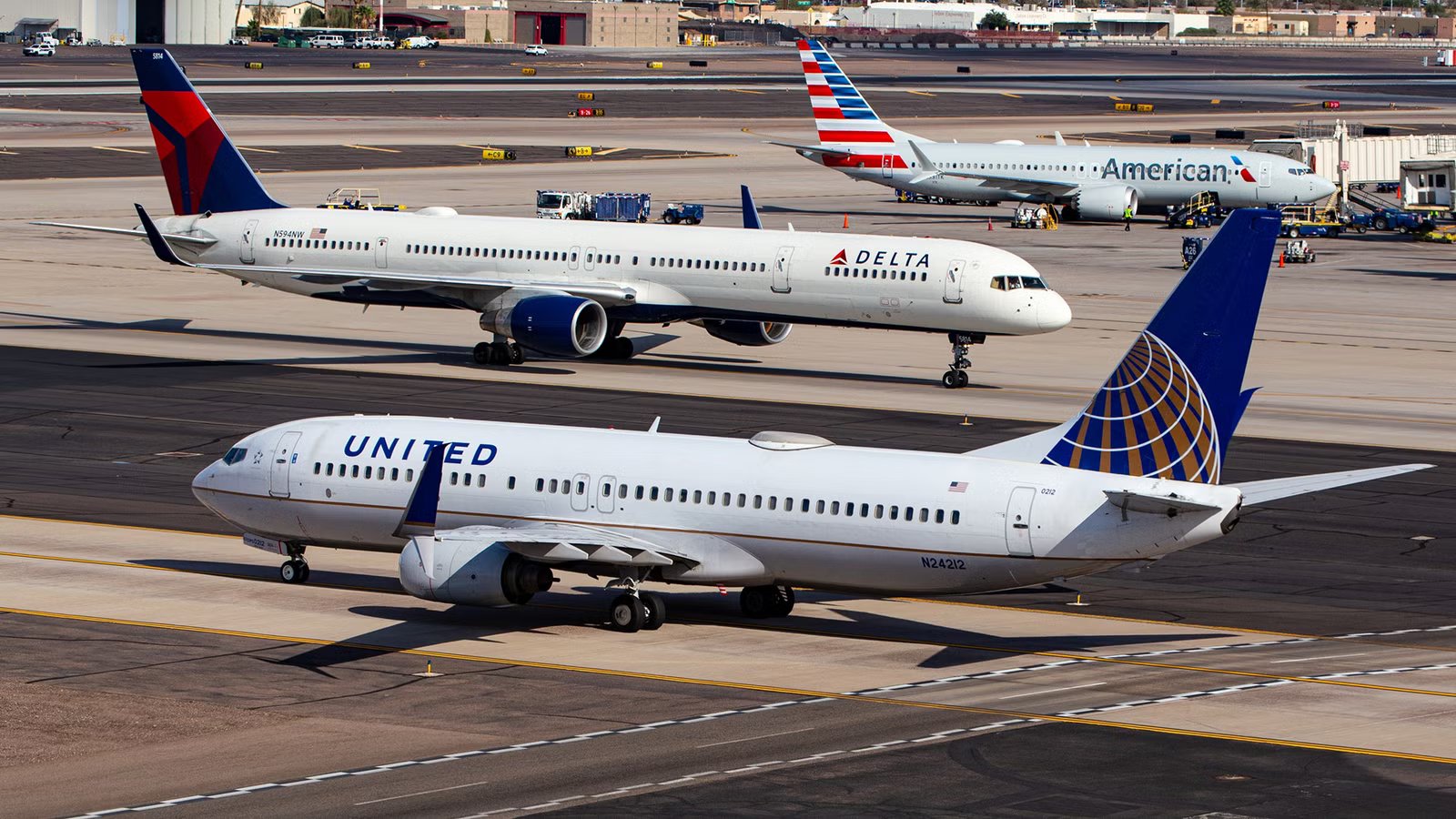
A Canadian former flight attendant has pleaded guilty to wire fraud after posing as a commercial pilot to obtain ‘hundreds of free flights’ from three major US airlines over nearly five years. Dallas Pokornik, 34, of Toronto, used a fake airline employee ID between January 2020 and October 2024 to obtain non-revenue seats usually reserved for airline staff.
He was only caught after an airport employee became suspicious of his ID and took a photograph of it, before it was later verified by the airline that he was not a pilot. Pokornik faces up to 20 years in prison and a fine of up to $250,000 at a sentencing hearing scheduled for December.
Former Flight Attendant Got Free Flights For Nearly 5 Years

In a US Attorney’s Office release, Canadian national Pokornik pled guilty to wire fraud after he was arrested in Panama and extradited to the United States. Pokornik worked as a flight attendant for a Toronto-based airline between July 2017 and October 2019. During his job, he discovered that airline employees regularly travel on non-revenue seats, the industry term for the free or discounted tickets airlines give to staff.
He used his knowledge to receive free travel with three US airlines by using a “fictitious employee identification card.” Although authorities have not explicitly named which airlines, court documents place them in Honolulu, Chicago and Fort Worth — the respective headquarters of Hawaiian Airlines,  United Airlines and
  American Airlines.
Prosecutors also allege that Pokornik repeatedly requested a cockpit jumpseat — seats usually reserved for qualified pilots — despite not holding a license himself. It remains unclear whether he ever actually occupied one. CJ Ammons, Homeland Security Investigations Acting Special Agent in Charge, commented,
“Dallas Pokornik’s guilty plea is a testament to the seamless collaboration between HSI Honolulu, the Department of Justice, and our international law enforcement partners. This individual took advantage of travel security protocols for his own benefit, and he will now face the consequences of his actions.”
How Non-Revenue Travel Usually Works

Staff travel between carriers is set out under the Zonal Employee Discount (ZED) framework, which has been adopted by more than 170 airlines, including most US airlines. The agreement dates back to 1994 and enables staff at one carrier to fly standby on another at heavily reduced or free rates. Staff book standby tickets and are expected to show government-issued identification alongside a valid employee badge at check-in.
Cockpit jumpseat access is even more tightly controlled due to the heightened security risk. Since July 2004, US carriers have used the Cockpit Access Security System (CASS), which cross-checks a pilot’s identity with their company database. John Cox, a retired airline pilot who owns an aviation safety consultancy, told the Associated Press that the allegations were even more surprising given the cross-checks carriers are able to run on crew from other airlines.
Cox explained that the most likely theory is that cross-checks “did not show him as no longer employed by the airline,” thereby allowing Pokornik to pass as a valid airline employee. Porter Airlines and Air Canada have not confirmed whether they previously employed him, with the former saying it was unable to verify any information related to the case and the latter that it had no record of him.
Questions Remain Over Security Lapses

The fact that Pokornik is said to have accessed hundreds of flights before getting caught raises questions over airport protocol for crew. His spree of deception and unauthorized access has been likened to the 2002 movie Catch Me If You Can, which details the life of serial con artist Frank Abagnale Jr, played onscreen by Leonardo DiCaprio.
Working crew at US airports generally do not pass through passenger security lanes. Instead, they use the Known Crewmember (KCM) program, a TSA scheme in place at more than 60 airports, although this is being replaced by the Crew Member Access Point (CMAP) program. This typically involves crew members scanning an airline badge or entering an employee number at a dedicated lane, which is then checked against their employer’s records before they are cleared through to the terminal.