dailynewsnblog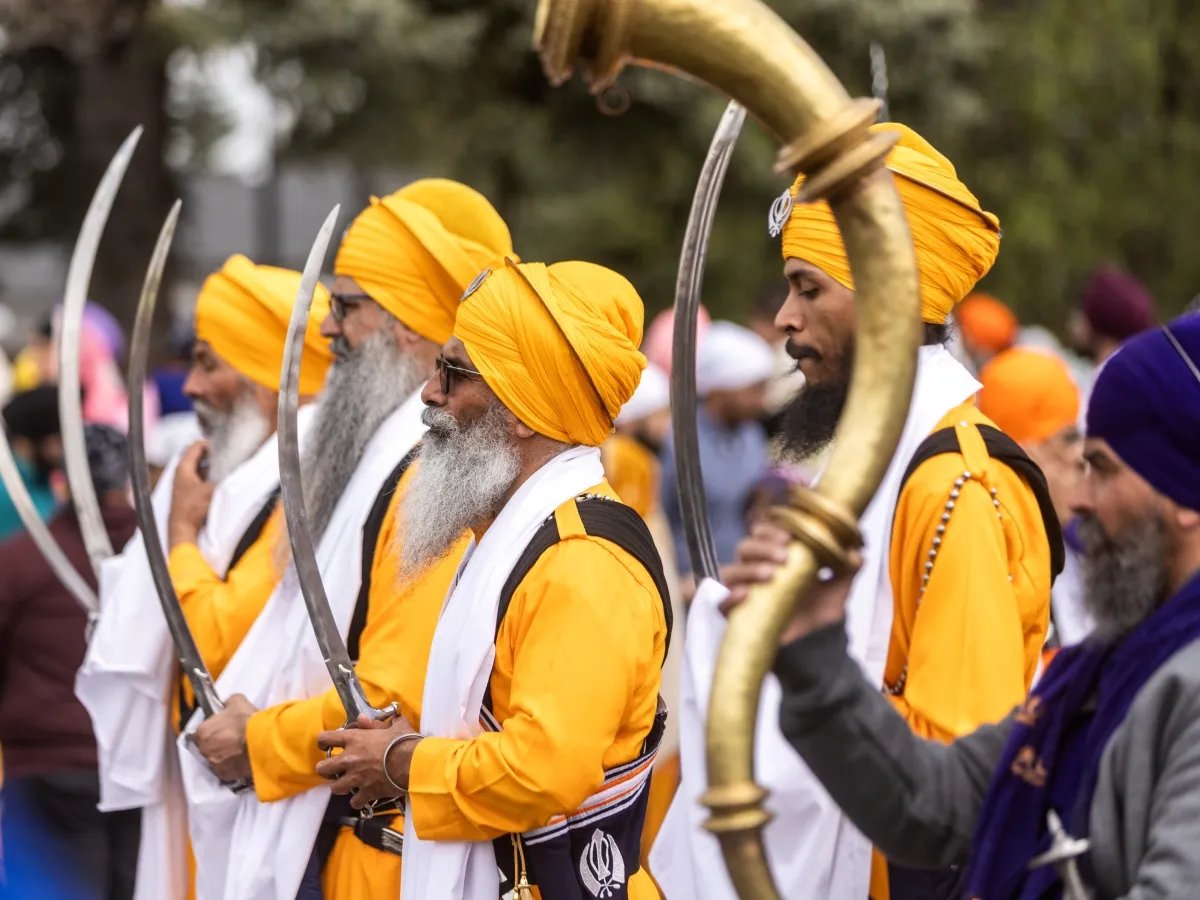
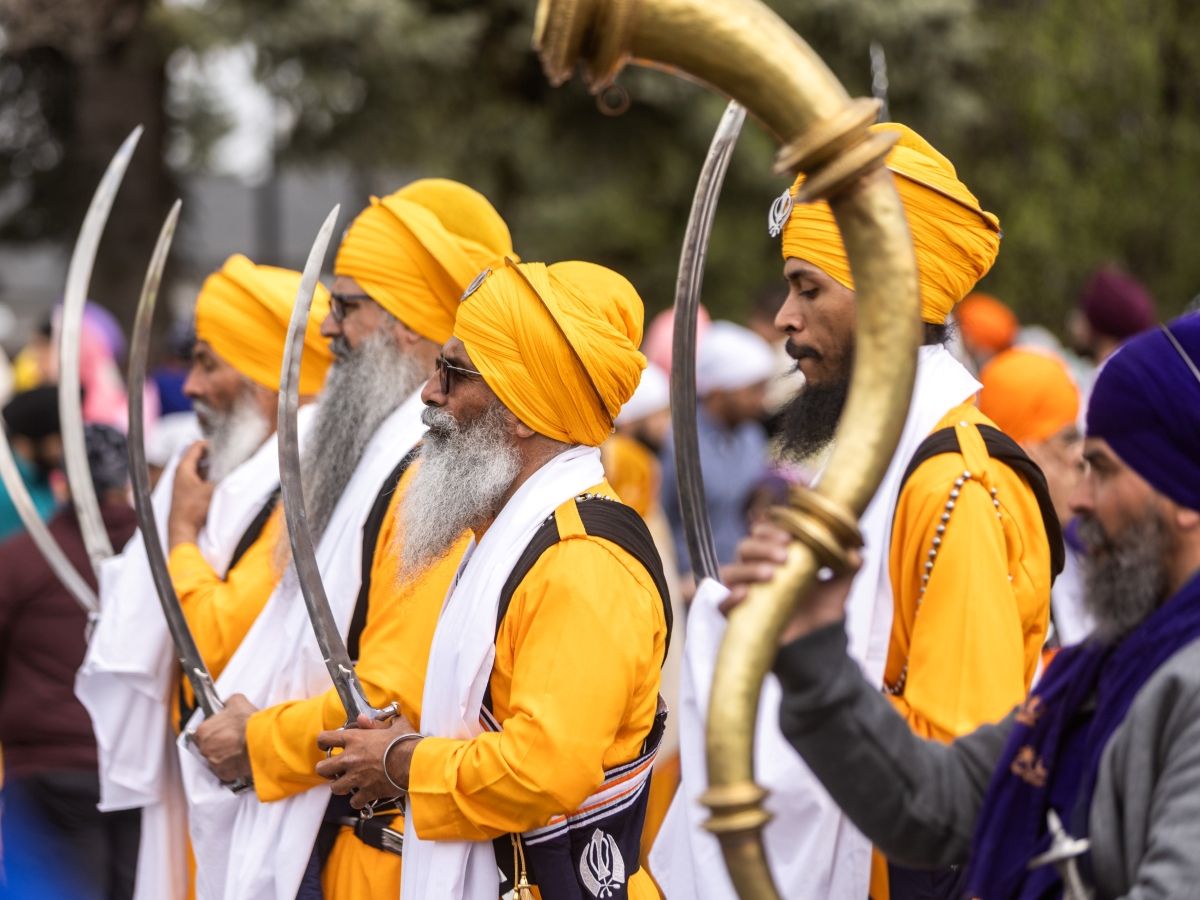
On Thursday morning, the Supreme Court of Canada delivered a little surprise package: it has agreed to entertain the Alberta government’s appeal of Wirring v. Law Society of Alberta, a 2025 decision in which the province’s appeal court struck down the requirement for prospective lawyers to take an oath of allegiance to the sovereign.
Prabjot Wirring, an Edmontonian, finished articling and thereby qualified for the Alberta bar in 2022. He claimed in court — creating some analytical complexity and confusion about his religious beliefs — that he wasn’t aware that practicing law in Alberta required him to swear allegiance to anybody or anything. He had no problem taking two other professional oaths that require lawyers to serve the public interest and treat their clients properly.
It was the particular concept of allegiance that gave him a problem of conscience, because Wirring is a baptized “Amritdhari” Sikh. This is a higher-level commitment to religious purity within the Sikh faith, a holy order that involves a special ceremony of consecration, and in Wirring’s view he is forbidden from taking any oath that could conflict with his Amritdhari status, such as pledging loyalty to an earthly prince. He could not be swayed by fancy metaphysical arguments that the oath is a promise to uphold a constitutional order, rather than a particular regime or a literal person. An Alberta chambers judge dismissed Wirring’s Charter challenge to the statutory allegiance oath, but the Alberta Court of Appeal upheld it in December 2025.
Wirring had, in the meantime, used a side door into eligibility for the Alberta legal profession. In the spring of 2023, the Alberta government passed a regulation that allowed members of other provinces’ legal bars to transfer their credentials directly. Wirring was able to join the bar of Saskatchewan, which has no requirement for an oath of allegiance, and simply transpose to Alberta without any further ado.
No doubt this will be a problem for Alberta when the Supreme Court re-does the good old Oakes test and tries to decide whether the province’s oath, and the problems it created for Wirring, have a bona fide justification. If the state willingly makes the allegiance oath escapable by a simple bureaucratic subterfuge, it probably cannot argue that the purpose of that oath has a super-compelling character.
On the other hand, this little affair is just one manifestation of a general and chronic problem with “religious freedom.” If Wirring’s private “religious” commitment has political implications, as it appears to, how far must the state go to accommodate those? A person might invent a religious faith with all sorts of behavioural requirements: we can imagine a Church of Effective Altruism whose adherents are obligated to steal money, perhaps from rich legal clients, and donate it all to shrimp welfare .
Does this suggest that tests of “religious freedom” are really just social tests of what religions are legitimate — which ones are worthy of state protection above and beyond those attaching to individual conscience? And does Wirring’s special inner-circle form of the Sikh religion attract the same legal deference that the ordinary one does?
Most of the other provinces have abandoned the explicit oath of constitutional allegiance for lawyers, or made that oath optional, although that’s kind of a funny thing to do with an oath if you think about it. My six or seven readers who are fellow atheist-monarchists ought to recognize that the “Wirring Question” is a legitimately hairy one. The oath of Canadian citizenship, like the oath in the statute governing Alberta lawyers, still requires a declaration of “true allegiance” to the King of Canada. Whenever that oath has been challenged in court, so far, it has been upheld on the grounds that this statement — while seeming to demand obedience to a living, breathing human being — is really just a symbolic commitment to the Constitution. (A republican, I suppose, can take such an oath in good conscience because it is a pledge to the King and his “successors,” who might not be monarchs at all.)
One must admit that this talk of “symbolism” doesn’t quite remove the oath of allegiance from the realm of religion; it perhaps displaces it into a realm best described as civil religion. Which hints that the real Wirring Question is whether a liberal-democratic state can legitimately impose idiosyncratic elements of civil religion on citizens and on accredited state servants such as lawyers.
Normally, being conscious of our law’s heritage, we would look to Britain, and more specifically England, for clues to an appropriate answer. Funnily enough, the U.K. abolished allegiance oaths for lawyers completely, by statute, in 1868; this was a victory for classical liberalism after centuries of struggle over various religio-political tests including the Oath of Supremacy and the Oath of Abjuration . Even more funnily, the 1868 law was itself motivated by a widespread religious sense among the Victorians that having a complicated political structure of multiple holy oaths was disgusting, and amounted to mockery of God.
Over the remainder of the 19th century, the great hero of world atheism, Charles Bradlaugh, fought successfully in England for the principle that oaths could be replaced by “affirmations,” allowing unbelievers a loophole into political life and all secular professions. This option is in fact available under the Alberta Legal Profession Act, and was given to Wirring, but the difference in wording between “swear” and “affirm” didn’t seem to assuage his religious feelings. The core problem seems to be the notion of “allegiance,” but at common law all citizens were understood to owe allegiance to the sovereign, as part of a reciprocal obligation, whether we like it or not. Maybe this is some of the meat left on the bone that the Supreme Court apparently hopes to gnaw; I don’t know that anyone expected them to give leave to an appeal of Wirring at all.
National Post