Opinion: Alberta is ground zero for Canada’s 10-year investment crisis


0626 biz mintz
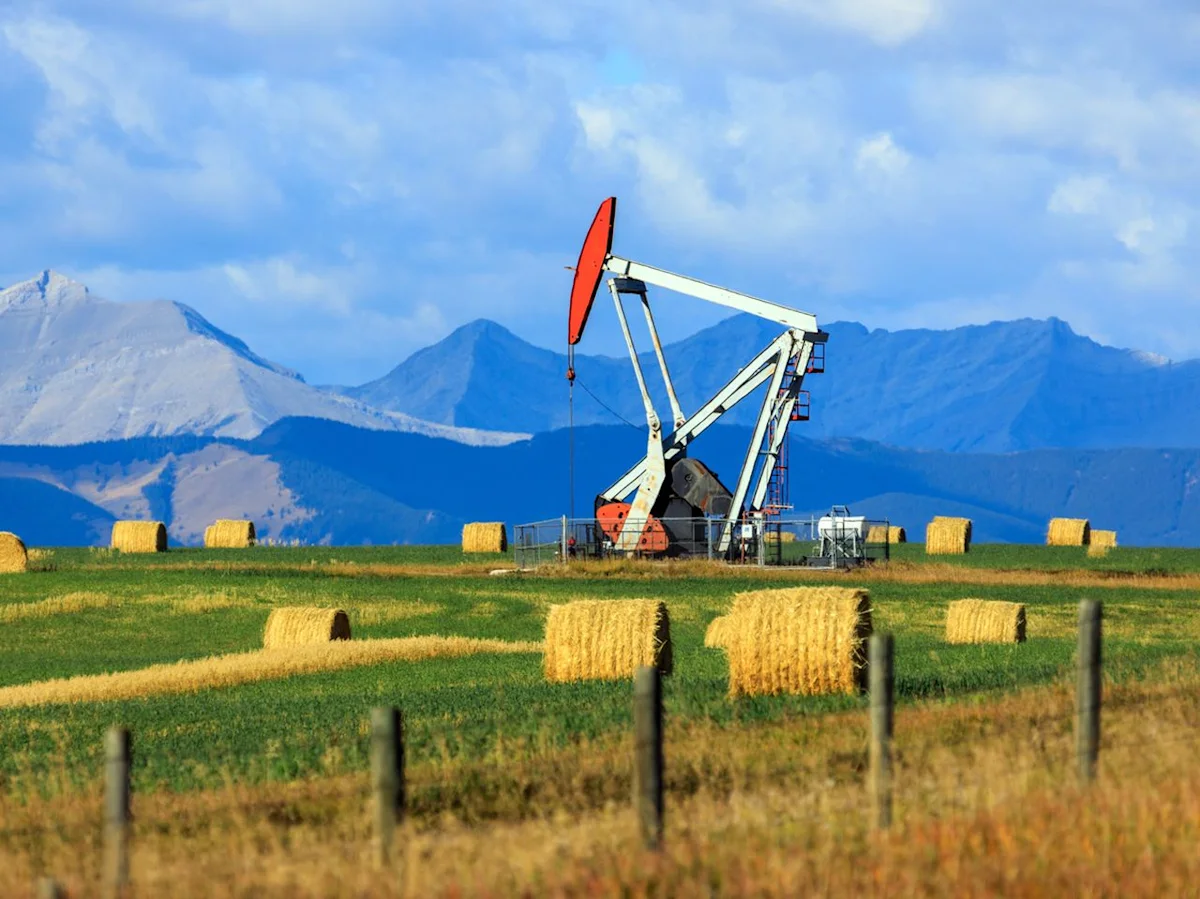
The lagging investment performance of Canada’s main energy-producing provinces not only detracts from Canada’s overall investment performance, it contributes to political friction. (Credit: laughingmangovideo/Adobe Stock)

It’s widely acknowledged that Canada’s stagnant investment performance, which began around 2014, has hurt productivity and living standards. Less discussed is the substantial disparity in investment performance among provinces since 2014, and particularly the sharp decline in energy-producing provinces such as Alberta.

One way to measure investment is to track the growth of the “net stock” of productivity-enhancing assets, which include infrastructure, plants, machinery and equipment, and intellectual property products, such as software. Investment in housing is also very important to Canadians but because it doesn’t increase their productivity directly we don’t count it here. We do adjust all the other things that go into productivity-enhancing investment for inflation.

When the net stock of productivity-enhancing assets increases, Canadians workers have more and often better tools to produce goods and services, and the resulting increased productivity raises incomes and living standards.

As noted in my new study published by the Fraser Institute, from 1990 to 2014 this net stock grew at a relatively healthy annual average rate of 2.4 per cent for Canada as a whole before declining to 1.1 per cent from 2014 to 2018 and then to just 0.99 per cent from 2018 to 2025. (Again, all numbers are adjusted for inflation).

From 1990 to 2014, all 10 provinces experienced positive growth of their net stocks, led by Alberta (4.4 per cent annual average growth rate) and Saskatchewan (3.3 per cent). All 10 provinces also experienced positive growth rates from 2014 to 2018, although Alberta’s growth rate was essentially zero while Saskatchewan’s was slightly above the national average. From 2018 to 2025, however, annual average growth was negative for three provinces (Alberta, Saskatchewan, and Newfoundland and Labrador), with Alberta suffering the worst hit: minus 1.05 per cent “growth” on an average annual basis. As a result, the net stock of productivity-enhancing assets in Alberta was actually smaller in 2025 than in 2014.

The nearby chart shows just how big the decline in the growth rate of investment was between 1990-2014 and 2018-25. Alberta suffered the biggest slowdown of all. As mentioned, productivity-enhancing investment in the province grew at a 4.4-per cent annual rate between 1990 and 2014. Between 2018 and 2025, however, its growth rate was negative 1.05 per cent. The difference between the two — which is the slowdown in its investment growth rate — was 5.45 per cent. Newfoundland and Labrador’s slowdown was 3.77 per cent, while Saskatchewan’s was 3.74. Note that in four provinces investment growth was slightly higher in the later period so their investment growth “slowdown” was negative: the rate of investment actually picked up a little.


Why did Alberta, Saskatchewan and Newfoundland and Labrador experience this sharp decline in investment? The short answer is that the Trudeau government assumed office in 2015 and for the next 10 years enacted policies that discouraged investment in the oil and gas sector, which drives economic growth in Alberta and, to a lesser extent, Saskatchewan and Newfoundland and Labrador.

The lagging investment performance of Canada’s main energy-producing provinces not only detracts from Canada’s overall investment performance (and from federal tax revenue that benefits other parts of Canada), it contributes to political friction between the federal and provincial governments, particularly between Ottawa and Alberta, and that undermines national unity.

To the extent that oil and gas production remains the major source of economic growth in Alberta, the federal government will face a challenge in its efforts to reduce carbon emissions while keeping the political underpinnings of Confederation intact. Diverging provincial economic fortunes will also discourage Ottawa’s efforts to promote interprovincial free trade, as policy-makers in provinces with lagging rates of investment and economic growth face intense pressure to protect local industries and producers from competition, even when these competitors are based in other provinces.

In this context, the federal government’s recognition of the geographically concentrated impact of national energy policies, particularly through its recent memorandum of understanding (MOU) with Alberta, is more than an acknowledgment of Alberta’s legitimate economic concerns — it’s a contribution to an economically and politically stronger Canada.

Steven Globerman is a senior fellow at the Fraser Institute.


Source link

  • Related Posts

    Sneak Peek: “Suspicion in Silver City” Keith Morrison reports on the Cassy Farrington case Friday

    IE 11 is not supported. For an optimal experience visit our site on another browser. Now Playing DATELINE FRIDAY SNEAK PEEK: Suspicion in Silver City 01:53 UP NEXT DATELINE FRIDAY…

    Why some B.C. farmers stay to fight, despite wildfire evacuation orders

    Cattle walk and graze at a ranch as the Bradley Creek wildfire burns in the distance, in Vernon, B.C., Monday, Aug. 3, 2026. THE CANADIAN PRESS/Darryl Dyck – The Canadian…

    Leave a Reply

    Your email address will not be published. Required fields are marked *

    You Missed

    Sneak Peek: “Suspicion in Silver City” Keith Morrison reports on the Cassy Farrington case Friday

    Sneak Peek: “Suspicion in Silver City” Keith Morrison reports on the Cassy Farrington case Friday

    Lion saved as cub from Ukraine war and brought to US battles rare fungal disease | US news

    Lion saved as cub from Ukraine war and brought to US battles rare fungal disease | US news

    This Week’s Awesome Tech Stories From Around the Web (Through August 8)

    This Week’s Awesome Tech Stories From Around the Web (Through August 8)

    The Best Blurring Primers for Smoother-Looking Skin

    The Best Blurring Primers for Smoother-Looking Skin

    How Troy Jackson went from Maine logger to the Democratic nominee for Senate against Susan Collins

    How Troy Jackson went from Maine logger to the Democratic nominee for Senate against Susan Collins

    Yankees get 3-2 walk-off win over Braves in 10 innings on Ryan McMahon sacrifice fly

    Yankees get 3-2 walk-off win over Braves in 10 innings on Ryan McMahon sacrifice fly