dailynewsnblog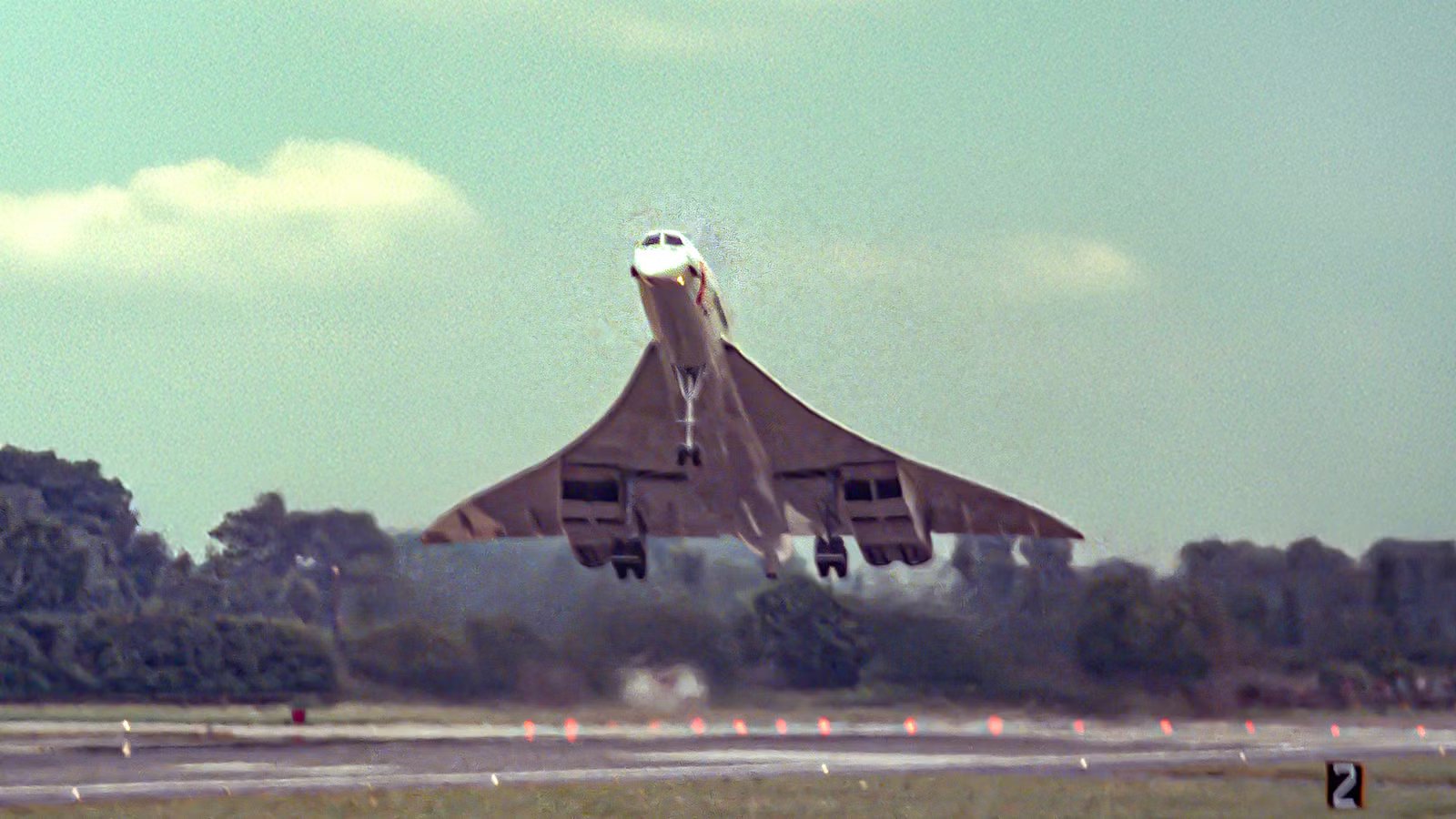
Concorde was not built to be an economic airliner in the traditional sense; instead, from start to finish, it was a national prestige program. If understood in this way, the aircraft suddenly makes sense, including how and why it was developed and why it didn’t get a successor. It also explains why it got a Soviet twin, but not American cousins.
It is often said Concorde was ahead of its time. While that may be true, it is also somewhat presumptuous. The most high-profile commercial passenger supersonic airliner in development today is the 60-80 seat Boom Supersonic Overture. History is yet to be written as to whether that program is set to make history, is still ahead of its time, or, indeed, if that time will never come. Let’s examine why Concorde didn’t have a replacement and why it wasn’t really about supersonic flight anyway.
The Result Of A Government Treaty

By the 1960s, the world had settled into a state of Cold War. The Western European powers of Great Britain and France had largely recovered from WWII, but were also much diminished on the world stage. They found themselves great powers in decline, in a world now dominated by the Soviet-US rivalry. In the commercial aviation sector, Soviet aviation was isolated and limited to the Soviet/Communist bloc, and the British and French could compete internationally.
However, smaller national aerospace companies like Sud Aviation and the British Aircraft Corporation (BAC) were struggling to compete in the commercial airliner sector against much larger US aerospace companies like Douglas, Boeing, and Lockheed. Concorde can be understood as an early step by European powers to pool resources and to pursue strategic industrial cooperation beyond purely national programs. It was an attempt to think in a ‘European’ mindset.
There was a time when the UK wanted to join the European Economic Community (the forerunner to the European Union). Concorde was the result, not of a typical business joint venture, but of a national treaty called the Anglo-French Agreement of 1962. The agreement called for “developing and producing a civil supersonic transport aircraft jointly” that would be “equal sharing” and “on the basis of equal responsibility.” The project helped set the stage for Airbus.
Why It Got A Soviet Twin

In the context of the 1960s, the United States was clearly the aerospace leader. The Europeans were looking for relevance as great powers sandwiched between the US and the Soviet Union. At the same time, the Soviets saw themselves as competing ideologically not just with the US, but with the West as a whole. Soviet ideology and insecurity demanded that the country build a supersonic passenger aircraft first.
In the early 1960s, the US’s Boeing and Lockheed were both drawing up plans to produce supersonic passenger jets, while the European powers of Britain and France had signed an agreement to produce one. It is one of the world’s ironies that countries that are the greatest rivals often end up jealously copying each other. They can end up resembling each other more closely than friends.
The Soviets rushed to build the Tupolev Tu-144 and fly it first, only for it to very publicly crash at the 1973 Paris Air Show. Concorde may have been a government prestige project, but it was designed as much as practical within the period’s engineering constraints as a useful and comfortable passenger aircraft.
The Tu-144 was hurriedly built by the Tupolev design bureau, whose experience lay primarily in military aviation rather than commercial airliners. It featured little thought of passenger comfort and practicality and only saw minimal passenger service.
Why The US Opted Out

In the 1960s, many assumed the US would produce the world’s most successful supersonic airliner. From the early 1960s, Boeing and Lockheed were each developing supersonic concepts under the US government’s Supersonic Transport program. This was launched by President Kennedy in 1963 and was intended to ensure the US remained at the forefront and did not fall behind in an expected supersonic revolution.
The FAA funded studies by Boeing, Lockheed, and General Electric during this period, with Lockheed producing the L-2000 and Boeing the Boeing 2707 concepts. These were more ambitious than the Anglo-French and Soviet projects. Over time, it became obvious that supersonic aircraft were impractical, and Congress increasingly came to understand it was funding what was shaping up to be a prestige aircraft, rather than the next big innovation in commercial aviation.
Supersonic aircraft | First flight | Max speed | Typical seating | Number built (per Heritage Concorde) |
|---|---|---|---|---|
Concorde | 1969 | Mach 2.04 | 92-128 | 20 (14 production, 6 prototypes) |
Boeing 2707 | Never flew | Mach 2.7 (planned) | 250-300 | |
Lockheed L-2000 | Never flew | Mach 2.7 (planned) | 220-250 | |
Tupolev Tu-144 | 1968 | Mach 2.35 | 120–140 | 16 (including prototypes) |
Boom Supersonic Overture | Planned 2027 | Mach 1.7 | 60-80 | 0 (prototype being built) |
Europe was looking for a major high-profile and demanding aerospace program to align their aerospace capabilities. The Soviets were paranoid about falling behind relative to the West. The US, however, was in a different position. Indeed, it was already the established leader and had plenty of other prestigious, commercially driven projects like the massive Boeing 747. Politically, it was easier for the US to cancel the program in 1971 after spending a whopping $1 billion.
The US Turned Against Supersonic Jets

One of the great ironies of the SST story is that the United States helped create the regulatory environment that made large-scale supersonic travel economically unattractive. After canceling its efforts to develop a supersonic aircraft, the US put in regulation that all but doomed whatever prospects Concorde had remaining of being economically successful.
Responding to public opposition to the sonic bomber and to environmental concerns, the FAA banned non-military aircraft from exceeding Mach 1 over the US except over designated test areas. This was the result of the 1960s Oklahoma City Sonic Boom Test, where the military flew hundreds of supersonic aircraft over the city to see the reaction to the booms. Many of the prime routes envisioned for Concorde were to the US from Europe.
This left overseas routes for supersonic aircraft operators. For a while, the US completely banned Concorde, forcing its inaugural British flight to fly to Bahrain and the French flight to go to Brazil via Senegal. Later, the US allowed it to fly to Washington Dulles and to New York.
However, the latter case triggered a legal battle where the Port Authority of New York and New Jersey imposed a ban on Concorde as it conducted its own studies. British Airways and Air France challenged the ban in federal court. Ironically, this became the primary designation and signature route for Concorde.
Ahead Of Its Time

In the end, only 14 production Concordes were built, including six for the national flag carriers: British Airways and Air France. These were practically gifted to the airlines by the national governments, as it wasn’t feasible for the airlines to purchase the aircraft and pay to operate them. That said, they did become profitable with British Airways, but without it paying the capital cost and having subsidies.
The only order that wasn’t canceled before aircraft were built was the order by Iran’s Shah for VIP transport. The Shah was overthrown in 1979, and the aircraft were passed to the national airlines. No airline ever purchased a supersonic passenger jet for profit-making. The commercial failure became a self-compounding problem.
The more airlines canceled their orders, the more expensive each aircraft would be, the less funding there would be to upgrade them, and the more risky they would be. Another issue was the fuel shocks of the 1970s, which made fuel-efficient aircraft much more attractive.
The engineering of the 1960s and 1970s struggled with producing a supersonic aircraft that could mitigate its sonic boom to an acceptable level. It was also insufficient to produce durable supersonic engines and aircraft with acceptable maintenance. In the context of large subsonic aircraft like the Boeing 747, McDonnell Douglas DC-10, and Lockheed L-1011, they were impractical.
Why It’s Finally Changing

Technology has moved on, and now some consider small, premium supersonic passenger flights economically practical. Although this is not a universal belief. In 2025, the White House instructed the FAA to remove the supersonic flight ban overland, although actually lifting the ban takes time. If followed through, this will significantly open up the potential routes. One of the biggest changes is the large steps that have been taken to reduce the sonic boom.
This is partly thanks to decades of work carried out by NASA (X-59 QueSST). The current supersonic flagship program is Boom Supersonic’s Overture. But it is important to note the market it is targeting. It is not intended to rival supersonic mainstream airliners like the Boeing 787 in the way that Concorde did. It is better understood as a scaled-up commercial business jet intended for very specific routes that can attract passengers willing to pay a very high premium.
Another leading program is the Spike Aerospace S-512, which is actually a business jet. Interestingly, the Chinese state-run COMAC company has revealed it plans to produce a supersonic passenger jet. Unlike the Tu-144, analysts generally view any future Chinese supersonic project as being driven by a combination of commercial ambitions, technological development, and national prestige. With that being said, even the US Air Force is considering ordering examples of Overture as VIP aircraft.