dailynewsnblog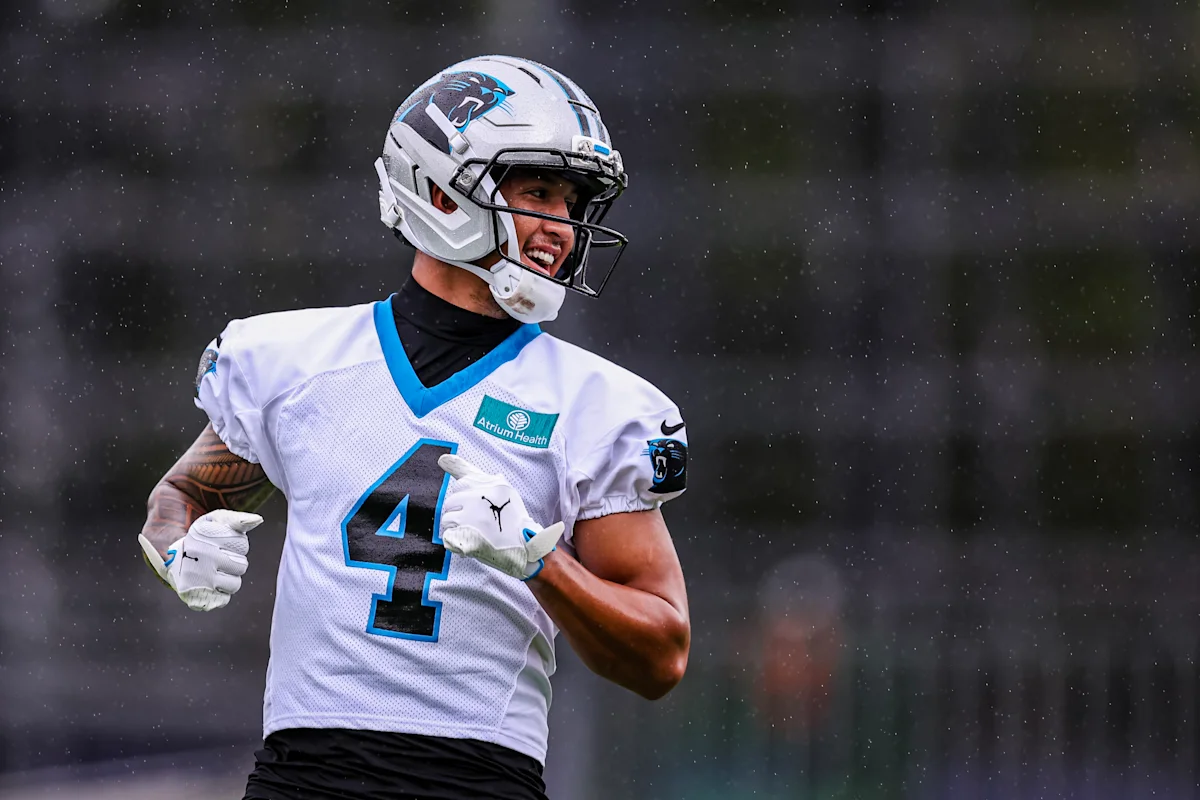
Everybody wants to find the next Puka Nacua. Which wide receiver is going to take the leap? Who is going to go from being viewed as a good receiver, a promising player or someone we are simply hopeful about, to become a true difference-maker who can tilt an entire fantasy football season?
Join or create a Yahoo Fantasy Football league for the 2026 NFL season
Advertisement
But what does “elite” actually mean? Last season was unusually soft at the position, with the WR12 averaging just 11.78 half-PPR points per game. Over the past five years, the average WR6 has scored roughly 14.5 points per game. That is the standard I am using here.
We are not just looking for receivers who can finish inside the top 12. We are looking for players who can push themselves into the tier right behind the absolute best at the position.
It is crazy to think about the season George Pickens had last year and still see his name included on a list of potential breakout stars. Pickens entered the season with people questioning whether he could coexist with a new team, remain motivated and consistently play within the structure of an offense. He squashed those concerns by turning 137 targets into 93 receptions, 1,429 yards and nine touchdowns. His 14.44 half-PPR points per game essentially reached the elite benchmark already and his underlying efficiency was just as impressive. Pickens produced 0.633 EPA per target, 2.35 yards per route run and 3.42 yards per route against man coverage.
Advertisement
The money-down production is what really stands out. Pickens converted 53.3% of his targets into first downs and that rate climbed to 62.8% on third or fourth down. When Dallas needed a play to keep a drive alive, Pickens was not just getting the football — he was converting. He also produced those numbers despite seeing the lowest rate of open-coverage targets in this group. Only 26% of his opportunities came with open coverage while 29% came with a defender in tight coverage. Add five pass-interference calls that created another 120 yards and you are looking at a receiver who consistently created value even when the completed pass never showed up in the box score. That ability does not simply get placed back into the bottle.
The concern is obvious. CeeDee Lamb is healthy and my projections have him leading Dallas with 155 targets compared to 128 for Pickens. But that still leaves Pickens playing nearly every snap in an offense that should throw the ball a significant amount and use three-receiver sets at a much higher rate. Pickens also gets a full offseason and training camp working with Dak Prescott after proving he could immediately produce inside this offense.
My ceiling projection has Pickens at 16.56 half-PPR points per game, which would place him firmly inside the elite tier. The talent is there, the efficiency is there, the volume is there and the offense is there. I would not be shocked if we look up at the end of the season and Pickens has led Dallas in receiving again.
Advertisement
The Tetairoa McMillan case is a little trickier because part of the bet has to be placed on Bryce Young continuing to mature in his fourth NFL season. What we do not have to project is whether McMillan can immediately command volume. He earned 122 targets, a 25.4% target share and 43.3% of Carolina’s air yards as a rookie. He turned that opportunity into 70 receptions, 1,014 yards and seven touchdowns despite playing in an offense that frequently found itself behind schedule. McMillan also received 52 targets on third or fourth down, the most of any receiver in this group. Carolina was already treating him like the player responsible for keeping its passing game alive.
The path to another massive workload may be the clearest part of his projection. Third-round pick Chris Brazzell is out for the season, Xavier Legette has been dealing with injuries in practice and Carolina does not have a tight end who should command a meaningful portion of the passing game. I am also not convinced that a running back who has yet to play a full NFL season will suddenly take significant opportunities away from McMillan.
Advertisement
The remaining question is whether that volume can become more efficient. McMillan produced 1.86 yards per route run with a 57.4% catch rate and nearly 70% of his targets came while Carolina was trailing or tied. Two out of every five targets also arrived on obvious passing downs, allowing opposing defenses to anticipate where the ball needed to go. If Young and the Panthers can create more early-down opportunities while allowing McMillan to retain his target share, the ceiling opens quickly.
I have him projected for 12.45 points per game with a 15.38-point ceiling. The volume, usage and opportunity are already in place for McMillan to push himself alongside the premier receivers in football.
Ladd McConkey’s case requires us to separate his performance from the environment around him. He ran 83 more routes in 2025 than he did the previous season but produced 360 fewer receiving yards, finishing with 66 receptions, 789 yards and six touchdowns. The immediate reaction is to view that as regression from the player, but the structure of the Chargers’ passing game tells a different story. Nearly 35% of McConkey’s targets came while Justin Herbert was under pressure, almost twice the rate of the other receivers in this group. The average time to throw on those targets was 3.00 seconds, the longest of the five, while McConkey caught only three of his 14 deep targets.
Advertisement
The Chargers now bring in Mike McDaniel, who has already shown what his offense can do for Tyreek Hill and Jaylen Waddle. McConkey converted 41.1% of his targets into first downs when used with pre-snap motion compared to only 24% without it. That matters because McDaniel’s offense is built around timing, movement and creating space before the football is snapped. Keenan Allen is also gone, pushing McConkey’s projected target share from 19.5% to 25.9% in my model and creating a path to 145 targets. The Chargers should also have a healthier offensive line after using one of the highest totals of offensive line combinations in the league last season.
There are still other pieces in the offense. Quentin Johnston will have a role, the Chargers have two capable tight ends and their rushing attack should remain important. My projections have 22% of the team’s targets going to the tight end position and only 60.3% going to wide receivers. Still, McConkey is playing with a quarterback who has already thrown for 5,000 yards, can attack every quadrant of the field and has the athleticism to extend plays when the original design breaks down.
McConkey’s ceiling reaches 15.44 half-PPR points per game. With limited high-end target competition, better protection and one of the league’s most creative coordinators, the path to an elite third season is not difficult to see.
Advertisement
The opportunity for Emeka Egbuka is obvious. We saw how dangerous he could be during the beginning of his rookie season before his production tailed off during the second half. Even with that uneven finish, Egbuka earned 128 targets and produced 940 yards with six touchdowns. Now Mike Evans is gone and the responsibility for leading Tampa Bay’s receiving attack falls on the former first-round pick. The Buccaneers drafted Egbuka to eventually become that player and he now has the opportunity to follow the path of former Ohio State teammates Jaxon Smith-Njigba, Chris Olave and Garrett Wilson.
The full-season efficiency numbers show why the ascension is not automatic. Egbuka caught only 49.6% of his targets, converted 26.6% of them into first downs and produced only 0.91 yards per route against man coverage. Compare that first-down rate to Pickens at 53.3% on a similar number of targets, and the gap becomes impossible to ignore. The opportunities were there, but Egbuka did not consistently turn them into successful offensive plays. He did show his explosive ability, however, by catching 10 of 27 deep targets for 362 yards, giving Tampa Bay something to build around as his role expands.
Zac Robinson now takes over the offense and Tampa Bay projects to increase its 11-personnel usage from 61% to 69%. Egbuka can play outside, work from the slot and be moved around the formation in ways that create more opportunities than the late-career version of Evans could offer. My projections do not give Egbuka a dramatic target-share increase, moving him from 23.5% as a rookie to 23.4% this season, but they do give him 8.1 touchdowns with a ceiling of 11.8.
Advertisement
His fantasy ceiling lands at 14.2 half-PPR points per game. The leap has to come from better efficiency and more consistent production against man coverage. Baker Mayfield is playing for another contract and Egbuka should be the focal point of an offense expected to compete for the NFC South.
The alpha role is available. Now Egbuka has to prove he is ready to own it.
Jaylen Waddle, Broncos
We have already seen Jaylen Waddle play at an elite level. He posted three consecutive high utilization scores from 2021 through 2023 before his usage and efficiency declined over the past two seasons. Last year, he still produced 910 yards despite running only 404 routes, or 25.3 per game, the lowest route volume of anyone in this group. Miami also changed how it deployed him. Waddle’s average depth of target climbed to a career-high 13.06 yards and his air-yard share rose to 39.6% while his yards after the catch fell to a career-low 3.56 per reception. Miami took one of the NFL’s most dangerous open-field players and increasingly used him as a vertical receiver.
Advertisement
Denver offers the opportunity to correct that. Sean Payton now has a receiver who can win short, intermediate and down the field while Bo Nix has already shown a willingness to distribute the football quickly. Waddle converted 48% of his targets into first downs last season, the second-best rate in this group, and his 2.59 yards per route against zone coverage led all five receivers. He also led the group in play-action target rate at 37% and pre-snap motion rate at 61%. Those are not weaknesses that need to be repaired. They are strengths that Payton can immediately build into the Broncos’ passing attack.
My projections represent the cautious side of the argument. I have Denver falling from 612 pass attempts to 573 while Waddle receives the smallest room share of the five receivers at 21.2%. That still produces 122 targets, but Courtland Sutton, Evan Engram, Troy Franklin and Denver’s running backs all remain involved. Waddle’s projected ceiling of 13.64 points per game is also the only one in this group that fails to clear the 14.5-point elite benchmark. Still, Sutton has openly discussed taking a step back to help Waddle and the training camp reports have described a different caliber of receiver operating inside Denver’s offense.
Advertisement
Cost against potential outcome, there may not be a better wide receiver bet in fantasy football. The talent has already been proven and the fit feels close to perfect.
Bottom Line
These five receivers do not all have the same path to the elite tier. Pickens is already knocking on the door, McMillan has the volume, McConkey has the quarterback and scheme, Egbuka has the clearest opening and Waddle has already shown us the talent.
Pickens is the safest bet to get there. Waddle is my favorite bet when factoring in draft cost and potential outcome. McMillan may have the clearest path to monster volume. McConkey and Egbuka need more to break right, but the upside is real.
I am not waiting until the leap becomes obvious. By then, the draft price is gone. These are the receivers I am willing to bet on now.