dailynewsnblog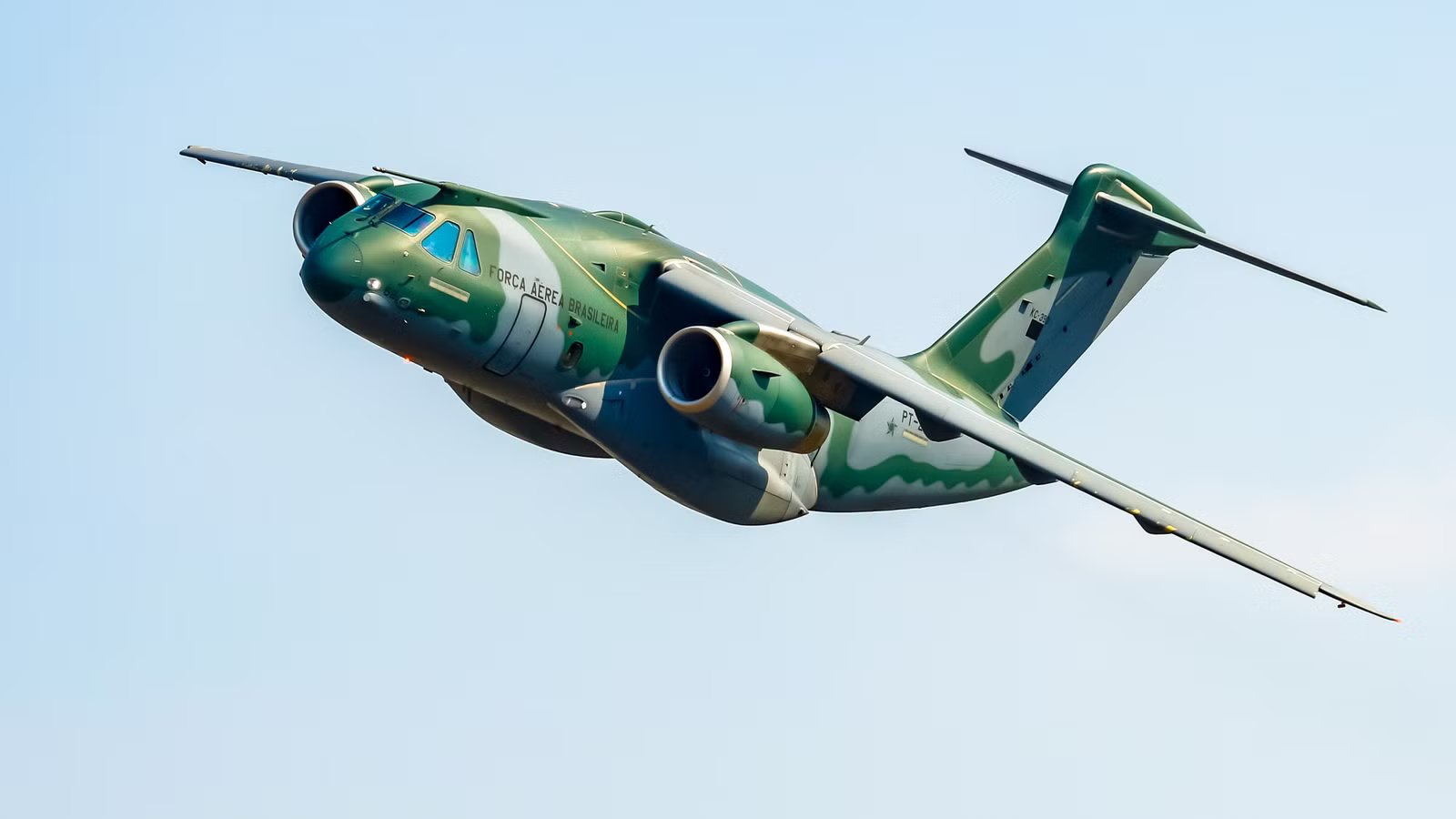
While Brazil is typically not considered a ‘Western’ country, its Embraer C-390 Millennium is part of the Western supply chain, and it is marketed to various Western countries as an alternative to the Lockheed Martin C-130J Super Hercules. It is seen as a geopolitically acceptable military aircraft for NATO allies to purchase in a way that Chinese and Russian military aircraft are not.
Since entering service in 2019, the C-390 has proven popular with smaller air forces around the world. However, while it is popular, it is not the only military airlifter affordable for smaller air forces. The Royal New Zealand Air Force has completed its purchase of five C-130J Super Hercules, various small air forces purchase the Airbus C-295, and even Luxembourg has purchased the large Airbus A400M Atlas.
The Embraer Is A Joint Western Effort

While the Embraer C-390 Millennium is marketed as a Brazilian military airlifter, it relies on an international supply chain. From an industrial perspective, it can be understood as a joint Brazilian, US, and European effort. Brazil manages the aircraft’s design, systems integration, final assembly (primarily at Gavião Peixoto and São José dos Campos), fuselage, wings, flight testing, and other components and systems.
Overall, Brazil likely contributes the largest share of the aircraft’s value through design, engineering, systems integration, major aerostructures, software development, certification, flight testing, and final assembly. The United States likely contributes around a quarter to a third of the aircraft’s production value, with the most important contribution being its IAE V2500-E5 turbofans.
These turbofans are produced by International Aero Engines, a multinational consortium comprising Pratt & Whitney (US), MTU Aero Engines (Germany), and Japanese Aero Engines Corporation, with Pratt & Whitney holding the largest workshare. The US also supplies avionics, flight control systems, and various subsystems.
Czechia may contribute up to 10% of value through the rear fuselage, cargo ramp, doors, and wing leading edges. Portugal is another major industrial partner through OGMA, which manufactures components including the center fuselage and horizontal stabilizer structures. The landing gear comes from Germany. Other contributors include France, the United Kingdom, Spain, and others. In aggregate, the European contribution may be similar to that of the United States.
The Embraer C-390’s Niche

The Embraer C-390 occupies a niche between the Airbus C295 (previously CASA C-295) tactical airlifter and the larger Airbus A400M Atlas tactical/strategic airlifter. Airbus’s C-295 is a medium-range twin-engined turboprop transport with the capacity to carry 70 soldiers, 48 paratroopers, or five standard 108″ pallets of cargo. It has a maximum payload of 19,842 lbs (9,000 kgs) and a ferry range of 3,100 nautical miles.
The A400M is a four-engine turboprop military transport aircraft able to lift 116 fully equipped troops or paratroops and has a ferry range of 4,700 nautical miles. Its max payload is 81,600 lbs (37,000 kgs). Meanwhile, the C-390 is a twin-engined, jet-powered transport designed to carry 80 troops or 66 paratroopers, and has a ferry range of 3,370 nautical miles. It has a maximum payload capacity of 57,320 lbs (26,000 kgs).
Transport aircraft are generally classified by their size, payload, range, and operational role rather than by engine type. The fact that the C-390 is jet-powered while both the C295 and A400M use turboprops does not, by itself, determine where they sit within the military airlift market.
With that being said, the jet-powered C-390 is notable for being faster than turboprop aircraft in its class with a cruising speed of around Mach 0.8. At the same time, the A400M is designed to operate from very short, rough, semi-prepared runways with heavy loads, while the C-390 lacks some of that capability.
The Competitor: The C-130J Super Hercules

The closest direct C-390 competitor is generally accepted to be the Lockheed Martin C-130J Super Hercules, which is a generational and comprehensive upgrade over the older C-130H. The C-130J-30 has a payload capacity of 44,000 lbs (19,958 kg) and carries up to 92 troops or 64 paratroopers. It also has a ferry range of 4,000 nautical miles depending on the configuration. One of the C-390’s primary advantages is speed, being around 25–30% faster and carrying a larger payload.
In the export market, the Super Hercules and the Millennium are frequently competing for the same customers, often to replace older C-130H legacy Hercules. In these competitions, sometimes the C-390 has won, and at other times, countries have selected the upgraded Super Hercules. The Super Hercules also has better austere-condition capabilities.
Medium airlifters (per Lockheed Martin, Airbus, Embraer) | Airbus C-295 | Lockheed Martin C-130J-30 | Embraer C-390 |
|---|---|---|---|
Max payload | 19,842 lbs (9,000 kgs) | 44,000 lbs (19,958 kg) | 57,320 lbs (26,000 kgs) |
Paratroopers carried | Up to 48 | Up to 92 | Up to 80 |
Ferry range | 3,100 nautical miles | 4,000 nautical miles | 3,370 nautical miles |
Powerplant | 2x Pratt & Whitney Canada PW127G | 4x Rolls-Royce AE 2100D3 turboprops | 2x IAE V2500-E5 turbofans |
It should be noted that this is not a neat capabilities-versus-requirements contest, and the C-130J has inherent advantages. The C-390 is a comparatively new aircraft being produced in lower numbers and is backed by Brazil’s Embraer. The Super Hercules has economies of scale, is very mature and low risk, is easy to transition to from the C-130H, and has high confidence in sustainment and upgrades for decades to come.
The C-390’s Growing List Of Customers

While the Embraer C-390 may be a comparatively risky aircraft compared with the Lockheed alternative, this erodes as time passes and more customers purchase it. In aviation, there is a phenomenon where success begets success due to herding mentality, and programs are more feasible to sustain and upgrade as they reach a higher mass. Air forces can also enjoy more interoperability with more allies.
So far, the operators of the C-390 are Brazil (19 examples), Hungary (two examples), Portugal (five examples), and the Czech Republic (two examples). Future operators include Austria (four examples), the Netherlands (at least six), South Korea (three), Sweden (four plus seven options), Uzbekistan (unknown number), and the UAE (ten with options for ten more). Other potential customers include India, Saudi Arabia, Chile, Greece, Romania, and Colombia.
These countries have aging fleets of legacy C-130s and/or Antonov transports that will need to be replaced. Colombia has significant ties to Embraer. However, it is also mixed up with the country’s politics. Outgoing US-sceptic Colombian President Gustavo Petro has recently placed orders for the immediate acquisition of two Embraer C-390 Millennium transport aircraft, but it is unclear if the incoming US-friendly President-elect will reverse these actions.
The End Of Ukraine’s Antonov

The other great competitor for medium-sized military transport aircraft was Ukraine’s Antonov. Antonov produced a large number of affordable military transport aircraft during the Cold War. After the collapse of the USSR, Antonov fell into hard times, and its production numbers fell but continued at a lower level. Production continued until around 2014 when the conflict between Ukraine and Russia began. Ukraine sanctioned Russia, and production of new transports largely came to a halt.
According to Dallas Analytics, the last aircraft was produced in 2016. In 2018, Reuters reported that “relations between Ukraine and Russia collapsed following the annexation of Crimea in 2014 and Antonov, which imported more than 60% of its plane parts from Russia, halted serial production two years later.” It also became more difficult for Russia to service its existing fleet of Antonov An-22, Antonov An-26, Antonov An-30 and Antonov An-72 transports.
Of Russia’s fleet of 368 Antonov series aircraft used by the military, National Guard, and FSB, 143 require repair. Russia is now looking at the prospect of being forced to retire its medium Antonov aircraft without replacement. While Ukraine was not historically considered a Western country, the country’s drift into the Western fold could have made its Antonov An-178 series aircraft acceptable options for some Western and Western-aligned countries. The Antonov An-178 could have competed with the C-390.
The Typical Cost Of A C-390 Millennium

Estimating the cost of the C-390 is challenging as Embraer and its customers rarely disclose the per-unit price of the aircraft. Instead, they disclose the bundle cost. One of the best disclosed prices was the Czech Republic, which said it was paying CZK 11.3 billion, or around $480-500 million, for two aircraft ($240-$250 million) with all the extras (including training, simulators, spares, long-term support, etc.).
Defense News reported Austria would purchase four C-390s for $532 million in 2023, or around $139–161 million per aircraft. This total price was around the same price as the Czech Republic’s deal for two units. It is unclear what was included. While the cost of the C-390 is hard to find, Austria gave one of the best estimates, saying in 2023 that “an aircraft of this type costs between 130 and 150 million euros ($148-$171 million) to procure.”
Overall, when it comes to cost, the small Airbus C-295 is the least expensive, but also much smaller. The Airbus A400M is in a different category and costs much more. The most similarly priced transport is the Lockheed Martin C-130J-30. New Zealand paid $880 million ($1.5 billion NZD) for five new C-130J-30s in 2020. The average cost was $176 million with extras.