dailynewsnblog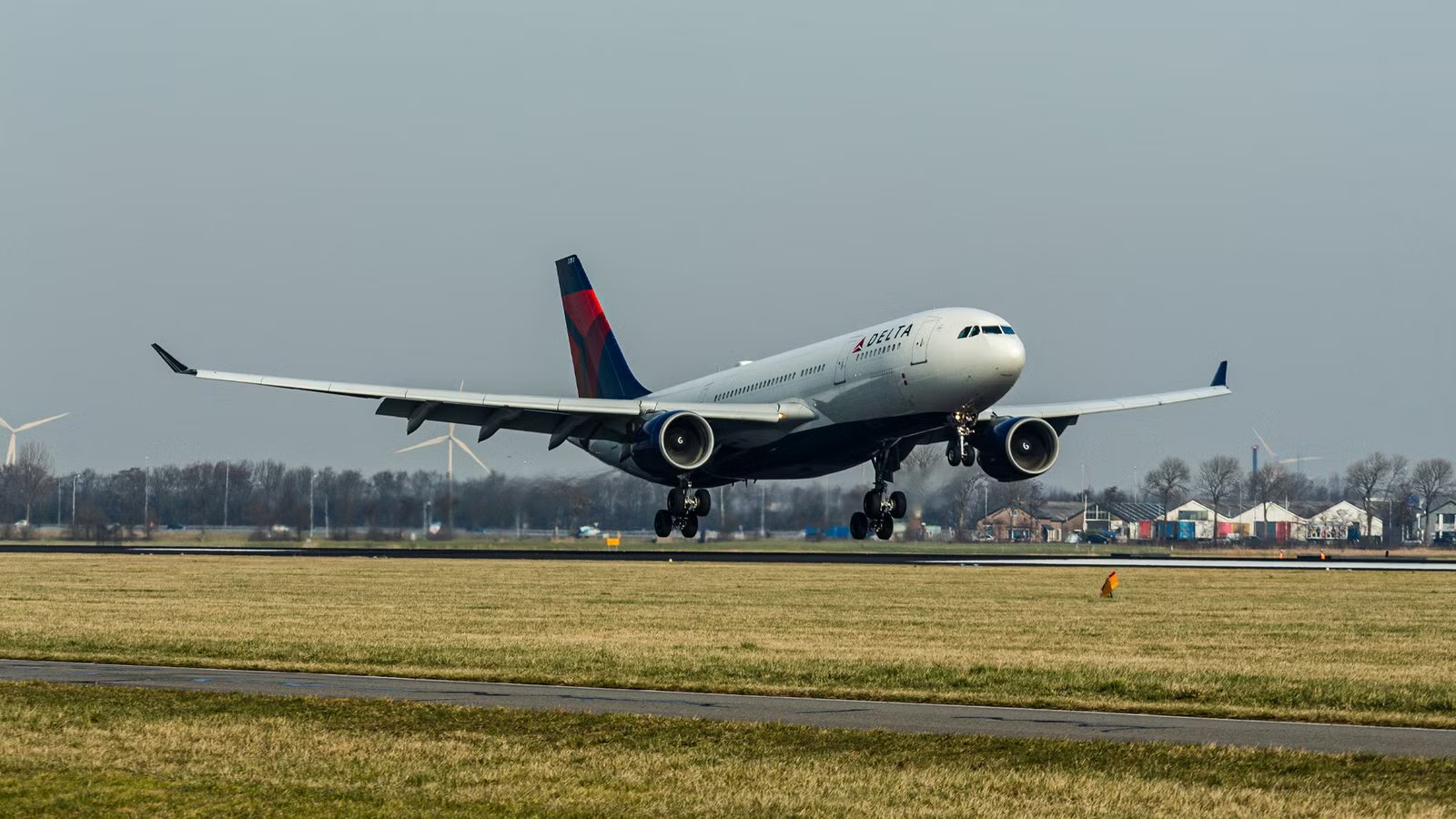
Airline mergers can be operational, logistical, and strategic nightmares. One example is planes, as aircraft are an airline’s most expensive asset, coming with high operating, maintenance, and ownership costs. Airline mergers often introduce multiple fleet types that have no commonality with one another and may also be redundant.
Some carriers may even dump the new aircraft types after the merger, as was the case with Alaska Airlines’ acquisition of Virgin America (Virgin America’s Airbus A320s) or Southwest’s acquisition of AirTran (AirTran’s Boeing 717s). With its 2008 merger with Northwest Airlines,  Delta Air Lines found itself operating several new types.
Northwest flew the Airbus A320 family, the A330, Boeing 747, 757, and McDonnell Douglas DC-9, while Delta flew the 737, 757, 767, 777, MD-80, and MD-90. The DC-9s were retired six years later and the 747s nine years later, while the A320s stuck around. However, an A320 is essentially a commodity that delivers nearly identical economics as the 737. The A330s also stuck around, but notably, they’ve arguably become Delta’s most important widebody.
The A330s That Delta Inherited

Northwest Airlines was the first US carrier to order the Airbus A330, when it ordered the A330-300 and A340-300 in 1987, which was firmed up in 1989. The A340-300s were to start coming in 1993, while the A330-300 would have begun arriving in 1994, but changes to the A340 program, followed by financial issues, led to the entire order being canceled in the early 1990s.
US Airways ended up being the US launch operator, but Northwest would later order 24 A330-300s in 2000, which was later revised to 21 A330-300s and 11 A330-200s. Northwest took delivery of the 32 A330s between 2003 and 2007, with some of them essentially being brand new by the time the carrier merged with Delta.
The carrier specced the A330s with the Pratt & Whitney PW4000, which was beneficial for Delta as the carrier already had another variant of the PW4000 on its Boeing 767-300ERs. These aircraft were rated with a Maximum Takeoff Weight of 233 tons, enabling them to operate most transatlantic routes, while the A330-200s could also handle some transpacific flights. Upon their integration into the combined Delta fleet, the A330s were gradually moved off of transpacific routes.
Instead, they operated transatlantic flights alongside Delta’s 767s. Initially concentrated at Northwest’s hubs in Detroit and Minneapolis, the A330s soon found themselves also flying out of the legacy Delta hubs in Atlanta and New York. The A330-300s initially featured 298 seats while the A330-200s were equipped with 239 seats, but they were later reconfigured with 293 and 234 seats, respectively, then to 282 and 223 seats, respectively.
The Advantage Of The Airbus A330

The A330 is primarily used by Delta as a transatlantic aircraft, operating in this role alongside the Boeing 767. The two planes were direct competitors while the passenger 767 was still in production, but the A330 proved far more popular after it entered service because it’s a significantly more economical aircraft. The 767 burns less fuel, therefore coming with lower operating costs, but the A330 is far larger and earns significantly more revenue, bringing in higher profits as a result.
The A330-300 may hold 60 to 70 additional passengers over the 767-300ER, and around 40 additional passengers compared to the 767-400ER. The 767-400ER has a larger cabin than the A330-200, but it has significantly less range. What’s more, the 767 family has greatly reduced cargo capacity compared to the A330, further restricting revenue. As such, the A330 began stealing market share away from the 767, and the former is now Delta’s most useful plane on transatlantic routes.
The 767 works in Delta’s fleet today by serving lower-demand destinations in Europe as well as premium transcontinental routes, roles that it can be flown in viably in part because Delta is growing and the fleet is fully paid off. As a whole, however, the A330 is simply a more lucrative aircraft for Delta to operate across the Atlantic, earning it more revenue per departure. The Atlanta-based carrier quickly saw results with the fleet, and later proved to be one of the type’s most important customers.
Ordering Ten More A330s

The A330-300 boasts fantastic operating economics, able to accommodate nearly as many passengers as a Boeing 777-200ER while burning far less fuel. The drawback is that the aircraft has traditionally been range-limited, with the very first A330-300s unable to reliably cross even the Atlantic Ocean in most cases. When the A330-200 debuted, however, Airbus bumped the A330-300’s MTOW, and has continued to gradually improve the aircraft to transform it into a true intercontinental workhorse.
In 2013, Delta Air Lines ordered ten additional A330-300s, bringing the size of that subfleet to 31 units while its overall A330 fleet would grow to 42 examples. Delta was the launch customer for the 242-ton variant of the A330-300, which boasts an impressive range of 6,340 NM (11,750 km), longer than even the 767-300ER. Notably, Delta equipped these aircraft with the General Electric CF6-80, which is also found on some of Delta’s 767-300ERs and all 767-400ERs, but none of its older A330s.
Delta Widebody Fleet | Engine Model |
|---|---|
Airbus A330-200 | Pratt & Whitney PW4000 |
Airbus A330-300 | General Electric CF6 Pratt & Whitney PW4000 |
Airbus A330-900 | Rolls-Royce Trent 7000 |
Airbus A350-900 | Rolls-Royce Trent XWB |
Boeing 767-300ER | General Electric CF6 Pratt & Whitney PW4000 |
Boeing 767-400ER | General Electric CF6 |
These are among the most efficient and capable A330-300s in the world, able to reliably operate routes like New York to Tel Aviv year-round or from Atlanta to Southern Europe with a full load. They were delivered from 2015 to 2017, making them among the youngest A330-300s in the world as well. While the carrier no longer relies on them to the same extent as initially, it shows that Delta became highly committed to the A330 years after receiving the initial 32 units, and it wouldn’t stop there.
Delta & The Airbus A330neo

Delta was an early advocate for an improved A330 with 787 engines, and after seeing broader market demand for a widebody smaller than the A350 that was also optimized for shorter routes, Airbus launched the A330neo. It’s essentially the same as the prior A330, but equipped with the Rolls-Royce Trent 7000 (a bleed-air derivative of the 787’s Trent 1000 engines), while also featuring new wingtips, avionics improvements, and the Airbus Airspace cabin as standard.
Delta initially ordered 25 A330-900s, alongside 25 A350-900s, and these two types are now the mainstays of Delta’s widebody fleet, while the airline later canceled its inherited order from Northwest Airlines for 18 Boeing 787-8s. The type was initially deployed out of Delta’s then-new Seattle hub on transpacific flights, but is now being shifted to operate transatlantic routes and is commonly found at nearly all of Delta’s large hubs.
Since the initial order, Delta has continued to increase its order book for the A330-900, and now operates 39. Most recently, the Atlanta-based carrier ordered 16 additional units in January 2026, bringing its grand total to 55 examples. These planes are set to begin arriving in 2029 and will reportedly feature a new premium-heavy configuration to serve destinations such as London. In addition, Delta holds 20 options for additional Airbus widebodies, which can be used for more A330-900s or more A350-900s.
The Future Of Delta’s A330 Fleet

The A330 is now Delta’s largest widebody fleet, as the carrier has 81 examples split across three variants, and it is now the world’s largest operator of the A330 family. In the future, the A330-900 will displace older A330s and 767-400ERs onto routes currently flown by the 767-300ER, which will be retired.
They’re already a mainstay on the airline’s transatlantic network and will continue to serve this role for decades, while the next 16 examples will be its primary aircraft for London if they do come with a premium-heavy layout as rumored. The airline’s A330-200s and A330-300s aren’t that old, which is why the carrier will soon begin retrofitting them with new DeltaOne Suites, as well as updated PremiumSelect and Comfort/Main seats.
Aircraft That Will Feature DeltaOne Suites | Number Delivered + On Order |
|---|---|
Airbus A330-200 | 11 |
Airbus A330-300 | 31 |
Airbus A330-900 | 55 |
Airbus A350-900 | 59 |
Airbus A350-1000 | 20 |
Boeing 787-10 | 30 |
The DeltaOne Suites will be updated versions of those currently found on the A330neo, while the airline will also be debuting larger screens in all classes and snack bars for DeltaOne. The first retrofitted example is expected to enter service in 2027, and with this $1 billion project, it’s expected that the fleet will remain in service for at least another decade.
Delta recently ordered 30 Boeing 787-10s with 30 options to serve as a new high-capacity widebody for its transatlantic and South American routes. These planes will presumably displace A330-900s, and while most of the order is primarily intended for growth, it’s expected that the option orders combined with the Airbus options will eventually facilitate the retirement of the 767-400ER and later, the legacy A330 fleet. However, this would not be until the late 2030s at the earliest.
Catch what other trackers miss
Emergency squawks, holds, NOTAMs — live signals, no signup.
Open tracker
Catch what other trackers miss
Emergency squawks, holds, NOTAMs — live signals, no signup.
Open tracker