dailynewsnblog
The new tech looks impressive, but most of it will be gobbled up by AI data centers.
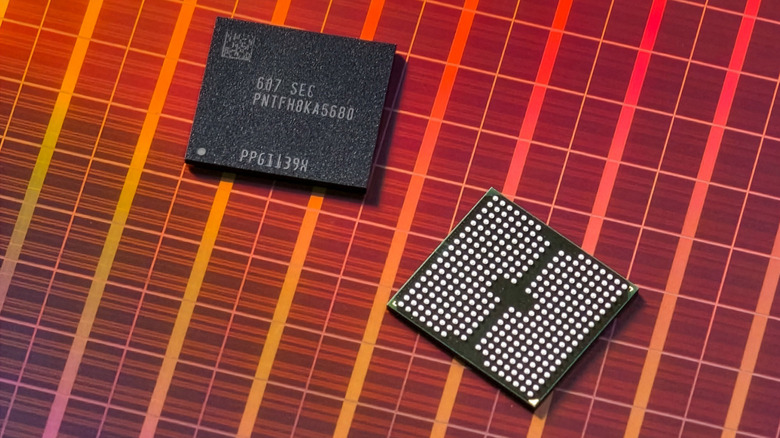
It used to be nice when Samsung announced its latest 3D memory or V-NAND storage, as we could all look forward to our PCs booting faster and files loading quicker. Now, the company has just announced its new next-gen memory and storage, and while the new tech looks impressive, it’s depressing knowing that most of it will be gobbled up by AI data centers.
At the Future of Memory and Storage (FMS) show in Santa Clara, Samsung unveiled the first concept models for zHBM, based on HBM memory used primarily in data centers, AI accelerators and a small number of high-end GPUs. zHBM is a new memory architecture that vertically stacks HBM directly above AI accelerators (rather than alongside them as before), helping boost performance up to eight times. It also uses next-generation wafer bonding tech, allowing over 10 times the memory density of current HBM5 tech while increasing energy efficiency threefold.
Samsung also unveiled a new type of V-NAND memory used in SSDs, memory cards and other types of storage. Called V10 BV-NAND, it uses the company’s new bonding V-NAND architecture to stack more than 400 layers of memory cells. This increases memory density by around 58 percent over the previous V9 generation, while boosting read, write and I/O performance.
The company also introduced zNAND-O, a next-gen V-NAND solution combining “high space efficiency, improved I/O performance and low latency, aimed at edge AI environments. Finally, Samsung showcased LPDDR5X-PIM, the industry’s first LPDDR memory with processing-in-memory technology, built to perform data processing within the memory itself to improve efficiency.
Alongside SK Hynix, Samsung is one of two companies who control the majority of memory production. As Engadget’s readers well know, both companies are failing to keep up with demand for memory created by the current AI bubble. That in turn is leading to insane prices for electronics of all kinds, ranging from gaming consoles to smartphones to laptops.