dailynewsnblog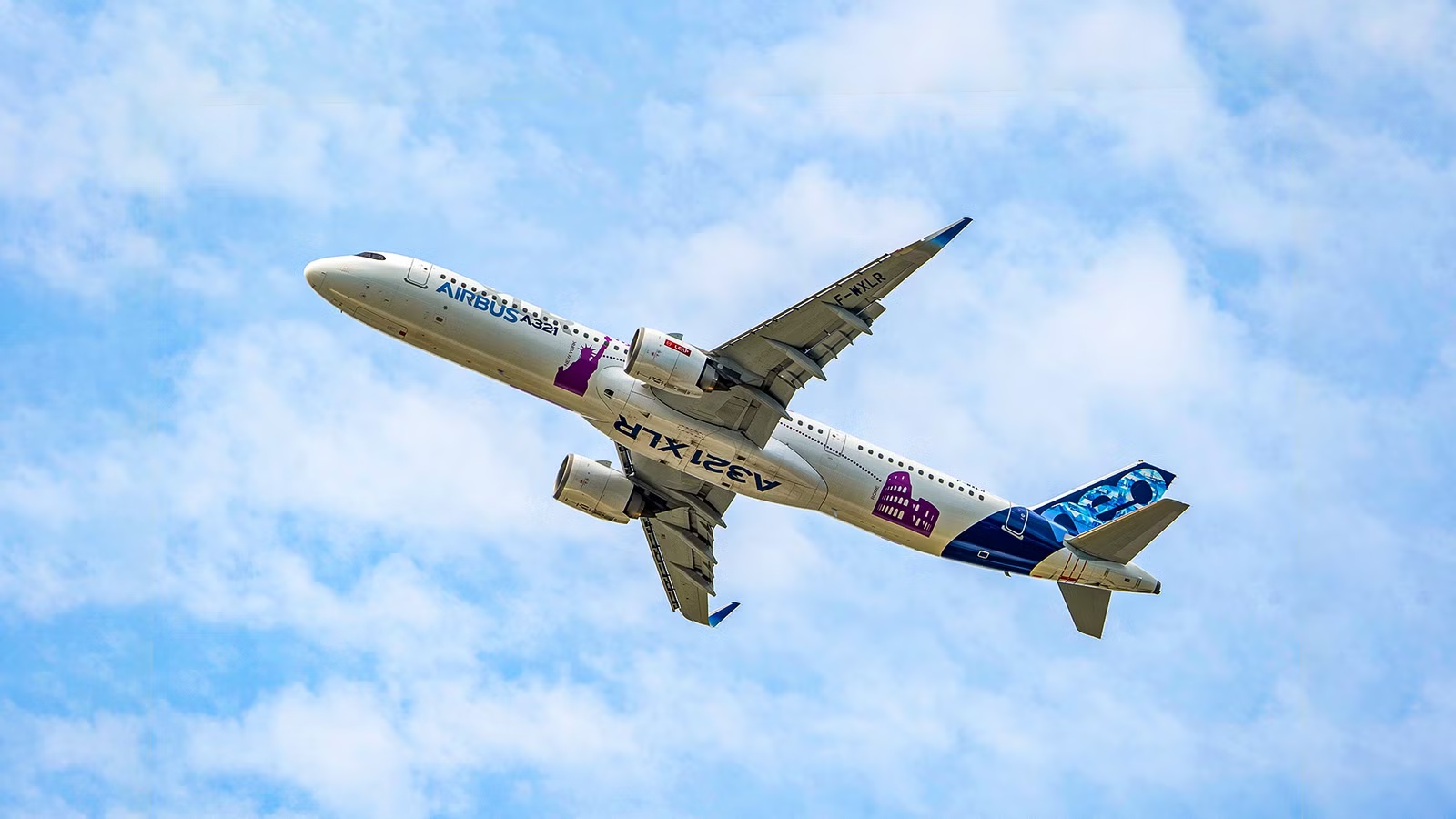
The Boeing 737 MAX 10 has an impressive and strong customer base, including United Airlines, Ryanair, American Airlines and Delta Air Lines. However, recent years have not been kind to the largest 737 MAX variant, which has suffered from a hefty backlog. It is not expected that the jet will become operational and certified until the end of this year.
Meanwhile, one of its key competitors, the Airbus A321XLR, has been going from strength to strength. Many airlines are choosing to opt for the A321XLR due to its higher range and capacity. It has also proven itself a capable aircraft, flying for many airlines successfully since its entry into service in late 2024.
Certification Problems Are The 737 MAX 10’s Main Issue

Boeing has given prospective customers a huge reason to not choose its MAX 10: certification issues. The delays have led the MAX 10 to acquire well over 1,000 orders, yet Boeing has not been able to deliver any of these planes. Meanwhile, customers haven’t had any return on their investment.
The primary testing that has caused the delays is system safety assessments. The Federal Aviation Administration requires that airlines complete these theoretical tests to confirm that there would not be a disaster in most conceivable problem scenarios. Boeing engineer Nathan Bement explained the process, saying that:
“If it’s theoretically possible, it’s something we have to explore. Even if we are not aware of something ever happening in service, we are analyzing the system to ensure it accounts for that and other failure scenarios.”
Operator | 737 MAX 10 Orders (Per ch-aviation) |
|---|---|
Air India Express | 50 |
Akasa Air | 99 |
Alaska Airlines | 168 |
American Airlines | 115 |
Delta Air Lines | 100 |
Donghai Airlines | 10 |
El Al | 20 |
Flybondi | 10 |
GOL | 25 |
Iraqi Airways | 10 |
Lion Air | 50 |
Luxair | 2 |
Malaysia Airlines | 12 |
Okay Airways | 3 |
Pegasus Airlines | 100 |
Ryanair | 131 |
SkyUp Airlines | 3 |
Skymark Airlines | 4 |
SunExpress | 30 |
TUI Airways | 27 |
Unassigned | 130 |
United Airlines | 165 |
Virgin Australia | 10 |
Vueling Airlines | 25 |
WestJet | 107 |
Certification issues have left customers who have made substantial orders for the MAX 10 in limbo. The table above displays the full breakdown of current orders for the MAX 10. In May, there were still 31 system safety assessments outstanding. Documentation for each of these tests can exceed 10,000 pages.
However, there is some cause for optimism as Boeing is in the final phase of testing. The manufacturer expects to begin deliveries in 2027. Yet, given the huge size of the backlog and the fact that the MAX 10 is far from the only Boeing aircraft with undelivered orders, we can expect it will be several years before all MAX 10 customers receive their jets.
The A321XLR Has Superior Range

There are not only factors pushing carriers away from selecting the MAX 10. The A321XLR has impressive capabilities that are pulling customers towards it. The A321XLR’s uniquely high range is the most obvious example, with the aircraft explicitly marketed for its ability to fly further than traditional single-aisle jets.
It has a range of 4,700 nautical miles (8,700 km), which is 1,600 nautical miles (2,963 km) further than the MAX 10. The range is also higher than other jets in the A321 family. The table below uses data collected by Simple Flying earlier this year to display the comparable range of this generation of narrowbody aircraft.
Aircraft | Range |
|---|---|
Airbus A321neo | 3,400 nautical miles (6,297 km) |
Airbus A321LR | 4,000 nautical miles (7,408 km) |
Airbus A321XLR | 4,700 nautical miles (8,704 km) |
Boeing 737 MAX 7 | 3,800 nautical miles (7,040 km) |
Boeing 737 MAX 8 | 3,500 nautical miles (6,480 km) |
Boeing 737 MAX 9 | 3,300 nautical miles (6,110 km) |
Boeing 737 MAX 10 | 3,100 nautical miles (5,740 km) |
The A321XLR can remain in the skies for an incredible 11 hours. These numbers translate to opening up new routes that were previously impossible for narrowbody aircraft. Examples include city pairs like New York City to Rome, London to Delhi, and Kuala Lumpur to Sydney.
The A321XLR is an extension of the A321LR, which shares its brother’s auxiliary tanks. It also has an enlarged center wing tank and a permanent Rear Center Tank. The RCT alone can carry 3,400 gallons (12,870 liters) of additional fuel. It achieves this without causing a noticeable reduction in cargo space.
The A321XLR Provides New Opportunities For Fleet Commonality

As aircraft become increasingly complicated, airlines stand to encounter high costs for maintenance and training. Commonality is a great way to mitigate these costs. It means pilots fly more familiar aircraft, requiring less training investment, and maintenance procedures are consistent and don’t require new infrastructure. As the A321XLR is based on the A321neo, carriers that already fly the popular modern Airbus narrowbody family (A320neo) will have pre-existing commonality.
One example of a carrier clearly using this commonality for significant benefit is  IndiGo. This low-cost carrier is India’s largest airline. The table below shows IndiGo’s fleet (April 2026) according to the carrier’s Q4 2026 earnings presentation, displaying commitment both in current fleet and orders to Airbus narrowbody jets.
Aircraft | In service | Orders | Notes |
|---|---|---|---|
Airbus A320-200 | 26 | None | Being retired |
Airbus A320neo | 177 | 235 | Largest operator |
Airbus A321neo | 168 | 558 | World’s second largest operator |
Airbus A321XLR | 2 | 67 | Largest order |
Airbus A321-200/P2F | 3 | 1 | Freight fleet |
Airbus A350-900 | None | 60 | A further 40 options, deliveries from 2027 |
ATR 72-600 | 46 | None | None |
IndiGo’s pattern has been reflected by a number of other airlines from around the world. Wizz Air has also bought the A321XLR as the carrier looks to expand into longer routes. Air India has converted 15 A321neo orders to A321XLRs, and Qantas announced an additional order of 20 more of the aircraft.
As a result of airlines choosing the aircraft, Airbus confirmed that orders for the A321XLR had surpassed 500 at the end of March 2026. These numbers are still lower than the 737 MAX 10, but indicate a growing interest in the plane, while interest in the MAX 10 is stagnating.
The A321XLR Fills A Key Gap

The A321XLR does not compete directly with the 737 MAX 10 as it has a substantially larger seating capacity. The MAX 10 has a maximum capacity of 230 passengers in a high-density configuration, while the A321XLR’s is 244. A closer comparison could be the Boeing 757, as seen above. The 757-300 variant has a two-class capacity of 243 passengers, and the 737 MAX 10 only partially replaces the 757 because it can’t match the 757’s range, which exceeds 4,000 nautical miles.
Boeing has yet to create a direct replacement for the 757 despite its immense popularity. It also hasn’t developed a re-engined version. Reasons for this decision include the high start-up costs to begin production again, Boeing’s obsession with the MAX, and the difficulty of creating a suitable updated engine. The table below shows key specifications for the A321XLR, based on data from Airbus.
Capacity | 244 maximum and 180 to 220 for two-class seating. |
|---|---|
Length | 146 feet (44.5 m) |
Wingspan | 117 feet, 5 inches (35.8 m) |
Height | 38.7 feet (11.8 m) |
Range | 4,700 nautical miles (8,700 km) |
Maximum takeoff weight | 222,700 lb (101,000 kg) |
The A321XLR carries similar or slightly fewer passengers than the 757. It can also fly significantly further while requiring much less fuel. That capability means that the A321XLR is suitable for long and thin routes that would usually not be financially feasible without an efficient narrowbody jet capable of operating them. An example of an airline using the A321neo family to replace its aging 757s is Icelandair.
Airlines Are Already Pushing The A321XLR To Its Limits

While 737 MAX 10 customers have to wait for certification, the A321XLR is already being put through its paces by many airlines. Some are already testing the limits of the A321XLR’s capabilities, with the aforementioned IndiGo having flown the jet daily from Delhi to Istanbul since February 28. Passengers can expect this route to take around eight hours on account of the need to avoid restricted airspace.
Previously, the carrier’s high-capacity Boeing 777-300ERs flew this route. That displays how the A321XLR allows carriers to use more efficient narrowbody aircraft on routes previously reserved for widebody jets. Iberia is another carrier using the A321XLR for ultra-long routes. Last April, the Spanish flag carrier restarted flights from Adolfo Suárez Madrid–Barajas Airport (MAD) to Washington Dulles International Airport (IAD).
This flight takes nine hours and 40 minutes. Iberia explained how the A321XLR had made the route possible, saying that “thanks to this new model, with a narrow fuselage but capable of crossing the Atlantic, Iberia increases the 4 weekly flights from 2024 and will have two additional frequencies to the US capital from April to August.”
Another long route flown by Iberia’s A321XLR is from MAD to Las Américas International Airport (SDQ) in Santo Domingo. The block time assigned to this route is nine hours and 35 minutes. It has a total length of 3,620 nautical miles (6,700 km). Iberia had previously used the Airbus A330-300 for this route