dailynewsnblog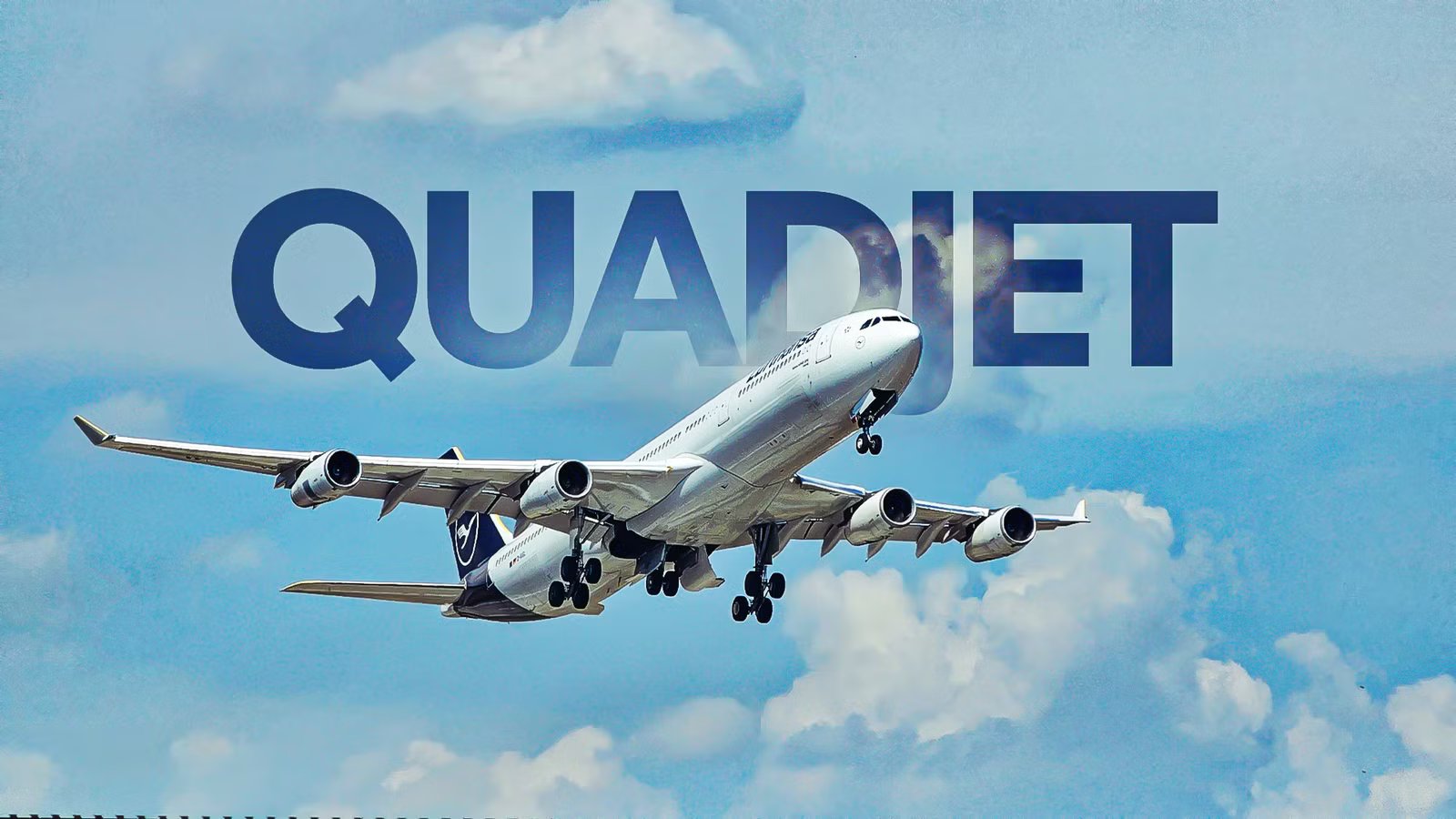
Looking back from today’s aviation industry, the Airbus A340 can seem like an aircraft built around an outdated idea. Modern long-haul airliners such as the Airbus A350, Boeing 787 Dreamliner, and Boeing 777 routinely cross oceans carrying hundreds of passengers using just two engines. They deliver lower fuel burn and significantly reduced maintenance costs than the four-engine jets they replaced.
With that in mind, the A340 naturally raises an obvious question: why did Airbus invest in developing a brand-new four-engine airliner when two engines would ultimately prove capable of doing the same job? The answer lies in understanding the world in which the aircraft was conceived rather than the one in which it eventually operated.
During the 1980s, Airbus wasn’t trying to decide whether four engines were inherently better than two. Instead, its engineers were working within the limits imposed by current engine technology, international certification standards and airline operating requirements. Once those constraints are considered together, the decision to build the A340 as a quadjet becomes far easier to understand.
Every Aircraft Begins With A Design Requirement

Commercial aircraft are rarely designed by starting with the number of engines. Manufacturers instead begin by defining a series of performance targets covering range, payload, operating economics, airport compatibility and certification requirements. The propulsion system is then selected to meet those objectives using the technology available at the time. For the A340, one requirement stood above almost everything else: unrestricted long-haul capability.
Airbus wanted an aircraft capable of linking virtually any two major cities on Earth without being constrained by the diversion limits that applied to twin-engine aircraft. That immediately narrowed the design options. During the aircraft’s development, ETOPS (Extended-range Twin-engine Operational Performance Standards) approvals remained relatively restrictive, with many twinjets limited to operating no more than 120 minutes from a suitable diversion airport.
While that may sound generous, it excluded many of the most efficient routings across the Pacific, southern Indian Ocean and remote polar regions. Importantly, ETOPS was never intended to imply that twin-engine aircraft were unsafe. Instead, it reflected a deliberately conservative certification process.
Regulators wanted years of operational evidence demonstrating exceptionally low in-flight engine shutdown rates before allowing twinjets to venture several hours from the nearest suitable airport. Four-engine aircraft were exempt because they retained three functioning engines following a failure, giving them greater system redundancy under the certification standards of the day.
Why Airbus Designed Two Aircraft At Once

When Airbus formally launched the A330 and A340 programs in June 1987, the manufacturer adopted a slightly unusual strategy to create two different widebody models (not different variants as we see very often) from a common engineering platform. The objective was to minimize development costs while allowing Airbus to compete across the full spectrum of the long-haul market.
Airlines that primarily operated routes within ETOPS limits could choose the more economical A330, while those requiring unrestricted global reach had the A340. The commonality between the two aircraft went far beyond sharing a similar appearance. Both used the same wide fuselage cross-section, identical digital fly-by-wire flight control architecture, virtually identical flight decks, and a common wing design.
Airbus also introduced a common type rating, allowing pilots to transition between the A330 and A340 with relatively little additional training through its Cross Crew Qualification philosophy. From an airline’s perspective, that translated into lower training costs, greater crew scheduling flexibility, common spare parts inventories and simplified maintenance procedures. In an era when Boeing’s 767, 747 and MD-11 all required separate type ratings, Airbus’s approach represented a competitive advantage.
Perhaps the most elegant aspect of the program was the way the wing was engineered. Rather than designing two completely different structures, Airbus developed a common wing with provision for four engine attachment points. On the A340, all four pylons were used, while on the A330 the outer attachment locations remained unused. This reduced certification effort and manufacturing complexity while allowing Airbus to produce two aircraft optimized for different regulatory environments.
High-Thrust Engines Suitable For The A340 Didn’t Yet Exist

Rather than developing an entirely new powerplant, Airbus based the original A340 around four CFM International CFM56-5C turbofan engines. At first glance, this can seem like an unusual decision, particularly when later long-haul aircraft achieve comparable or better performance using just two much larger engines. However, the choice reflected the priorities of the era.
Airbus favored a mature, proven engine with an established reliability record over a more ambitious solution that depended on technology still years away from entering commercial service. The CFM56-5C produced around 34,000 lbf (151 kN) of thrust, giving the A340-300 a combined output of approximately 136,000 lbf (605 kN).
Although four engines inevitably increased maintenance requirements compared with an equivalent twin, the configuration allowed Airbus to meet its performance targets using one of the aviation industry’s most successful turbofan families. As newer generations of widebody aircraft entered service, the A340’s relatively small engines became one of its defining characteristics.
Aviation enthusiasts and pilots often refer to them comically as ‘hairdryers’ or ‘APUs,’ due to the low thrust produced by them. However, those jokes largely reflect how quickly engine technology advanced during the 1990s and 2000s. Airbus itself later equipped the larger A340-500 and A340-600 with Rolls-Royce Trent 500 engines producing up to 56,000 lbf (249 kN) each, around 65% more thrust per engine than the original CFM56-powered variants.
Airbus Expected ETOPS To Expand Gradually

Airbus never expected ETOPS restrictions to remain unchanged forever. Engine manufacturers had spent decades improving reliability, and regulators had already begun cautiously extending diversion limits for twin-engine aircraft. However, certification authorities historically moved conservatively, requiring operators to accumulate millions of engine flight hours while demonstrating exceptionally low in-flight shutdown rates before approving longer diversion times.
Airbus therefore likely believed any expansion of ETOPS would be measured rather than revolutionary. That assumption shaped the roles of the A330 and A340. The A330 would gradually benefit as ETOPS approvals increased, making it an increasingly attractive choice on routes where diversion limits were less restrictive. The A340, meanwhile, would continue serving airlines that needed unrestricted global reach without depending on future regulatory changes.
Rather than competing directly, the two aircraft were intended to complement one another, allowing Airbus to offer airlines the optimum solution regardless of how quickly ETOPS evolved. History unfolded rather differently. Improvements in engine reliability consistently exceeded expectations, prompting regulators to approve progressively longer ETOPS operations at a much faster pace than Airbus had anticipated.
By the mid-1990s, ETOPS-180 approvals had become increasingly common, enabling twin-engine aircraft to fly approximately 95% of commercially important long-haul routes without meaningful operational penalties. The regulatory advantage that had justified the A340’s design was disappearing almost as quickly as the aircraft itself was entering airline service.
How The Boeing 777 Challenged the A340

If expanding ETOPS weakened the case for four engines, the 777 fundamentally changed it. Entering commercial service in 1995, just two years after the A340, the aircraft combined long-range ETOPS capability with an entirely new generation of ultra-high-thrust turbofan engines.
For the first time, airlines could purchase a twin-engine aircraft capable of carrying comparable payloads over similar distances without accepting the weight, drag and maintenance penalties associated with four engines. The contrast was striking. An A340-300 generated around 136,000 lbf (605 kN) of total thrust from four CFM56-5C engines, while a 777-200ER equipped with GE90-94B engines produced approximately 188,000 lbf (836 kN) using only two powerplants.
Those engines also benefited from significant improvements in compressor efficiency, turbine cooling, materials science and digital engine control, allowing them to deliver greater performance while consuming less fuel. Airlines additionally faced half as many engine inspections, overhauls, and life-limited component replacements, substantially reducing maintenance costs over the aircraft’s lifetime.
By the turn of the century, the economics of long-haul aviation had shifted decisively in favor of large twinjets. Rising fuel prices only widened the gap, while increasingly capable engines continued to extend the performance advantage of aircraft such as the 777.
Catch what other flight trackers miss
Emergency squawks, holds, NOTAMs — live signals, no signup.
Open tracker
Catch what other flight trackers miss
Emergency squawks, holds, NOTAMs — live signals, no signup.
Open tracker
The A340 Wasn’t Wrong: Rather, The Industry Changed

With the benefit of hindsight, it is easy to conclude that Airbus made the wrong decision by building the A340 as a four-engine aircraft. Yet doing so ignores the constraints under which the program was conceived. Given those realities, Airbus’ engineering decisions were entirely rational.
The A340 was not a commercial failure. Airbus delivered 377 aircraft between 1993 and 2012, with the type serving major operators including Lufthansa, Air France, Cathay Pacific, Virgin Atlantic, South African Airways and  Iberia. The A340-500 demonstrated the capability of the design by operating Singapore Airlines’ Singapore Changi Airport (SIN)–Newark Liberty International Airport (EWR), which launched in 2004 and covered approximately 9,534 miles (15,344 km).
Meanwhile, the larger A340-600 became the longest passenger aircraft in service until the arrival of the 747-8 Intercontinental. Even today, examples continue to operate with passenger airlines, governments and VIP operators. So, why did Airbus build the A340 with four engines when two would do? The simple answer is that, when the aircraft was designed, two engines wouldn’t do, as the regulations had not yet caught up with advances in engine reliability.
Also, the high-thrust turbofans needed to power a true long-range twin had yet to enter service, and airlines still required an aircraft capable of flying virtually anywhere without restriction. Airbus therefore built the aircraft the market demanded. The irony is that within little more than a decade, every one of those assumptions had changed. The A340 wasn’t overtaken because its engineering was flawed: it was overtaken because aviation advanced faster than almost anyone thought possible.