dailynewsnblog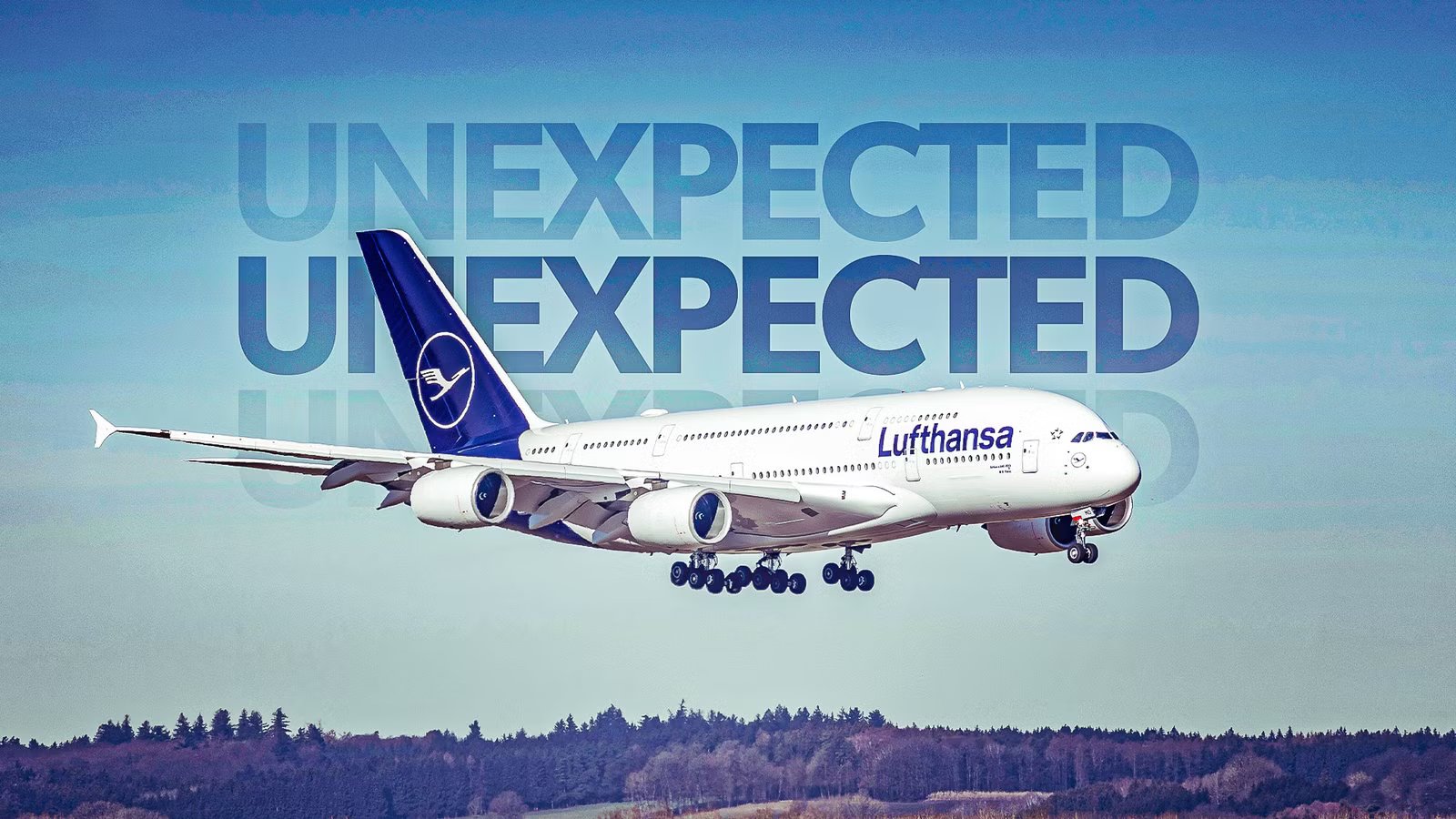
When the final Airbus A380 was handed over to Emirates in December 2021, it marked the end of one of the most ambitious commercial aircraft programs ever undertaken. Originally launched with the expectation that airlines would increasingly funnel passengers through mega-hubs using ultra-large aircraft, the A380 instead entered a market that gradually shifted in the opposite direction.
Advances in twin-engine technology have enabled aircraft such as the Boeing 787 Dreamliner to connect smaller cities directly, reducing reliance on the traditional hub-and-spoke model. With only 251 aircraft built, far fewer than Airbus had originally anticipated, the program was brought to a close after nearly two decades. Almost five years later, the A380 has become one of aviation’s most surprising success stories.
Around 190 aircraft remain in commercial service, representing roughly three-quarters of the entire fleet ever produced, while airlines continue to invest in refurbishment programs rather than accelerating retirements. Rather than being remembered as an aircraft overtaken by technology, the A380 has found a highly profitable niche.
This has been thanks to a combination of delayed aircraft deliveries, increasing airport congestion, record international travel demand and a renewed focus on premium passenger experience. Although no additional aircraft will ever be built, the world’s largest passenger airliner is proving far more valuable in 2026 than many expected when production ceased.
The Aircraft Shortage Nobody Expected

In 2019, when Airbus announced it was ending production, airlines expected the aircraft to be gradually replaced by a new generation of efficient widebodies. The Boeing 777X was intended to become the flagship of many long-haul fleets, while Airbus continued expanding production of the A350 family and Boeing increased deliveries of the 787 Dreamliner.
Fleet planners typically make decisions many years in advance, carefully aligning aircraft deliveries with the retirement of older models to avoid unnecessary maintenance costs and maximize fuel efficiency. The reality facing airlines today is very different. The 777X program remains years behind its original entry-into-service target, delaying replacement plans for numerous carriers. At the same time, Airbus and Boeing both continue to work through historically large order backlogs.
Airbus has more than 9,000 commercial jets on its order books, while Boeing’s backlog exceeds 6,000 jets across its commercial portfolio. Although production rates are increasing, manufacturers continue to face shortages of critical components, including engines, castings, avionics and cabin interiors. This has altered the economics of operating older fleets. Instead of retiring aircraft, airlines have concluded that investing in heavy maintenance and cabin refurbishments is a better financial decision.
 Lufthansa illustrates this perfectly. During the pandemic, the airline placed its A380 fleet into long-term storage in Spain and publicly indicated that the aircraft’s commercial career with the carrier had effectively ended. Today, Lufthansa is not only flying the A380 again but also investing in new business class cabins for the fleet.
No Aircraft Moves More Passengers Through One Airport Slot

Even if aircraft manufacturers could suddenly deliver hundreds of additional widebodies, airlines would still face another challenge that has become increasingly significant over the past decade: airport capacity. Some of the world’s largest international hubs are effectively full for much of the day, leaving airlines with few opportunities to add extra flights even when passenger demand continues to grow. This environment plays directly into the A380’s greatest strength.
Depending on the airline’s configuration, the aircraft typically accommodates between 450 and 520 passengers, although Emirates’ highest-density examples seat as many as 615 passengers. With that being said, the capacity of these types is being reduced in retrofits. By comparison, a 777-300ER generally carries around 350 to 390 passengers, while most A350-1000s seat between 350 and 410.
Although newer aircraft offer substantially lower fuel burn per flight, they cannot match the passenger volume an A380 can transport during a single airport movement. Where slots are scarce, airlines are often more concerned with maximizing passengers per departure than minimizing operating costs per aircraft. On routes where flights regularly depart full, adding another 100 to 200 seats without requiring another slot can generate significantly greater revenue than operating a smaller aircraft more efficiently.
Premium Demand Has Transformed The Business Case

Although economy class continues to account for the majority of passengers, an increasing proportion of airline profits now comes from premium cabins, with business class, first class and premium economy generating disproportionately high yields. In its latest Global Market Forecast, Airbus highlights a strong shift toward ‘premiumization,’ with high-end cabin seating expected to expand at a faster rate than overall passenger volume over the next two decades.
Its enormous cabin gives airlines a level of flexibility that simply does not exist on smaller aircraft. With two full-length passenger decks and around 5,920 square feet (550 square meters) of floor space, the A380 allows operators to dedicate substantially more room to premium products without dramatically reducing overall seating capacity.
Etihad’s fleet became famous for introducing ‘The Residence’, a three-room private suite featuring a bedroom, lounge and ensuite shower. Passenger perception also continues to work in the A380’s favor. The upper deck offers a noticeably quieter cabin than most twin-engine aircraft thanks to the distance from the engines, while the aircraft’s immense fuselage creates a greater sense of space, particularly in premium cabins.
Airlines have capitalized on that reputation by marketing the A380 as a flagship. Choosing a flight specifically because it is operated by an A380 has become increasingly common. That brand value is difficult to quantify, but it helps airlines justify continued investment in the aircraft.
Airlines Are Investing Billions Instead Of Retiring Them

Perhaps the clearest indication that the A380 has secured a long-term future is the amount of money airlines are spending to modernize aircraft they were once expected to retire. During the pandemic, many observers assumed operators would simply return stored aircraft to service in their existing configuration before gradually phasing them out. No airline illustrates this commitment better than Emirates.
As the world’s largest A380 operator, the Dubai-based carrier has invested approximately $5 billion in what it describes as the largest fleet retrofit program in its history, covering both its A380s and 777s. The program includes the installation of premium economy cabins across much of the fleet, refreshed business class cabins, redesigned interiors and upgraded first class suites on selected aircraft. By the end of 2026, Emirates expects around 110 A380s to be flying, making it by far the dominant operator of the type.
Lufthansa has also begun retrofitting its returning A380 fleet with a modern 1-2-1 business class layout, giving every passenger direct aisle access, while British Airways has upgraded many of its superjumbos with its latest Club Suite business class product. These investments are significant because they demonstrate confidence rather than necessity. Airlines rarely spend tens of millions of dollars modernizing aircraft they intend to retire within only a few years.
The A380 Has Become A Specialist Rather Than A Generalist

When Airbus launched the A380, the European manufacturer believed that rapid passenger growth, combined with increasing congestion at the world’s largest airports, would drive airlines towards ever-larger aircraft capable of transporting more people between major global hubs.
That prediction was not without merit. International passenger traffic has more than doubled since the early 2000s, and airports such as London Heathrow, Dubai, and Singapore have become significantly busier. However, the shift to twin-engine aircraft ultimately limited the A380’s commercial success.
Airbus originally forecast demand for well over 1,000 over the program’s lifetime, but only a quarter of that number were built. Many airlines concluded that operating two smaller aircraft offered greater flexibility than flying one very large aircraft, allowing them to spread departures throughout the day and better match capacity to demand. Ironically, those same market forces have helped define the A380’s long-term role.
Rather than serving every long-haul route, the aircraft has become highly specialized, excelling only where its unique characteristics offer a clear commercial advantage. Airlines no longer need hundreds of A380s spread across their networks to justify keeping the type in service. Instead, a relatively small fleet deployed on carefully selected trunk routes can continue generating attractive returns. The aircraft has evolved into a highly effective solution for a very specific set of market conditions.
Catch what other flight trackers miss
Emergency squawks, holds, NOTAMs — live signals, no signup.
Open tracker
Catch what other flight trackers miss
Emergency squawks, holds, NOTAMs — live signals, no signup.
Open tracker
Why The World’s Largest Airliner Still Has A Long Future Ahead

Despite no longer being in production, the A380 is unlikely to disappear from the skies anytime soon. Around 190 aircraft remain in active commercial service during 2026, with  Emirates alone accounting for well over half of the operational fleet. While some airlines, including Air France, Thai Airways and Malaysia Airlines, retired the type during or shortly after the pandemic, the remaining operators are generally those with networks best suited to its capabilities.
The pace of the aircraft’s eventual retirement will depend on several factors beyond Airbus’ control. The long-awaited arrival of the 777X will eventually provide airlines with a modern high-capacity twin-engine alternative, while Airbus intends to continue increasing A350 production throughout the decade. Improvements in engine efficiency, sustainable aviation fuel adoption and future aircraft designs will gradually reduce the economic case for operating four-engine aircraft. However, those transitions will take time.
For an aircraft that was once widely labeled one of commercial aviation’s greatest failures, the A380 has enjoyed a remarkable reversal in fortunes. It never fulfilled Airbus’ ambition of becoming the dominant aircraft connecting the world’s largest hubs, nor will production ever restart. Yet success can be measured in different ways. Today, the superjumbo occupies a profitable niche that no other passenger aircraft can fully replicate, combining unmatched capacity with a premium passenger experience.