dailynewsnblog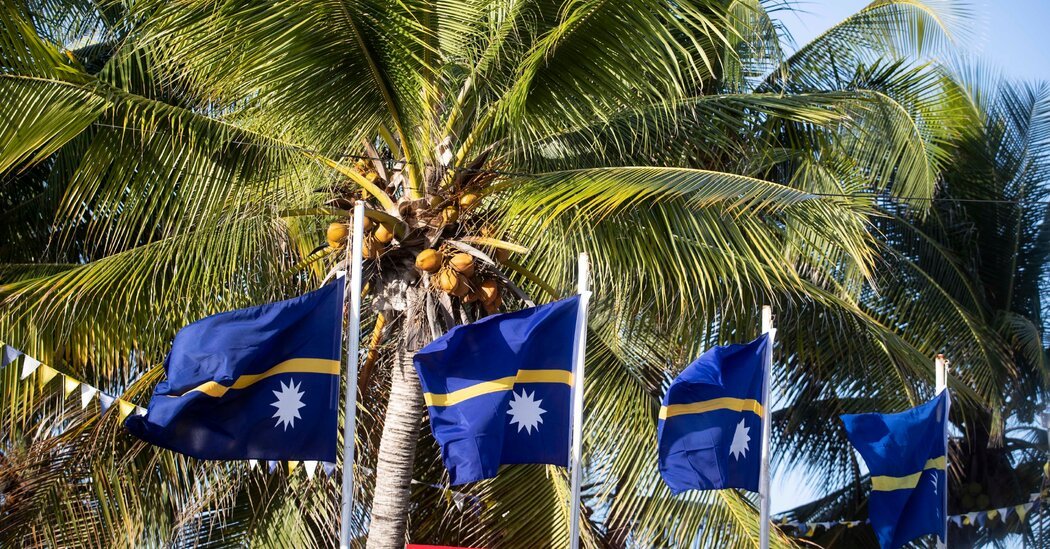
Peruse an up-to-date list of the nations of the world. Between Namibia and Nepal, you will see a potentially unfamiliar one: Naoero.
That’s the new name for the small South Pacific country formerly known as Nauru. Its Parliament unanimously approved the change in May and the name became official, President David Adeang said last week, after plans for a national referendum on the matter were dropped.
A new name for an obscure country? We know you have questions.
What can you tell me about Naoero?
The island is about eight square miles, making it the second-smallest full-member state of the United Nations, ahead of Monaco. With about 11,000 people, Naoero also ranks second smallest in population, ahead of Tuvalu, another island nation to the southeast.
People have lived on Naoero for 3,000 years. The West began to intrude in the 1700s, and the island was controlled by a succession of countries, including Germany, Australia, Japan and finally a protectorate of Australia, New Zealand and the United Kingdom. It became independent as Nauru in 1968.
Its economy was once largely based on phosphate mining. But depleted supplies have led it in other directions, including processing Australian asylum seekers.
Why the name change?
You could say it isn’t really a change at all. People in Naoero speak English, but also the Nauruan native language, in which the country is known as Naoero.
The name Nauru came about because some foreigners struggled to pronounce Naoero.
“The proposed change seeks to more faithfully honor our nation’s heritage, our language and our identity,” the government said on social media in February, in proposing a constitutional amendment.
(While some early European visitors merely mispronounced the name, others didn’t bother at all, calling Naoero “Pleasant Island.”)
How the new name is pronounced depends in part on one’s accent. British, Australian and American English speakers variously pronounce it nah-OO-roo, now-AIR-o or nah-oh-EH-roh.
The demonym, or name identifying the people, is changing from Nauruan to dei-Naoero.
What is the significance of the change?
Changing a country’s name can often be part of a longer-term process of shedding a history of colonialism and asserting an independent national identity.
“Decolonization in place-naming addresses the fact that, while countries may now be independent economically and politically, they are often still living with the legacy of the cultural and linguistic impositions of their colonizers,” said Derek H. Alderman, a professor of geography at the University of Tennessee and an expert on place names, in an interview in May.
“Name changes, in this respect, are part of the process of repairing some of that cultural and linguistic damage and asserting a return to a precolonial identity,” he added.
Have there been other name changes recently?
Swaziland in southern Africa moved to change its name to Eswatini in 2018. More recently, Turkey has pushed to change to Türkiye, reflecting more closely the spelling in its language.
And depending how old your globe or atlas is, you might find such names as Persia (now Iran), Siam (now Thailand), Burma (now Myanmar), Upper Volta (now Burkina Faso), Ceylon (now Sri Lanka) and Gold Coast (now Ghana).