dailynewsnblog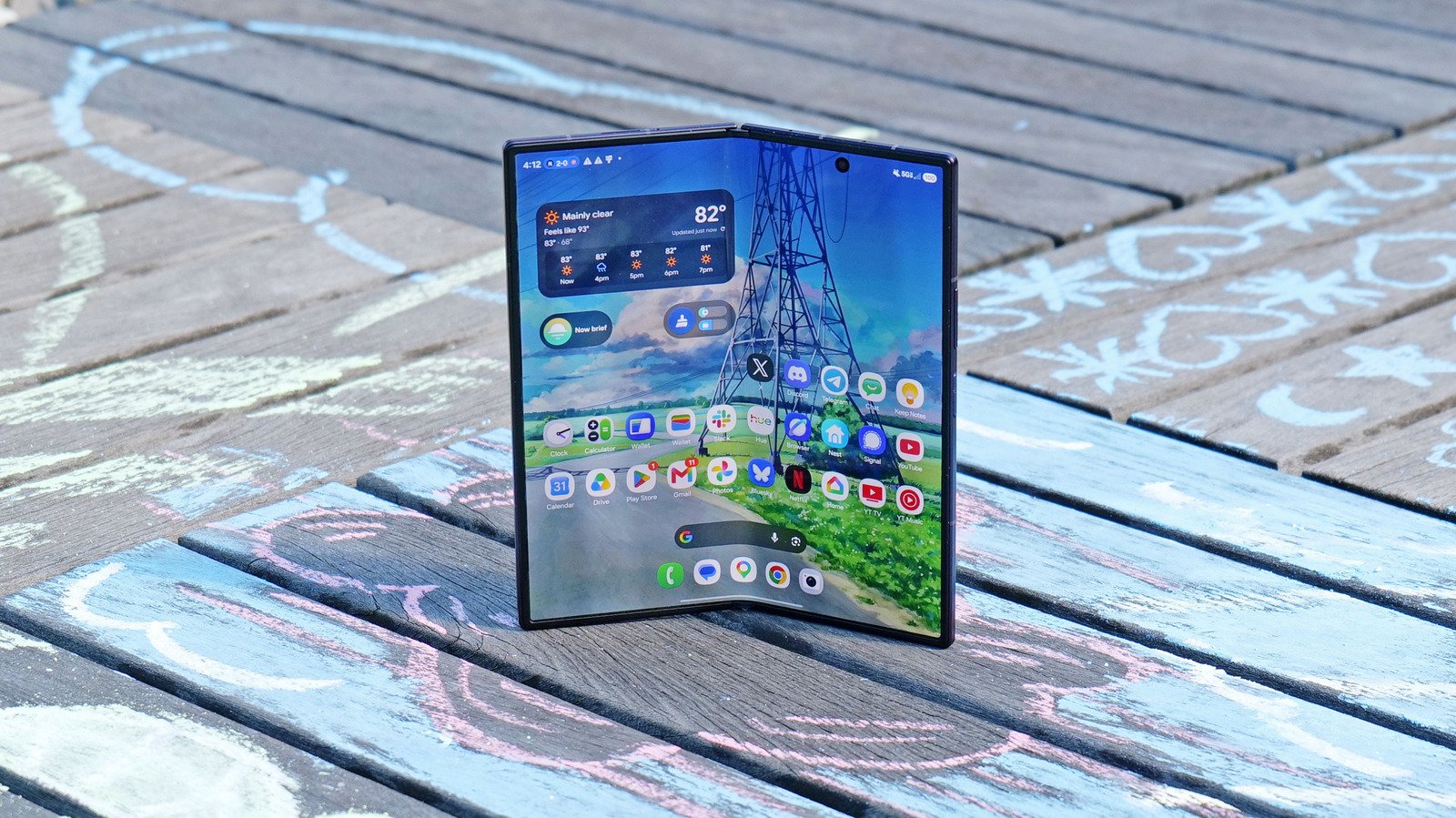
A new processor, brighter screens and chassis tweaks are nice, but the updates don’t do enough to earn the ‘ultra’ tag.
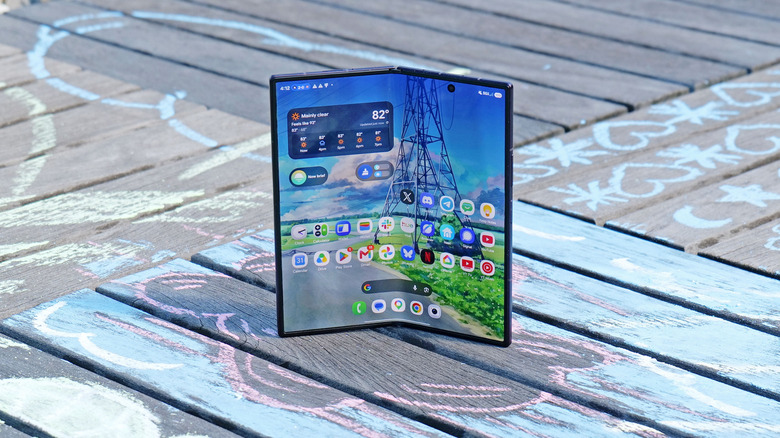
RATING : 8.8 / 10
- Brighter screens
- Class-leading performance
- Still has three rear cameras
- Easier to open
- Much longer battery life
- Expensive
- No built-in magnetic ring for Qi2 accessories
- Design is largely unchanged from last year
Samsung took a two-pronged approach to its flagship foldable phone this year when it split the series into two devices for the first time. On one hand, there’s the base Galaxy Z Fold 8, which sports an all-new wider design meant to maximise the handset’s content consumption capabilities. And on the other, there’s the Galaxy Z Fold 8 Ultra, which retains essentially the same build as its predecessor — including its focus on productivity and multitasking.
This puts the Ultra in a bit of a weird spot. Despite its newly-elevated branding, it doesn’t really look or feel all that different, even with a number of tweaks and improvements. That’s not inherently a bad thing as the previous model was my favorite phone of last year. So instead of a big overhaul, it seems Samsung settled on creating a more refined version of an already great device.
Design and displays
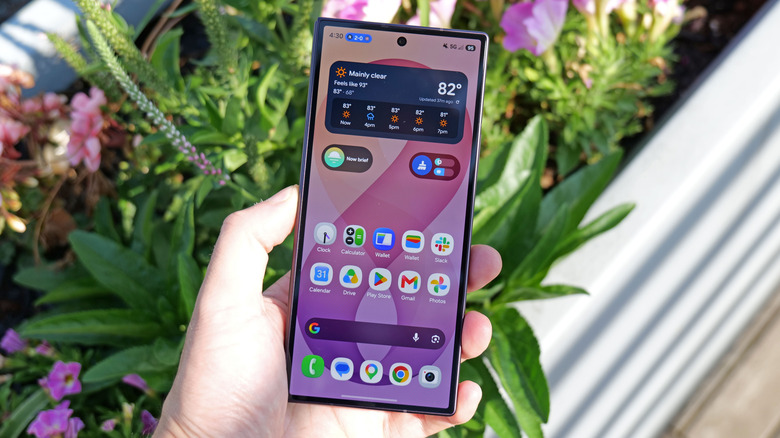
One of the best examples of how little has changed on the Z Fold 8 Ultra are its size and weight. At 8.9mm thick when closed and 7.58 ounces, its thinness and weight are exactly the same as before. Same goes for its IP48 rating for dust and water resistance. That said, Samsung managed to shave off a tiny bit of material (and I do mean tiny) off the inside of the phone. When it’s open flat, it measures 4.1mm instead of 4.2mm like on the Z Fold 7. Technically, that makes the Z Fold 8 Ultra the thinnest foldable Samsung has ever made.
However, the more important design changes on the Ultra are subtle tweaks like tapered edges which makes the handset significantly easier to open. Meanwhile, there’s a new titanium alloy layer beneath its flexible display that adds extra rigidity while reducing the appearance of a crease. Just to be clear, there’s still a groove that runs down the middle of the interior screen. But it’s so faint and innocuous that anyone who gets upset about it is really just looking for something to be angry about.
 Sam Rutherford for Engadget
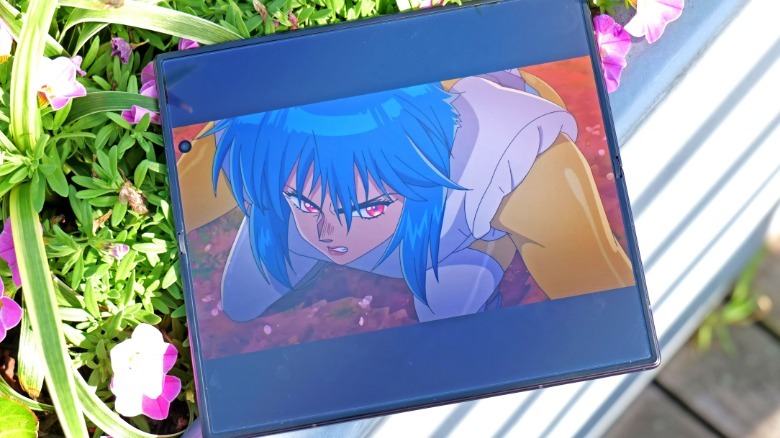
As for its displays, those are largely unchanged as well. You still get two vivid AMOLED panels: a 6.5-inch cover screen and a flexible 8-inch main screen, the latter of which has gotten a small bump in resolution from 1,968 x 2,184 to 2,256 x 2,504. Both look stunning and feature a swift 120Hz refresh rate alongside yet another bump in peak brightness to 3,000 nits (up from 2,600 nits). Samsung even added an anti-reflective coating to the Ultra’s interior display, which helps cut down on unwanted glare so you can enjoy the phone’s main attraction that much more.
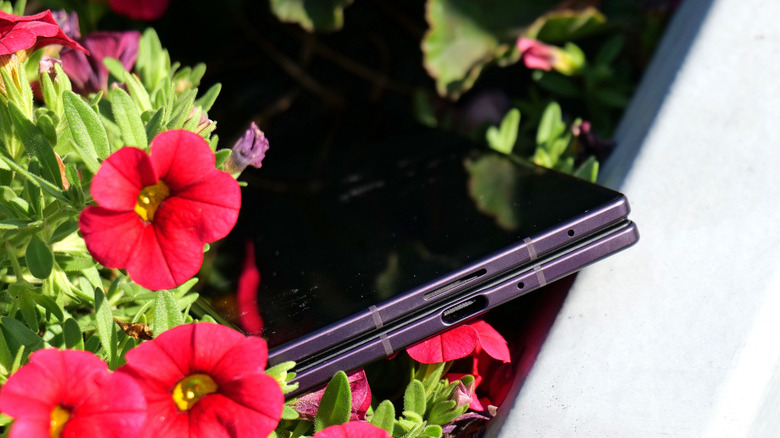
Still, anyone who used the previous model will be immediately familiar with the Ultra. Once again, the phone features a side-mounted fingerprint scanner and a removable SIM tray, along with what appears to be the exact same matte finish used on the phone’s Gorilla Glass Victus 2 rear panel.
Performance
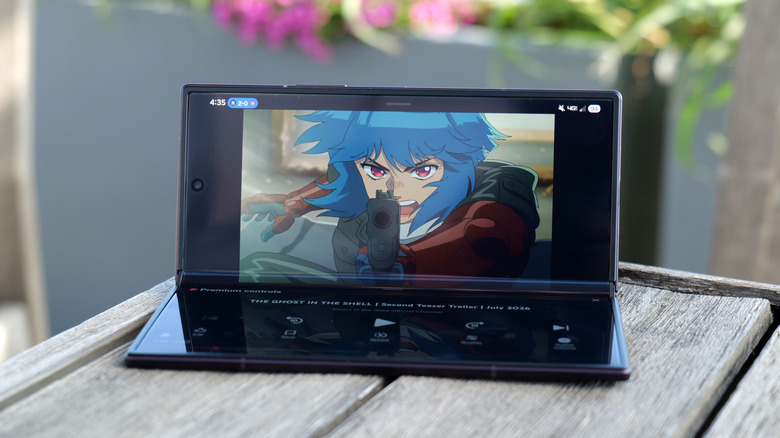
By upgrading to a Snapdragon Elite Gen 5 for Galaxy chip with up to 16GB of RAM and 1TB of storage, Samsung ensured that its flagship foldable still offers class-leading performance. In the real world, this thing blitzed everything I threw at it, including multitasking with two apps side-by-side and playing games. In fact, I wish developers would take time to add extra graphics options to titles like Pokemon Champions. Even though it’s hard capped at 30 fps on mobile, I suspect there are a number of premium handsets like the Ultra that can totally handle a framerate limit twice as high. That said, it’s important to note that the Ultra’s less expensive sibling comes with the exact same processor and specs. If you end up opting for the base Z Fold 8, there’s no reduction in speed or responsiveness.
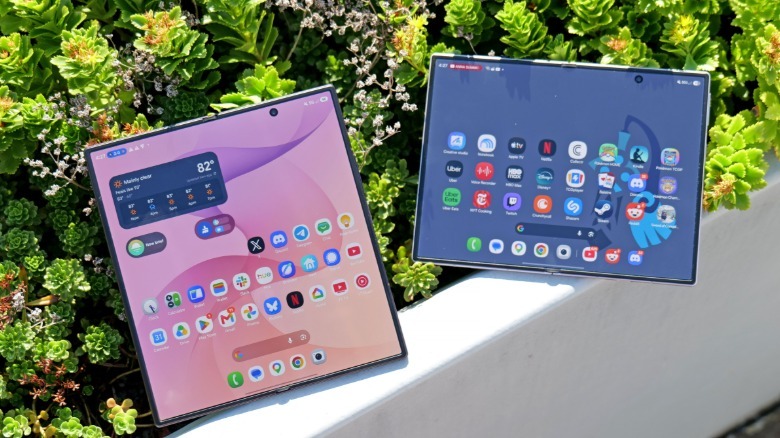
I also want to call out that if you are a big time multitasker, the Ultra does make more sense than the base model. The extra vertical height you get on both of its screens gives you more freedom to scroll and read text without stuff like menu buttons and UI elements getting in the way. The downside is that its nearly square flexible display feels like a bit of a waste when watching movies and shows, where you’ll run into pretty serious letterboxing at the top and bottom of the screen.
Cameras
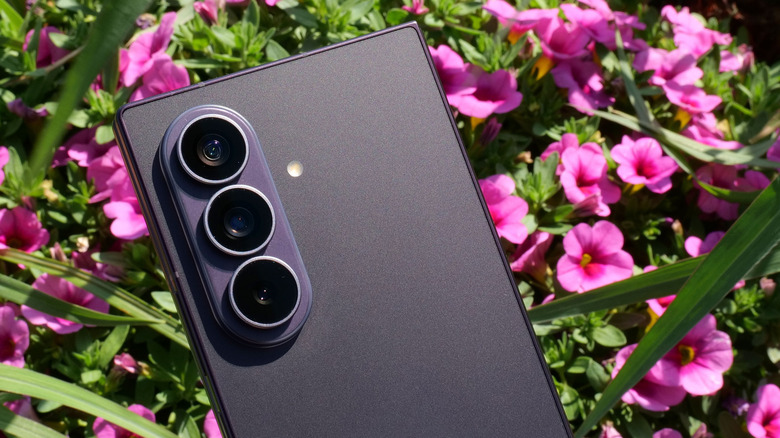
One of the Ultra’s biggest advantages over the base model is that it still comes with a full assortment of rear cameras, including a 200-megapixel sensor for its main cam, a 10MP sensor for its telephoto and a new 50MP sensor for its ultra-wide lens. For avid photographers, I love the extra reach a true 3x optical zoom gives you compared to the digital enhancement the standard Z Fold 8 relies on.
The Ultra also provides top-notch image quality in both brightly lit and low-light environments, though if we’re really nitpicking, I still prefer pics captured by Google’s Pixel phones as they are often a tiny bit more detailed and accurate to real life. Finally, the new 50MP ultra-wide cam makes expansive vistas and landscapes look a touch shaper. But it’s the kind of difference that you really only notice when pixel peeping side-by-side next to a shot taken with last year’s phone.
Battery life and charging
For everyone out there who can’t get enough battery life, the Z Fold 8 Ultra received the biggest jump in capacity in series history, moving up from 4,400mAh to 5,000mAh. This increase is due to the introduction of a new silicon carbon cell, and on our local video rundown test, the results speak for themselves. When using its smaller exterior display, the Ultra lasted 32 hours and 11 minutes, which is one of the longest times we’ve seen from any phone to date. It’s also significantly better than what we got from the Z Fold 7 (26:22) and the base Z Fold 8 (28:14). So if you’re worried about your foldable running out of juice, the Ultra is the easy pick.
Samsung didn’t neglect the Ultra’s charging rates either, as both wired and wireless speeds got boosts to 45 watts and 25 watts, respectively. Those are significant increases, especially when using a cable with last year’s Z Fold 7 was capped at just 25 watts. Unfortunately, Samsung did not refine the Ultra’s design by adding a built-in magnetic ring. So if you want to make the phone work with magnetic charging pads and other accessories, you’ll need to pair the handset with a compatible case, which does include most of Samsung’s first-party options.
Wrap-up
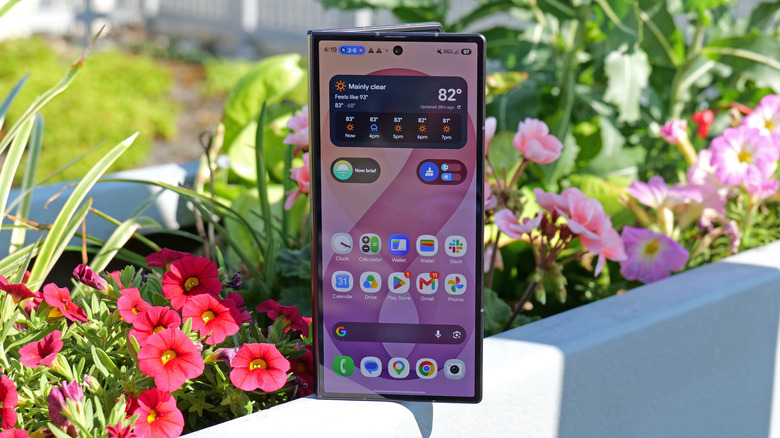
I like the Galaxy Z Fold 8 more than its predecessor. But the lack of major upgrades or design changes means that it doesn’t have the profound impact of the Z Fold 7 when it first debuted the delightfully thin chassis that’s still in use today. Samsung also tacked on even beefier performance, brighter displays and better battery life, so there are nice improvements throughout — even if it doesn’t look all that different from the outside.
In the end, my issue with the Z Fold 8 Ultra doesn’t really have anything to do with the device itself. Instead, my gripe is what the phone could have been. What I really want is a device that sports the wider chassis used on the base Z Fold 8 while retaining three rear cameras and moving up to an even larger main display — somewhere in the 8.4-inch range. This would give the phone a little extra vertical screen space for multitasking while vastly improving its ability to play back movies and shows. To me, this would go a long way towards making the Ultra really live up to its more premium designation.
 Sam Rutherford for Engadget
The Galaxy Z Fold 8 Ultra is a nice refinement over its predecessor and an excellent foldable in its own right. However, Samsung’s improvements for 2026 aren’t nearly enough to make anyone who bought the previous model want to run out an upgrade. Plus, pricing starts at $2,100 compared to $1,900 for the base model. Unless you are a big time side-by-side multitasker, or are seriously turned off at the thought of not having a dedicated zoom cam, the regular Z Fold 8 remains my pick for this generation.