dailynewsnblog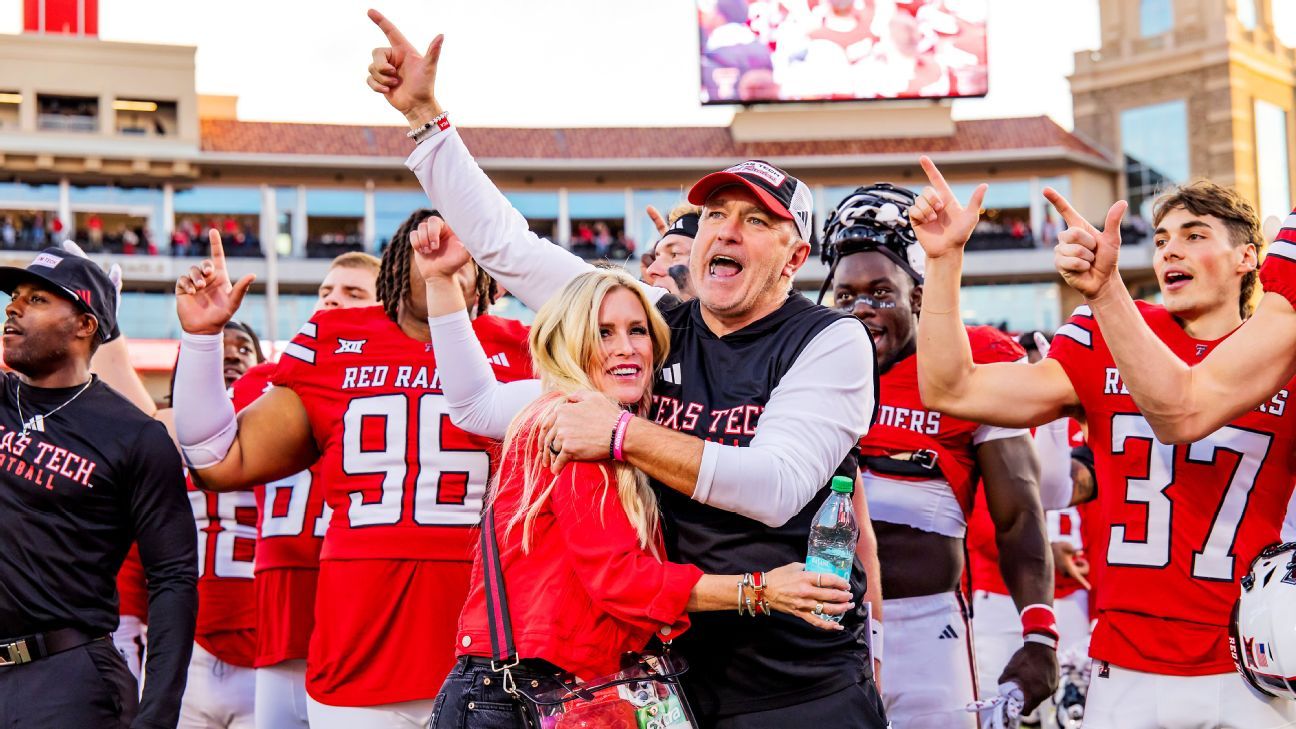

Bill Connelly

Multiple Authors
It’s comforting to know that sometimes we don’t know what we’re talking about. It’s a lot more fun that way.
We spend college football’s seven-month offseason trying to understand teams’ new rosters and general strengths and weaknesses, and most of the time we do a pretty good job of it.
Last year’s preseason AP top 10, after all, featured six teams that went on to reach the College Football Playoff, and nine eventual CFP teams were in the preseason top 20. It was a huge disappointment when preseason No. 1, Texas, merely won 10 games.
Of course, seven months of offseason analysis didn’t prevent us from some epic whiffs. Remember how preseason No. 2 Penn State was finally ready to break through? And preseason No. 4 Clemson had all the experience and continuity that most other teams lacked? And preseason No. 9 LSU finally had its offense and defense on the right trajectory at the same time? And preseason No. 11 Arizona State was ready to defend its Big 12 crown? And No. 13 South Carolina was a popular dark horse? And No. 20 Indiana was sure to fall off after an out-of-nowhere charge in 2024?
The preseason poll rankings and final SP+ projections for 2026 are coming in August. We’re going to be right about a majority of teams, but let’s take a moment to revisit some of the teams we may have been pretty wrong about and predict some of this coming season’s happier stories. Which of 2025’s unexpected breakthroughs might find even further heights? Which of last year’s disappointments are likeliest to bounce back?
Jump to:
Breaking through | Bouncing back

Teams most likely to sustain 2025 gains
We’ll start with the difficult category. In last year’s breakthroughs and bounce-backs piece, I listed six teams I felt would sustain the gains they enjoyed in 2024 surges. Illinois, Miami and Pitt all improved further, per SP+, and Miami of course reached the national title game; three other teams, however — Arizona State, Baylor and Buffalo — all saw their win totals fall by at least three games and saw their SP+ rankings fall. Going 3-for-6 isn’t bad, but I expected better.
Over the past 20 years, we’ve seen an average of 1.9 teams improving by at least 20 ratings points in SP+ and an average of 18.6 teams improving by at least 10 points. On average, these teams regress the next season 61% of the time, 32% by at least seven points.
The sudden improvements have increased in the 2020s, as liberal transfer usage has increased the speed of total roster resets. While not every reset produces happy results, since 2022 we’ve seen 20.0 teams per year improving by at least 10 points — an increase of about 8% over that 20-year average above. And interestingly, only 50% of these surging teams regressed the next year. Half of them improved further. This might be a short-term trend, but it remains something to watch.
In 2025, a whopping 24 teams improved by at least 10 points in SP+. Based on recent averages, we can expect 40-50% of them — about 10 to 12 — to improve further in 2026. Only four were projected to do so in my spring SP+ projections, which means I’ll have to stray from the numbers to pull a larger list together. But after writing lengthy conference previews about each team, here are eight teams I believe are the likeliest candidates to build on 2025’s surprise successes.

2024: 8-5 record, 54th in SP+ (+4.3 adjusted points per game, or 4.3 points better than the average college football team)
2025: 12-2, third (+27.6)
2026 projection (as of March): 10.7 average wins, seventh (+23.1)
From my Big 12 preview: “Tech remains the obvious Big 12 favorite both because of the talent on hand and because of how shockingly light the Red Raiders’ schedule turned out to be. … There are always challenges in store, but it would take quite the run of surprises to prevent Tech from returning to [the Big 12 title game] and racking up a huge win total in the process.”
The Red Raiders certainly face some big questions this fall: How good can QB Will Hammond be when healthy (and when will he be healthy)? Does the new receiving corps provide enough help? Am I glossing over the massive losses they face in the defensive front six simply because I like their new transfer haul? They did laps around the rest of the Big 12 in 2025 — in three games against the Big 12’s second- and third-best teams (BYU and Utah), they won by a combined 97-24 — and they get massive benefit of the doubt because of it. I expect another top-10 product, even if unexpected QB questions keep them from making any sort of major CFP run.

2024: 6-7 record, 58th in SP+ (+3.1 adjusted points per game)
2025: 9-4, 13th (+18.4)
2026 projection (as of March): 7.8 average wins, 21st (+14.6)
From my Big Ten preview: “After a solid nine-win bounce-back campaign in Fisch’s second season in charge, Washington re-signed exciting young quarterback Demond Williams Jr., then lost him, and then got him back. … He has spent most of the offseason insisting that he’s fully committed to UW. Assuming no lasting repercussions from the saga … the Huskies really should be pretty fun.”
Williams’ stay-or-go saga killed the afterglow of a fantastic rebound season in Seattle, but if there are indeed no issues stemming from that, the Huskies could potentially improve further. The conference schedule is rocky, featuring five of the top-seven projected (non-Washington) Big Ten teams; considering Washington’s primary issue last year was damaging high-level defenses, that might prevent a serious CFP push. But with Williams, five experienced offensive linemen and proven defensive disruptors such as linebacker Jacob Lane and safety Alex McLaughlin, I’m expecting a top-20 caliber team.

2024: 4-8 record, 102nd in SP+ (-8.2 adjusted points per game)
2025: 10-3, 40th (+7.4)
2026 projection (as of March): 7.4 average wins, 36th (+8.2)
From the Big 12 preview: “In his first year in a job, Fritz’s all-time win percentage is just .507. But it rises to .730 in Year 2 and holds steady at .725 in Year 3. … The schedule isn’t particularly kind, but the Coogs could have some of the best trench play in the Big 12 and plenty of upside elsewhere. And Year 3 Willie Fritz definitely gets the benefit of the doubt.”
A 6-1 record in one-score games certainly boosted Houston’s record last season, but the Cougars were still dramatically improved, and line play and extreme experience from quarterback Conner Weigman could prove to be a nice close-game combination once again. Or at least it had better: Each of Houston’s last seven games is projected within 6.3 points, per SP+.
Even with another close loss or two, however, this roster should be sturdy and exciting. Incoming running back Makhi Hughes was a star for Willie Fritz at Tulane, and it would be great if Weigman didn’t have to carry the run game as much. But the defense looks excellent, and the Coogs have top-30 potential.

2024: 2-10 record, 83rd in SP+ (-3.2 adjusted points per game)
2025: 5-7, 41st (+7.2)
2026 projection (as of March): 6.6 average wins, 35th (+8.7)
From my ACC preview: “Technically, anytime you improve by three wins and 42 spots in SP+, you have pulled off an excellent rebound season. And technically, going 5-7 just two years after you went 13-1 is never going to be anything but massively disappointing. It’s impossible to set expectations for Mike Norvell and FSU.”
I’m guessing FSU fans wouldn’t describe anything about the 2025 season as a “breakthrough,” but the Seminoles technically qualified for the list with a decent-sized rebound after 2024’s all-time collapse. And they should improve further this fall, even if that’s not saying just a ton. The Ashton Daniels-to-Duce Robinson pitch-and-catch combo should be fun, and the defensive front six should be solid. That Mike Norvell had to rebuild his offensive line, again, is scary, though.
We won’t have to wait long to know if I’m wrong about the Noles. With a visit from SMU in Week 1 and a Week 3 trip to revenge-minded Alabama, FSU could have some serious end-of-September buzz for either great or terrible reasons.

2024: 4-8 record, 101st in SP+ (-8.2 adjusted points per game)
2025: 7-6, 51st (+5.8)
2026 projection (as of March): 5.4 average wins, 49th (+4.6)
From my Big Ten preview: “Last season’s Wildcats team was their best in five years. … And though the offense still only occasionally carried its weight, David Braun hired Chip Kelly as offensive coordinator and brought him a fun dual-threat QB with Big Ten experience (Michigan State’s Aidan Chiles). The defense returns about half of its key playmakers and added a couple of FBS starters.”
This definitely feels like a “better team, worse record” situation with Northwestern this season. The defense could improve further, and while Chip Kelly isn’t quite the slam-dunk hire he used to be — his innovations are pretty far away in the rearview mirror — he is still Northwestern’s most proven offensive coordinator hire in ages and should craft a solid run game. But the Wildcats drew the short straw in the scheduling department: They’ll play all three of the Big Ten’s projected top-five teams on the road. For that matter, the home schedule features Penn State, Iowa and Illinois as well. If they go 7-6 again, David Braun should be the Big Ten Coach of the Year; I’m not writing it off, though.

2024: 5-7 record, 116th in SP+ (-14.8 adjusted points per game)
2025: 9-4, 73rd (+0.9)
2026 projection (as of March): 8.0 average wins, 68th (-0.5)
From my Mountain West preview: “After enjoying just two winning seasons in the 17 previous years, the Lobos became one of the nation’s more delightful stories. […] The Lobos are projected underdogs only twice — by 20.2 points at Oklahoma in Week 3 and by 0.7 points against UNLV in November.”
They were among the nation’s favorite mid-majors last season, and not just because of their sexy alternative unis.
the turquoise aura is elite 👏
“one of the best alternate uniforms in the sport” – @espn #GoLobos | 🐺⬆️ pic.twitter.com/wwQhzVUflY
— New Mexico Football (@UNMLoboFB) November 30, 2025
Jason Eck gets his players to play both loose and ultra-physically, and despite turnover in the skill corps and on the offensive line, I’m betting the Lobos are major factors in the Mountain West race a year after narrowly missing out on a title game bid. They might have the best linebackers in the Group of 6, and a dynamite offensive line should make life easier for quarterback Jack Layne and a new-ish set of running backs. It sure seems like the arrows are pointed in the right direction here.

2024: 1-11 record, 121st in SP+ (-16.2 adjusted points per game)
2025: 2-10, 90th (-6.1)
2026 projection (as of March): 3.5 average wins, 83rd (-3.1)
From the Big Ten preview: “This is a pretty tough job, and it felt as if Odom was a pretty good guy to take it on. … He did technically make improvements during last season’s frustrating 2-10 campaign, even if most were of the ‘nowhere to go but up’ variety. After bringing in a whopping 54 transfers last season, he eased off the throttle, signing only 29 this past offseason.”
I’m not above picking low-hanging fruit. Purdue probably won’t be very good this season; I’m just not seeing enough high-end talent on offense. But there’s still plenty of room for growth after jumping to merely 90th in SP+ last season. New/old coordinator Kevin Kane’s defense got pretty significant size and depth infusions via the portal and could be downright spicy in the secondary. With the return of players such as nickel Smiley Bradford and the addition of transfers such as safeties Mister Clark (Florida International) and Jaden Mangham (Michigan) and 6-foot-4 corner Don Saunders (Utah). Even if improvement simply means “having a shot at five wins for the first time since 2022,” that’s still further improvement!

2024: 3-9 record, 128th in SP+ (-20.6 adjusted points per game)
2025: 4-8, 104th (-10.0)
2026 projection (as of March): 6.4 average wins, 98th (-7.6)
From my American preview: “[Tre] Lamb’s first season after coming over from ETSU wasn’t an absolute thrill, but his Golden Hurricane got 2,158 passing yards out of freshman quarterback Baylor Hayes, beat Oklahoma State for the first time since 1998 and upset Oregon State and Army late.”
I don’t think we’re talking about American Conference contenders here or anything, but with Hayes returning (and potentially getting pushed by Kennesaw State transfer Dexter Williams II), Lamb signing a delightful group of running back transfers and a huge number of 2025 freshmen and sophomores returning on defense — including potential standouts in corner Elijah Green and nickel Devin Robinson — the upside is high enough here to generate a solid push forward.
Tulsa ranks second in the conference in returning production, and Lamb added one of my favorite Group of 6 transfer classes. That seems encouraging, doesn’t it?
Teams most likely to rebound from a 2025 stumble
Now for the easier category. Of the five teams I listed last season that I thought were likely to rebound from a sudden stumble — Air Force, Florida State, Michigan, Southern Miss and Washington — four saw their win totals improve, and all five improved in SP+, four by at least 30 spots. Two of these teams (FSU and Washington) are on the “sustained gains” list above for 2026, too.
In a universe in which you’re measured by wins and losses, everything is zero-sum: If someone is rising, someone else is falling. Over the long haul, the trend for collapses is almost identical to the trend for sudden surges: Over the past 20 years, an average of 1.8 teams have collapsed by at least 20 adjusted points per game in SP+, and an average of 16.9 have fallen by at least 10 points. But of the teams that stumble, 64% of them rebound the next season, and 36% see their SP+ rating improve by at least seven points. The trends of the 2020s have been relatively stable, too: Since 2022, 14.8 teams have regressed by 10-plus points, and 68% have rebounded the next year.
Last year, two teams regressed by 20 or more points: Sam Houston and Virginia Tech. Thirteen others fell by at least 10 points. Averages suggest that about 36% of these 15 teams — around five to six — will improve by a touchdown or more in 2026. Here are the six I think are most likely.

2024: 8-5 record, 20th in SP+ (+13.8 adjusted points per game)
2025: 4-8, 63rd (+3.5)
2026 projection (as of March): 7.0 average wins, 20th (+14.7)
From my SEC preview: “[Jon] Sumrall’s first roster doesn’t feature tons of guaranteed stars, but it has lots of components. And that’s something Sumrall can generally work with. He inherited a Troy team that had gone 10-13 over the previous two years and went 23-5, then he inherited a good Tulane team and won 20 games in two years with an American title and playoff berth.”
I’ve been wrong about Florida’s capabilities plenty of times through the years, but I haven’t been particularly wrong about Sumrall. Granted, I was pretty high on Sumrall’s predecessor, Billy Napier, too, but after a genuine offensive collapse last season, the bar for improvement in Sumrall’s first season is low. Florida collapsed to 89th in offensive SP+, and while new starting quarterback Aaron Philo — who followed new coordinator Buster Faulkner from Georgia Tech — isn’t incredibly proven, he was exciting in a small sample. There seem to be pieces for a strong run game, and a decent defense returns a solid core. I’d be shocked if the Gators didn’t improve into at least the 40s in SP+, and probably a lot more than that.
Virginia Tech Hokies

2024: 6-7 record, 30th in SP+ (+10.0 adjusted points per game)
2025: 3-9, 106th (-10.1)
2026 projection (as of March): 7.3 average wins, 33rd (+9.1)
From the ACC preview: “[James Franklin’s] going to be reliant on a mix of transfers and holdovers from a team that underachieved quite a bit in Brent Pry’s final season in charge. […] There’s a chance it takes Franklin & Co. a little while to get things aligned, and maybe this ends up being a year for getting the young blue-chippers’ feet wet. But with a manageable schedule and semi-proven QB in [Ethan] Grunkemeyer, there’s potential for at least seven or eight wins.”
More low-hanging fruit. After a 2024 season loaded with both promise and close losses, Tech collapsed last fall with two new coordinators and almost an entire transfer class failing to deliver what was required. The Hokies’ No. 106 SP+ ranking was their worst in 52 years, so of course they’re likely to improve. But their SP+ projection — 33rd with a good chance at seven or eight wins — is aggressive. There’s a natural progression-toward-the-mean factor baked in there, and by my count Franklin added 16 former blue-chippers (freshmen and transfers) and around seven FBS starters. The floor is quite a bit higher than it was 12 months ago.
0:44
Kemari Copeland breaks a Virginia Tech record with 510-pound bench press

2024: 3-9 record, 81st in SP+ (-2.6 adjusted points per game)
2025: 1-11, 121st (-15.1)
2026 projection (as of March): 6.4 average wins, 39th (+6.7)
From my Big 12 preview: “OSU is projected an aggressive 39th in SP+, which feels right to me but is still awfully ambitious. The Cowboys’ conference schedule features seven games projected within 6.9 points, which means that if they over- or underachieve by a decent amount, their win total could swing pretty wildly. But if nothing else, it’s going to be pretty easy to improve on 1-11.”
As with Virginia Tech, improvement is all but guaranteed in Stillwater, but the potential magnitude of the rebound really interests me. New head coach Eric Morris is grafting half of the best offense in the country onto what was the worst roster in the Big 12; his transfer haul is easily my favorite — not only because of quarterback Drew Mestemaker but also because of running back Caleb Hawkins, receiver Wyatt Young, defensive end Keviyan Huddleston and loads of others. The defense might not be good enough for a Big 12 title push by any means, but I could indeed see an immediate return to the top 40 here.

2024: 9-4 record, 39th in SP+ (+8.1 adjusted points per game)
2025: 3-9, 96th (-8.3)
2026 projection (as of March): 4.6 average wins, 65th (+0.7)
Again from the Big 12 preview: “In Sanders’ fourth year in charge, he’s looking at his third or fourth total reset. The thing is, I like nearly everyone he added. […] There’s more proven production on this roster than even the nine-win 2024 team had. It has to jell, and massive makeovers always come with risks. But I like this team’s potential a lot more than SP+ does.”
Colorado’s SP+ ranking has either improved (twice) or regressed (once) by at least 40 spots in each of Deion Sanders’ three seasons in charge. I’m not sure that big a jump is in store this season, but while I don’t have statistical backing for this claim, I’m just really enamored with the transfer class Sanders reeled in, from high-level proven FBS starters such as receivers Danny Scudero (San Jose State) and Kam Perry (Miami-Ohio), center Demetrius Hunter (Houston), defensive tackle Santana Hopper (Tulane), linebacker Gideon Lampron (Bowling Green), corner Justin Eaglin (James Madison) and nickel Randon Fontenette (Vanderbilt), to former blue-chippers such as receiver DeAndre Moore Jr. (Texas) and nickel Boo Carter (Tennessee). Hiring Brennan Marion as your offensive coordinator tends to work out well, too, even if he tends to leave every job after a year.

2024: 10-3 record, 46th in SP+ (+5.5 adjusted points per game)
2025: 3-9, 115th (-13.1)
2026 projection (as of March): 4.5 average wins, 69th (-1.0)
From the ACC preview: “After a delightful 10-win debut in 2024, Fran Brown’s Syracuse was in excellent shape last September, starting 3-1 with an upset of Clemson. But quarterback Steve Angeli, solid in four starts, was lost for the season to injury against Clemson, and the offense bottomed out. … Syracuse averaged just 11.1 points per game after Angeli’s injury and lost eight straight by an average of 27.5 points.”
Again with the low-hanging fruit. If Angeli is ready to roll in September (and he certainly suggested as much), Syracuse is automatically better than it was last season. Brown’s panic moves in Angeli’s absence were alarming, and he had to rebuild his receiving corps and defensive line this offseason, but simply improving into the 60s or 70s in SP+ would represent massive improvement, and I would be shocked if Syracuse doesn’t hit that mark.

2024: 2-10 record, 129th in SP+ (-21.9 adjusted points per game)
2025: 0-12, 136th (-36.6)
2026 projection (as of March): 2.9 average wins, 137th (-30.9)
From my MAC preview: “You could tell what Joe Harasymiak wanted to do last season. His Minutemen avoided mistakes and attempted physicality via both run and pass. … The defense was good on third-and-longs. Their game plans were solid, too: They were ahead after the first quarter three times and at halftime twice. … You do need some level of talent to succeed, however. UMass didn’t have much.”
Harasymiak is a former Greg Schiano protégé, and it really seemed as if he was laying down a Rutgers-esque foundation last season. He desperately needed to upgrade his roster’s talent levels after a dreadful 0-12, last-in-SP+ performance last season, and with the addition of players such as quarterback Pop Watson III (Virginia Tech), running back Justin Williams-Thomas (Marshall), center Aitor Urionabarrenechea (Colorado State), defensive ends Andrew and William Depaepe (Indiana), safety Jahmad Harmon (Ball State) and others, I think he did so. Combine that with the fact that it will be almost impossible to put a worse product on the field than what we saw last year, and this might be the lowest-hanging fruit of all.