dailynewsnblog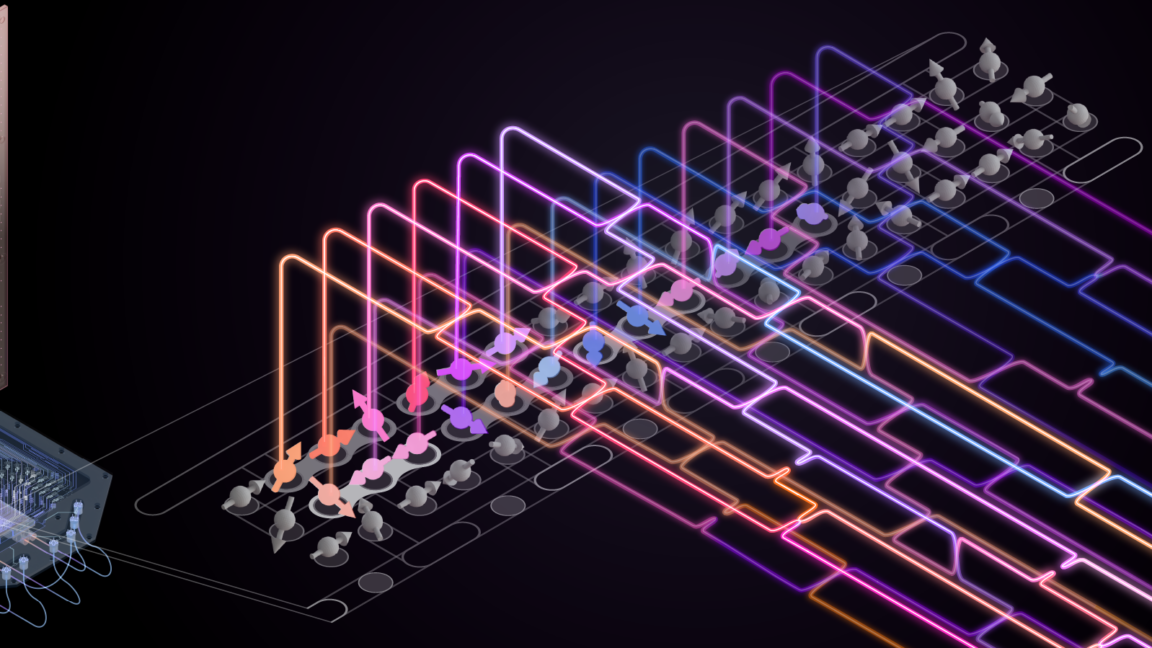
For qubits, the traps are far smaller and serve to hold a single electron in place. Critically, they can be manufactured; with the right wiring, electromagnetic interactions can trap a single electron in a small patch of silicon. Once trapped, the electron’s spin, which can be up, down, or a superposition of the two, can be used as a qubit. While this technology can scale easily—we’re very good at putting wiring into silicon at scale—electron spins are hard to keep stable and are typically controlled via microwaves, requiring a separate control system.
But “typically” doesn’t mean “always,” and HRL is describing a different tech. It requires three separate quantum dots, each holding an electron, with the surrounding electronics controlling how much the spins of these three electrons can interact. That’s critical because, under certain conditions, no two electrons can have the same spin. This explains why atomic orbitals fill up the way they do, with each energy level holding just a pair, one spin-up, the other spin-down. Enabling them to interact can alter their spins.
To do operations on this kind of qubit, you simply need to control which electrons are interacting and to what extent. That is controlled electronically, allowing us to eliminate microwaves entirely. Everything is handled via wiring, eliminating the need for lots of microwave-carrying cabling into the refrigeration system that keeps the hardware near absolute zero.
HRL spends much of the paper describing its control system, which sits at an intermediate level of refrigeration and consists of a traditional processor optimized for low-temperature and low-power operations, consuming less than 3.5 watts despite being manufactured on a 130 nm process. Instructions for operating the qubits are compiled elsewhere, then loaded into the controller, after which it operates autonomously. Communications with the chip that holds the qubits are handled by a superconducting ribbon cable.