dailynewsnblog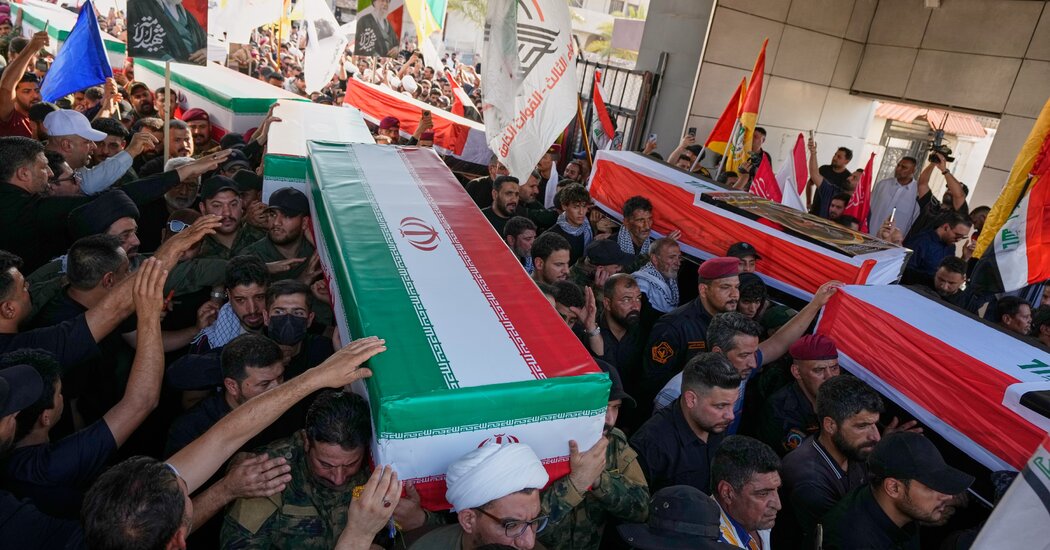
Prime Minister Ali al-Zaidi of Iraq called the U.S.-Saudi strikes “an unacceptable aggression.” Iraq maintains close ties to both Iran and the United States and has often found itself caught between the warring sides in recent months.
Many of the militias that make up the Popular Mobilization Forces first formed after the U.S.-led invasion and occupation of Iraq in 2003, which led to widespread anti-American sentiment in the country. Now they appear to be increasingly embroiled in the current war with Iran.
The U.S. official, who spoke on condition of anonymity to discuss operational matters, said that the U.S.-Saudi strikes killed about 20 Iranian advisers, a combination of senior technical advisers and liaisons from the Islamic Revolutionary Guards Corps. The sites in Iraq were deliberately targeted for that reason, the official said, and to knock out missile and drone sites belonging to the Iraqi militias.
The Popular Mobilization Forces issued a joint statement Wednesday threatening retaliation for the strikes. Still, they said they would not act until after Tuesday, the end of the ongoing Arbaeen pilgrimage, when hundreds of thousands of Shiite Muslim pilgrims visit holy shrines in the Iraqi city of Karbala. “Our response to the American enemy is inevitable and will come,” the statement said, “and we may target its tools in Saudi Arabia if the situation demands it.”
In Lebanon, a cease-fire involving another group supported by Iran — Hezbollah — came under threat on Wednesday when the Israeli military said the group had launched an explosive drone at one of its vehicles on a ridge in southern Lebanon.
The cease-fire has barely held as Israel and Lebanon have worked to implement a separate framework agreement aimed at ending months of fighting. Hezbollah has rejected the agreement between Israel and Lebanon.
Reporting was contributed by Erika Solomon, Abdi Latif Dahir, Lara Jakes, Jenny Gross, Rich Barbieri, Euan Ward, Pranav Baskar, Shirin Hakim, Zane Irwin, Peter Eavis and Eric Schmitt.