dailynewsnblog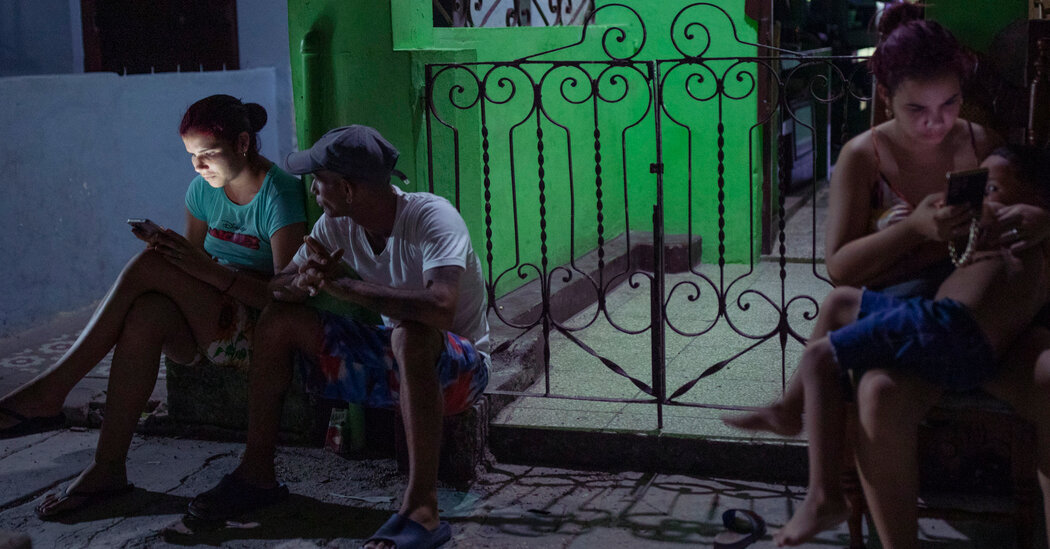
Why hasn’t Cuba’s government collapsed yet? It’s been six months since President Trump cut off the island’s fuel sources, in an effort to force political change. “It’s just going to fall,” he told reporters on Jan. 4. And yet, it hasn’t.
The New York Times recently sent a team of journalists to Cuba to try to figure out why. (It’s highly unusual for the Cuban government to grant Times journalists visas to report from the island. The last time was almost eight years ago.)
What they found was a remarkable story of people adapting to extreme circumstances — with lithium batteries, jury-rigged generators, solar panels and more. My colleague Sam Sifton, who hosts our sister newsletter, The Morning, spoke with our reporter Jack Nicas about his recent trip, and what it took to report from Cuba.
How they’re resolviendo in Cuba
Sam: I want to ask you about one farmer you met who devised a tiny backyard refinery to make gasoline out of shredded plastic. “Cubans thrive amid crisis,” he told you. Did you see a lot of that kind of ingenuity in Cuba?
Jack: One of the most important words in the Cuban lexicon is “resolver.” It literally means “to solve,” but in Cuba, after decades of a U.S. trade embargo, it really means “to figure things out by any means necessary.”
It explains how Cubans put Soviet engines into 1950s American cars to keep them running or ate breaded grapefruit rinds to imitate meat during their economic crisis following the fall of the Soviet Union.
And now they’re resolviendo again. We saw a lot of creativity during our trip across Cuba. People drilled solar panels to the tops of electric rickshaws. They are using lithium batteries to power concerts. There are even stories of people powering their cars with charcoal and cooking oil.
As a result, the country is still functioning, despite the hardship.
Sam: What was your reception in the country like? It’s been a long time since the Cuban government has allowed Times journalists to report there.
Jack: Everywhere we turned there were stories, and the Cuban people were eager to tell them. We spoke to dozens of people in Havana and beyond who wanted to express their frustration and exhaustion with the status quo. It was a mixed bag on whom they blamed. Some saw the Cuban government at fault for failed economic policies and political repression, while others believed Trump was making them suffer for his own personal gain. Many blamed both.
Sam: How hard was it to get your visa? Did government minders follow you around?
Jack: It took a lot of convincing to get. I met with top Cuban diplomats in Mexico City, Havana, Washington and New York over six months, and sent many letters to persuade them that we would tell this story fairly. Once we got to Havana to report, we met with Cuban officials a few times, but they otherwise didn’t bother us. We traveled around freely, decided our story targets and chose whom we interviewed.
Read the team’s first dispatch from Cuba here.
MORE TOP NEWS
Zelensky and Netanyahu at the White House
Trump enjoys bringing world leaders into the Oval Office and letting news photographers and reporters capture him as he does it. But yesterday, he kept two meetings — one with Benjamin Netanyahu, the Israeli prime minister, and the other with Volodymyr Zelensky, the Ukrainian president — behind closed doors.
Trump and Netanyahu are each facing electoral challenges in the months ahead as their interests appear to be diverging sharply on the war with Iran. As for Trump and Zelensky, their relationship appears stronger than ever. Zelensky said they had discussed Trump’s pledge to allow Ukraine to produce U.S.-designed Patriot air defense systems.
OTHER NEWS
Football: A U.S. lawmaker requested that Gianni Infantino appear before a congressional committee to answer questions about FIFA’s relationship with Trump.
NICHE JOB OF THE DAY
Call him the Picasso of pointe shoes. Tim Foster sprays and daubs hundreds of shoes each season for New York City Ballet, turning standard-issue pale pink into a rainbow of hues. It’s a delicate, painstaking art: He must match costume colors exactly, so that the footwear doesn’t break the continuous line of the leg. “It has to be right,” he said, “because it’s their sacred tool. It’s their violin. It’s their oboe.”
Samosas in India. Noodles in South Korea. Papaya salad in Thailand. Across Asia, people are discovering that dishes that were once reliably cheap are no longer so affordable, as the shock waves of the war in Iran spread around the world.
Many Asian countries rely heavily on energy imports from the Middle East. Since the fighting began in February, their currencies have plummeted while inflation and prices of ingredients have surged. Customers and food sellers alike are feeling the pinch. “We are all in the same boat, hoping it won’t sink,” said one Bangkok street food vendor. Read more about how war makes noodles more expensive.
AROUND THE WORLD
Sealskin style in Greenland
There’s no overstating how important seals are to Greenland. They’ve provided sustenance for centuries in an environment where it’s difficult to survive. People there eat seals, feed them to their sled dogs and use their bones for jewelry. The sealskin trade is a major business, providing income for thousands of Inuit hunters.
My colleagues visited the Great Greenland tannery in the southern town of Qaqortoq to see how pelts are turned into clothing. It isn’t easy. Take a look.
RECOMMENDATIONS
Read: Marlon James’s “The Disappearers,” about an anti-gay hate crime in 1980s Jamaica, is among the 13 books up for the Booker Prize. See the list of nominees.
Snack: Eating the same foods every day can simplify your routine. But there can also be a downside.
Dress: What does semiformal even mean? Our fashion critic weighs in.
Soft bread is filled with a mayo-rich and Dijon-spiked egg mixture in this furikake egg salad sandwich. The filling gets an herby lift from chopped dill and the furikake’s sea-like flavor.