dailynewsnblog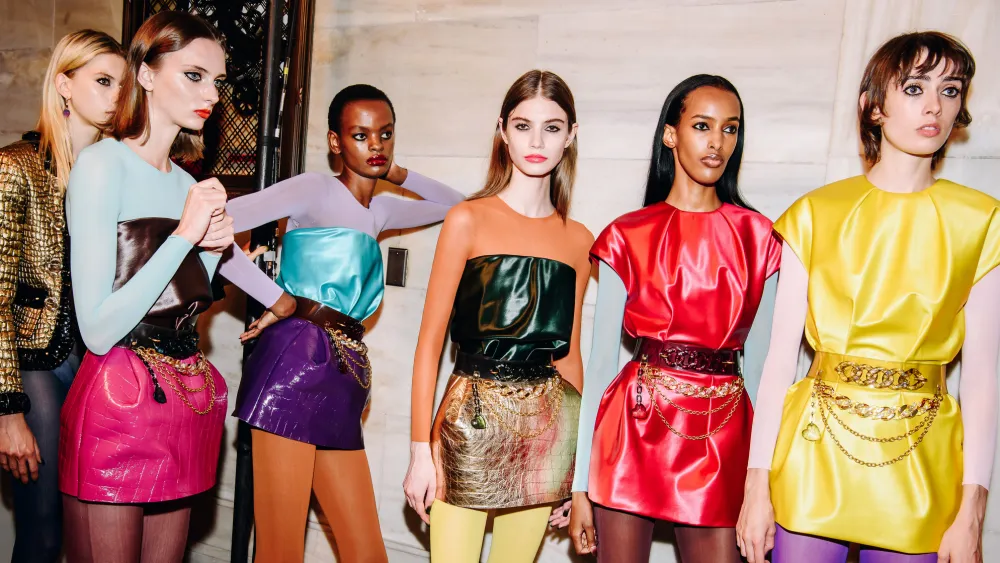
The macroeconomic ills of the world had their say — from the uncertainty of war to sticky inflation — but consumers get the final word and they’re still spending.
In addition to bolstering retail sales in the first half, the surprising consumer resilience helped push up the number of deals and valuations in the apparel, footwear and accessories mergers and acquisitions market, according to a new report from Capstone Partners’ consumer investment banking group.
Capstone’s tally counts 75 deals that closed or were revealed in apparel, footwear and accessories so far this year, a 21 percent increase from a year earlier. Most of the increase came from accessories deals, which tripled to 24 so far this year. The number of apparel and jewelry deals declined and footwear inched up to seven deals, from four a year earlier.
“Deal flow in the sector has bifurcated with businesses tied to discretionary spending, fashion risk, supply chain shocks, and wholesale dependence seeing weaker performance and softer acquisition appetite,” Capstone said. “In contrast, strong brands with recession-resistant business models and operations have continued to transact at healthy prices.”
Valuations have also been trending upward, with deals being priced at an average of 9.8 times earnings before interest, taxes, depreciation and amortization for 2025 and so far this year. That’s up from EBITDA multiples of 7.7 times for the 2023 to 2024 period.
Despite the macro concerns, the would-be dealmaker has some important winds at their back.
“Health and wellness and dress code casualization trends have converged with GLP-1 [weight loss drug] adoption to reshape wardrobes and bolster demand for activewear brands that have increasingly leaned into lifestyle apparel and footwear,” Capstone said.
The report cited Circana statistics showing that 23 percent of U.S. households use GLP-1s, with 80 percent of users expecting to need new looks to change sizes.
“This translates to approximately 31 million patients — assuming one GLP-1 user per household — in the market for a new wardrobe while a fourth of GLP-1 users, approximately 7.8 million, have already refreshed their wardrobes for a general style update,” Capstone said, citing 2025 data from the Federal Reserve. “The downstream impact of weight loss drugs on the sector has only begun to materialize, and business owners in the space are expecting to see growing demand throughout 2026 despite inflationary headwinds weighing on consumers.”
While that is the kind of big trend private equity companies like to jump at, most aren’t going for it and instead are steering clear of fashion. The number of fashion deals counting private equity as the buyer has fallen 50 percent so far this year, accounting for just 6.7 percent of transactions.
Picking up the slack are the brand management giants, which Capstone said “have accelerated acquisitions, moved upmarket, and helped fill the void.”
“Top brand aggregators include American Exchange Group, Authentic Brands Group, Bluestar Alliance, Marquee Brands, and WHP Global — a cohort that has collectively announced or completed 29 acquisitions in the space since 2023,” the report said.
Lately, the brand management crew has gotten a taste for luxury, with WHP teaming with G-III Apparel Group to cut a deal to buy Marc Jacobs while Marquee agreed to buy Roberto Cavalli. Lower down the price scale, Authentic agreed to buy the Lee denim brand for $1 billion, including a potential $250 million earn-out.
And nobody thinks they’re done wheeling and dealing.