dailynewsnblog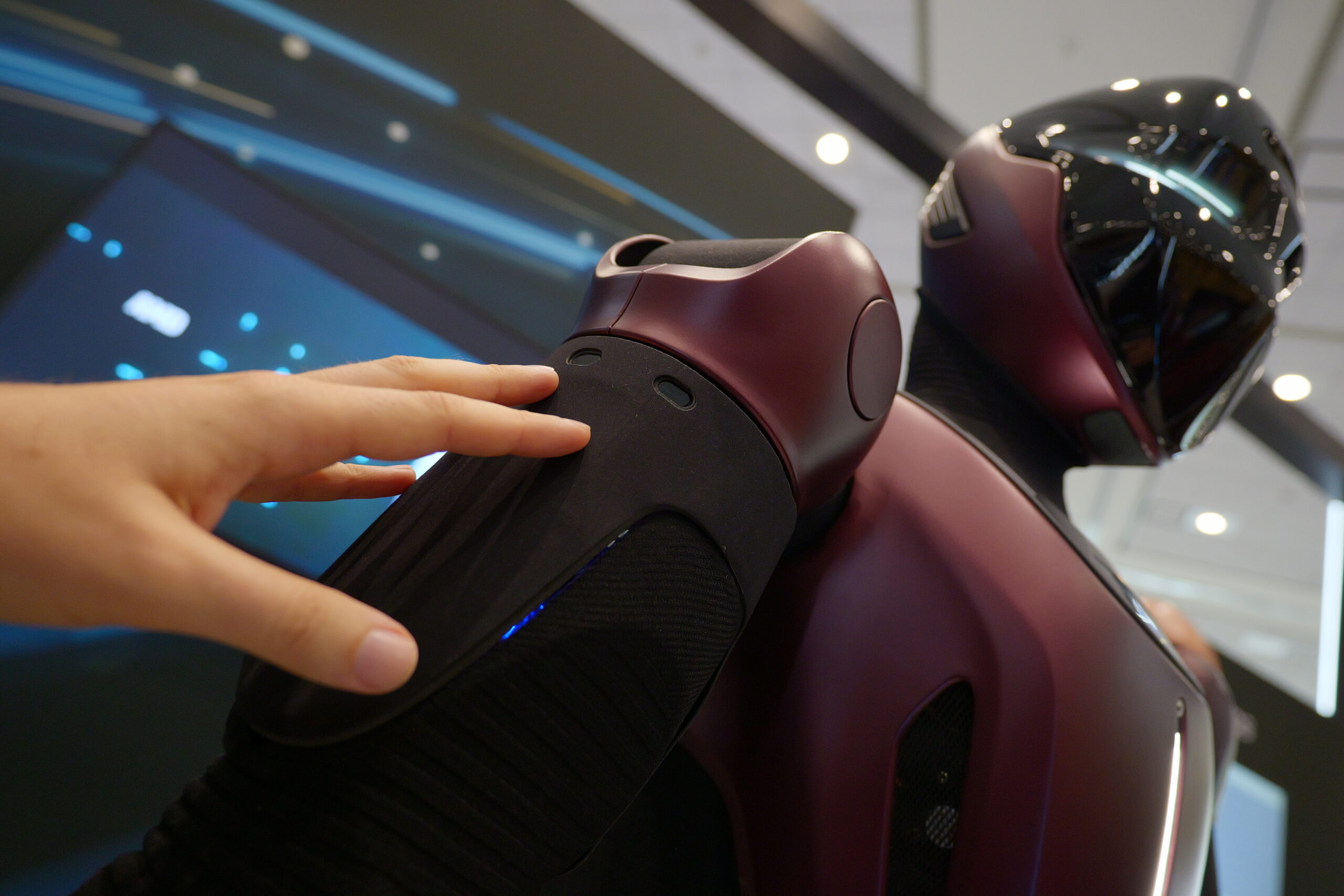
A new humanoid robot named Gene.01 just debuted at AMD’s Advancing AI conference in San Francisco, featuring a layer of external sensors on its arm called “smart skin.”
When I touched it, the “smart skin” felt like a neoprene wetsuit.
The robot has two different types of sensors. First, it has touch sensors that can detect not only when the robot is being touched, but also precisely where and how much force is being applied. As my fingers squeezed the rubbery skin, a rendering of the robot on a nearby TV screen lit up in the area I touched, glowing blue that grew darker the harder I squeezed. It specifically lit up only in the areas where my fingers were applying pressure.

It also has proximity sensors that detect when someone or something is close to the robot, but not quite touching it. These are called “time-of-flight” or ToF sensors in the robotics business. They work by sending invisible light out into the environment and measuring the time it takes for the light to bounce back to the sensor.

As I put my hand near these sensors, a dense cluster of dots appeared on-screen near the robot, indicating it was detecting my presence. As I moved my hand away, the cluster of dots moved farther from the robot on-screen and spread out until they became indiscernible from the background.
Embedded touch and proximity sensors prevent collisions and enable gentle interactions, which could open the door to robots working more closely with people. But gathering this sort of sensory data is just one piece of the puzzle.
The real challenge will be applying this data to real-time decision-making. That’s something Generative Bionics, the maker of Gene.01, is working on.

The company sees Gene.01 as a first step: a robotic platform that can be a jumping-off point to make humanoids custom-made to the specific needs of their clients. The amount of “smart skin” a robot has, where it’s located, and what sort of hands or “end effectors” it will have depend on what work the robot will be made to do.
To see this robot’s “smart skin” in action and our interview with Generative Bionics CEO, check out the video in this article.

See full bio