dailynewsnblog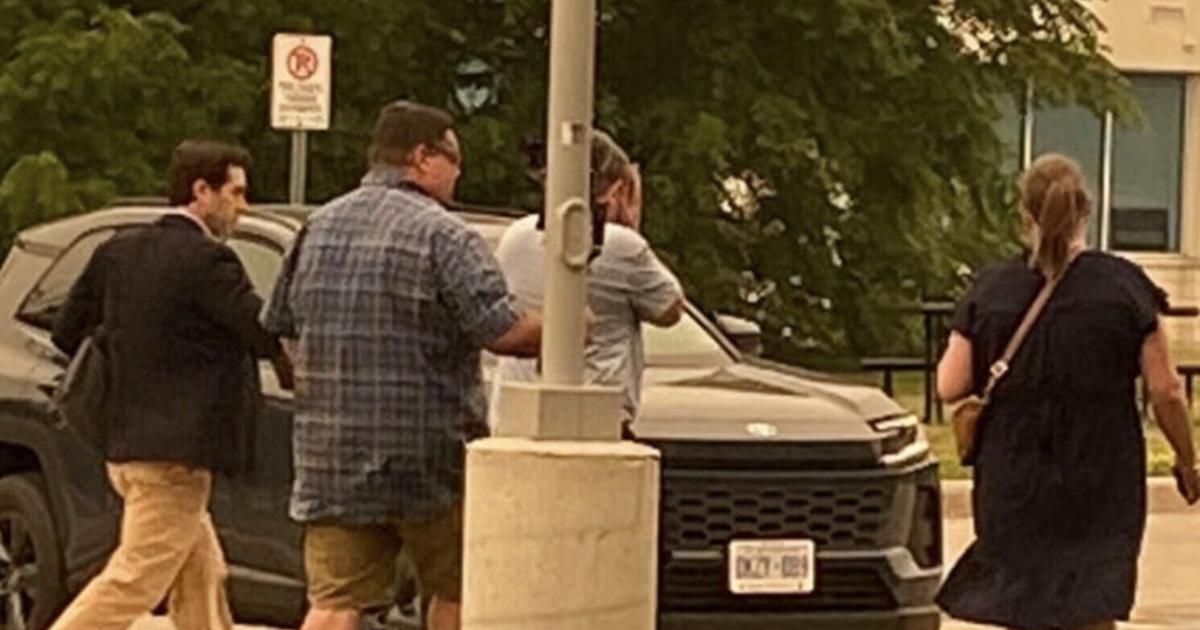
Tension hung in the air as Tammy Allin stood behind the boards of a Burlington arena last summer, coaching her teenage daughter’s lacrosse team.
Just a few feet away stood a woman who sold Allin and other parents fake tickets for Taylor Swift shows in Toronto. The global superstar brought her Eras Tour to the city in November 2024.

Tammy Allin was one of many parents scammed with fake Taylor Swift tickets by a former friend whose kids played hockey and lacrosse with her 13-year-old daughter.
Cathie Coward/The Hamilton Spectator
Tisor, 45, promised people tickets, only to rake in $265,330 for herself and Blake — over half of which went toward online gambling, according to court documents.

Denise Tisor (right) and David Blake (behind pole) hurry past media outside the Milton courthouse after their July 15 court appearance.
The Hamilton Spectator file photo
The ongoing fallout from the scam has transformed the social dynamics of what used to be a close-knit community of parents in Burlington. Many, including some who weren’t scammed but are friends with those who were, have done their best to avoid Tisor, even as she continues trying to talk with people in the stands of sports games and elsewhere, according to three parents who spoke to The Spectator.
Today, resentments still linger in certain Burlington parent circles. Allin and others told The Spectator they feel betrayed by Tisor — who they got to know because their kids play in the same sport leagues or go to the same school.
“She mined her personal relationships to sell these tickets,” said Jennifer Beck, who gave Tisor $1,050 for tickets for her and her teenage daughter.
Both Tisor and her lawyer declined multiple requests for comment over the course of several months.
Blake, 58, also declined to comment.
But on July 15, after pleading guilty before a judge in Milton, Tisor apologized in a now-deleted post on Facebook, Beck said.
“To those who were once close friends, to those who trusted me, and to everyone whose lives were affected, I am truly sorry,” Tisor wrote in the post — a transcript of which was shared with The Spectator.
Tisor has also reached out to individuals to apologize, according to Beck and Allin. But Beck, who received one of these messages, said she isn’t interested in reconciling until Tisor “shows some effort to start paying back the money that she stole.”
Both Tisor and Blake are due to return to court in early August to schedule a sentencing hearing. Tisor could face jail time, and a long record of past convictions for non-violent crimes in the early 2000s, including drug trafficking and probation breaches, could factor into the judge’s decision. Blake was also previously convicted of crimes, including theft under $5,000 in 2002.
While a lot of people have severed ties with Tisor, others have maintained their relationships — though doing so has put them at risk of judgment from those who are still upset.
“Everyone who was affected from this had some sort of fallout,” said Beck. “There’s lasting consequences — much, much apart from the financial losses.”
Buyers found Denise Tisor trustworthy
Before the events of November 2024, Tisor was well-liked among those in her extended social circles.
“Denise was a very nice person,” said Beck, describing Tisor as a “friendly acquaintance.” “I really, truly believe she was a really good mum just trying to work for her kids.”
The two met in 2019 when their sons played on the same hockey team. They stayed in touch through Facebook once the season ended and, after the pandemic, Beck started purchasing — and receiving — concert tickets from Tisor to see artists like Madonna and P!nk.
So when Swift announced in August 2023 she’d be coming to Toronto, Beck felt confident purchasing seats from Tisor again. This trust also led Beck to connect Tisor with other friends who wanted to go to the shows.

Denise Tisor sold hundreds of fake tickets for Taylor Swift shows in Toronto. The global superstar brought her Eras Tour to the city in November 2024.
The Associated Press file photo
“That in and of itself feels particularly terrible,” Beck said, explaining the guilt she still feels for spreading the word. “You know, I vouched for this person and said that she was trustworthy.”
According to an agreed statement of facts (ASF) read in court July 15, Tisor was a “reseller of genuine tickets” who promoted herself on Facebook under the alias “Denise Blackhawk” ahead of the Eras Tour. She claimed to have a corporate connection at the Rogers Centre, where Swift was performing, and would use positive reviews from previous “happy customers” to make her appear legit.
This also happened in text message exchanges, screenshots of which were submitted as evidence in a small claims case filed by one of the scam victims in March.
“I sell lots of tickets and im not here to get rich im here to make people happy and money on the side,” Tisor wrote in one text. She also sent screenshots of people tagging her on Facebook, thanking her for tickets to see Olivia Rodrigo, Sabrina Carpenter and others.
When Beck started hearing from friends that they still didn’t have their tickets just hours before Swift was set to take the stage, she reached out to Tisor. Beck was told Tisor’s “guy” with the tickets — a man named Mark Harlow — had disappeared, so she initially thought Tisor had been scammed, too.
(Police would go on to investigate Harlow, but determine he had no involvement in the ticket sales, according to the ASF.)
But as those without tickets started talking with one another, and to the media, Beck became suspicious of Tisor. Parts of Tisor’s explanation for the missing tickets didn’t add up. Plus, there was the question of how Tisor was able to get so many tickets for such a high-demand concert. (Beck said she later heard multiple people were sold tickets for the same seats.)
When Beck spoke with The Spectator in November, she still wasn’t sure if Tisor had malicious intentions. Did Tisor initially have some tickets but see an opportunity to make some cash? Or was it a ploy from the start?
After the guilty plea, though, Beck is no longer on the fence.
“This was a well-planned out scheme from the start,” she said.
Where did the money go?

In the wake of the Taylor Swift ticket scam, a tight-knit parent community in Burlington remains fractured.
Toronto Star file photo
None of the 107 victims — who reside mainly in Halton and Toronto and whose names span a two-and-a-half page document submitted as evidence — have gotten their money back from Tisor.
But the ASF lays out where their money went:
Between October 2023 and November 2024, Tisor e-transferred nearly $42,500 to Blake’s bank account — money that had come from the fraudulent ticket sales, the court heard. Blake had no direct contact with any of the ticket purchasers.
Around the same time, between July 2023 and November 2024, the pair used $139,144 to place bets on online gambling sites, including BetRivers and Paybilt Inc. The nature of these bets isn’t clear, but they ultimately ended up with a net loss of $56,335. The couple also withdrew nearly $300,000 in cash through roughly 350 ATM transfers.
Tisor referenced some of these actions in her now-deleted Facebook apology, sharing that she was “facing a serious gambling addiction that completely took over” her life.
However, neither Beck nor lacrosse mom Allin buy this explanation.
“I think she used that money to try and make more. And she lost it,” Beck said.
Purchasing tickets from scalpers a risk
Allin has heard criticism online about those who were scammed. How did they not know something was wrong?
The scam wasn’t like that, though, said Allin.
“I wasn’t on Facebook Marketplace. It was someone that I knew in the community,” she said. In addition to their lacrosse connection, Allin is the gym teacher at a local elementary school that some of Tisor’s kids attend.
“I had no reason to believe that I shouldn’t have trust and faith in her.”
Even if people know a “scalper” like Tisor is reliable, Daniel Tsai, a business professor at Vancouver’s University Canada West and founder of ConsumerRights.ca, said buying resale tickets through unofficial channels is never worth it.
“The risk outweighs the reward,” he said.
Instead, Tsai recommends sticking to official resale sites like StubHub — even if someone on Facebook Marketplace or elsewhere is offering tickets for a lower price.
Vass Bednar, managing director of the Canadian Shield Institute and co-author of “The Big Fix,” said artists could be part of the solution, too. She pointed to Ticketmaster, which pledged to cap resale prices for tickets to Olivia Dean’s “The Art of Loving Live” tour after the Grammy-winning singer called out the company.
“They have sway,” Bednar said.
What’s next for scam victims?
In the wake of the guilty pleas, the scam victims are still anxious to see what happens to the couple at the upcoming sentencing hearing, Beck said.
But regardless of what happens next, the tight-knit parent community in Burlington remains fractured.
After last summer, Allin decided to stop coaching at school to limit her chances of a potential encounter with Tisor or her kids. She didn’t coach her daughter’s lacrosse team this year for similar reasons.
“I don’t think that it’s fair that other people should have to tiptoe around her and her behaviours because she chose to commit a crime,” Allin said in the wake of Tisor’s plea.
Beck, meanwhile, recalls a phone conversation with a friend last summer. The friend, who was notably not among the scam victims, was at her child’s lacrosse game but speaking to Beck from her car. She told Beck she was avoiding Tisor, who was in the stands talking to other parents.
Beck would’ve done the same.
“If I ran into Denise, I would turn and walk the other way.”