dailynewsnblog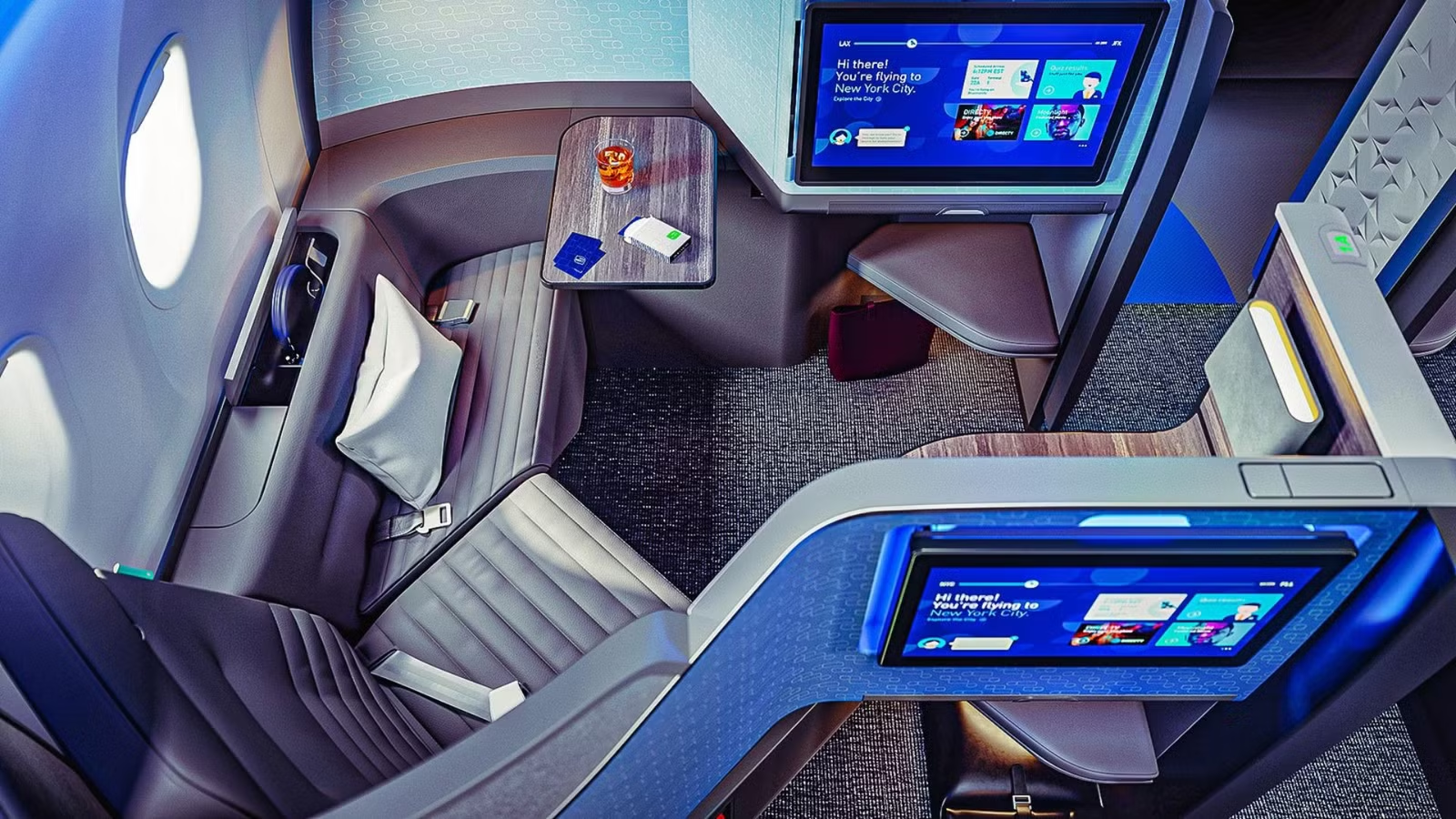
Commercial aviation has spent decades chasing passenger growth, but Airbus believes the next major shift will be driven by something entirely different. Rather than simply carrying more people, airlines are increasingly competing to offer a better experience, with premium cabins becoming one of the industry’s most valuable assets.
Speaking during Airbus’ 2026 Global Market Forecast briefing in London, attended by Simple Flying, company executives explained why this trend is expected to have a significant impact on the US domestic market over the next two decades. Their outlook suggests premium cabins, larger aircraft, and increasingly sophisticated cabin layouts will shape airline fleet decisions through 2045, even as population growth across North America remains relatively modest.
Premium Travel Has Become One Of Aviation’s Fastest-Growing Markets

For much of modern aviation, airlines have focused primarily on increasing passenger numbers and reducing unit costs. While those fundamentals remain important, particularly in markets such as the low-cost carrier sector, Airbus believes airlines are now generating a growing share of their profits by selling differentiated products rather than simply filling economy seats. Across the industry, premium cabins consistently generate a disproportionate share of airline revenue.
This comes despite accounting for a small percentage of passengers. According to McKinsey, premium seating can account for around 15% of airline revenue while serving only about 3% of travelers, highlighting why airlines continue to invest heavily in premium products.
Airbus Head of Marketing, Commercial Aircraft, Joost van der Heijden, said the trend has become increasingly visible across both narrowbody and widebody fleets.
Catch what other flight trackers miss
Emergency squawks, holds, NOTAMs — live signals, no signup.
Open tracker
Catch what other flight trackers miss
Emergency squawks, holds, NOTAMs — live signals, no signup.
Open tracker
He explained that airlines have spent the past decade introducing stronger segmentation, noting that “what we’ve seen over the last decade is a strong increase in premium class configurations with a stronger segmentation, up to four classes in an A321.” Rather than offering a simple choice between economy and business class, airlines now divide their cabins into multiple tiers. The shift reflects changing passenger expectations rather than simply higher corporate travel demand.
Van der Heijden said airlines are responding to “different passenger expectations, different travel behaviors, different experiences being sought,” creating aircraft interiors that cater to a much broader range of travelers. This is particularly relevant as leisure passengers increasingly purchase premium products that were once associated almost exclusively with business travel.
Why Airlines Are Adding Four Cabin Classes To Narrowbody Aircraft

One of Airbus’ strongest observations is that premiumization is no longer confined to long-haul widebody aircraft. Thanks to aircraft such as the Airbus A321XLR, airlines are operating single-aisle aircraft on routes lasting six, seven or even eight hours, creating demand for far more sophisticated cabin layouts. The A321XLR, with a range of up to 4,700 nautical miles (8,704 km), allows airlines to serve transatlantic and other long-thin markets that previously required much larger aircraft.
According to van der Heijden, these longer sectors have accelerated premium cabin development. He explained that airlines are introducing “up to four classes in an A321,” with the additional range creating stronger demand for premium products and greater cabin segmentation. Instead of simply installing more economy seats, airlines are increasingly allocating space to premium economy, extra-legroom sections and modern lie-flat business class suites that command significantly higher fares.
This strategy is already visible across the industry. JetBlue’s Airbus A321LR fleet features Mint business suites alongside Even More Space seating and Core economy. Meanwhile, American has introduced premium-heavy Airbus A321XLR cabins featuring Flagship Suites on upcoming deliveries. United is also expanding premium seating across its narrowbody fleet as part of its United Next program, while Delta continues increasing the proportion of Delta Comfort+ and First Class seating on domestic aircraft.
Premium Economy Is Becoming Aviation’s Most Important Cabin

While business and first class continue to generate the highest fares, Airbus believes one of the biggest structural changes has been the rapid emergence of premium economy. Research from the International Air Transport Association shows premium travel demand has consistently recovered faster than economy traffic since the pandemic, with premium traffic rebounding to 86% of pre-pandemic levels globally (and surging to 107% in North America) ahead of economy’s 81% recovery.
To capture this high-yield demand, airlines continue expanding premium cabins on both new aircraft and retrofitted fleets, driving a 27% increase in premium seat capacity since 2020 compared to just 10% for standard economy. Van der Heijden said Airbus has seen this trend accelerate across its widebody customers. “What we’ve been seeing as well on the widebody side is that premium traffic has been growing faster than economy class traffic,” he explained.
Importantly, he stressed, this growth is “not only because of more first or business,” but because airlines are offering guests more choice through additional cabin segmentation. Premium economy has become a particularly important part of that strategy, with flyers increasingly willing to pay for an improved experience without paying business-class fares. For airlines, the economics are compelling, as premium economy seats typically occupy 1.5 times the floor space of economy but generate over twice the revenue.
Wealthier Leisure Travelers Are Reshaping The Market

Although North America remains one of the world’s largest aviation markets, Airbus believes its future growth will differ from rapidly expanding regions. Rather than relying on population growth, the manufacturer expects rising household wealth to become the primary driver of airline demand. Airbus’s Head of Market Analysis and Forecast Antonio Da Costa explained that North America will require approximately 7,000 new passenger and freighter aircraft over the next 20 years.
These will account for a substantial share of the manufacturer’s global forecast of more than 42,000 aircraft deliveries through 2045. Da Costa said the underlying foundations of the US sector are changing. “The US domestic market is still a good growth market, especially for such a large-sized market,” he explained, before adding that “the dynamics of the market are really a bit different, because there we do see a stronger trend in one thing that Joost pointed out, premiumization.”
He noted that population growth across the United States is relatively modest, but household incomes continue to rise; “the wealth of the population per capita, especially the household income, is going quite high.” This is creating greater demand for higher-quality travel experiences. That changing customer profile is already evident across the US airline industry. Delta Air Lines has repeatedly reported that premium products account for a growing share of its total revenue.
Meanwhile, United Airlines has expanded Polaris, Premium Plus and domestic First Class seating as part of its long-term fleet strategy. American Airlines is investing heavily in Flagship Suites, premium-heavy Boeing 787-9 deliveries and Airbus A321XLR aircraft. Elsewhere, Alaska Airlines continues to enhance its premium offerings following its acquisition of Hawaiian Airlines.
Airlines Need Larger Aircraft, But Not For The Reason You Might Expect

When airlines introduce larger aircraft, the assumption is often that they simply need more seats to accommodate rising passenger numbers. Airbus argues that the reality is becoming far more nuanced. While traffic demand continues to grow globally at an average annual rate of around 3.9%, premium cabins occupy significantly more floor space than traditional economy seating.
As a result, airlines increasingly require additional cabin volume to accommodate more spacious layouts without dramatically reducing total capacity. Van der Heijden said this changing cabin mix is already influencing aircraft demand. He explained why Airbus continues to see strong prospects for larger twin-aisle aircraft.
“Premium economy has really come up strongly in the premium segment, so that means an increased floor space requirement for the premium traffic, and therefore we see an increasing need for larger widebodies to accommodate the stronger premium demand and the stronger cabin segmentation.”
In other words, airlines are not simply buying larger aircraft to transport more passengers; they are buying them to transport passengers more profitably. The trend is visible across the world’s largest airlines. Lufthansa’s new Allegris cabins dedicate substantially more space to premium seating than previous generations.
Meanwhile, Air France, Qantas,  Emirates, and Singapore Airlines have all expanded premium economy and business class offerings on new A350s and 787s. Even carriers traditionally associated with high-density cabins are investing more heavily in premium products, reflecting the higher yields these seats generate.
Premiumization Will Shape Fleet Decisions Through 2045

Airbus’ latest Global Market Forecast estimates that airlines worldwide will require more than 42,000 new passenger and freighter aircraft by 2045, with around 95% of today’s fleet eventually being replaced by more fuel-efficient models. While sustainability, fleet renewal and traffic growth remain major purchasing drivers, Airbus believes premiumization will increasingly influence how those aircraft are configured once they enter service.
The question for airlines is becoming less about how many passengers an aircraft can carry and more about what mix of products generates the highest long-term returns. Da Costa emphasized that airlines are increasingly looking beyond simple seat numbers when evaluating future fleets. He explained that carriers are seeking aircraft “not so much for the higher number of seats, but for what that extra space (…) can do in terms of offering better, stronger segmentation.”
Whether that means installing larger premium economy cabins, adding private business suites, increasing extra-legroom seating or introducing entirely new premium products, cabin flexibility is becoming a major competitive advantage. Looking ahead, Airbus believes premiumization will become one of the defining characteristics of North American aviation over the next two decades.
As household incomes continue rising and travelers place greater value on comfort, airlines are expected to continue redesigning cabins around differentiated experiences rather than maximum seating density. Combined with new-generation aircraft capable of flying longer routes more efficiently than ever before, this shift suggests the future of US domestic aviation will be measured not simply by passenger numbers, but by the quality and profitability of the journey itself.


![Only 64 Miles: American Airlines’ 11 New Ultra-Short International Flights [Map]](https://dailynewsnblog.com/wp-content/uploads/2026/07/american-airlines-aa-e175-miami.jpg)