dailynewsnblog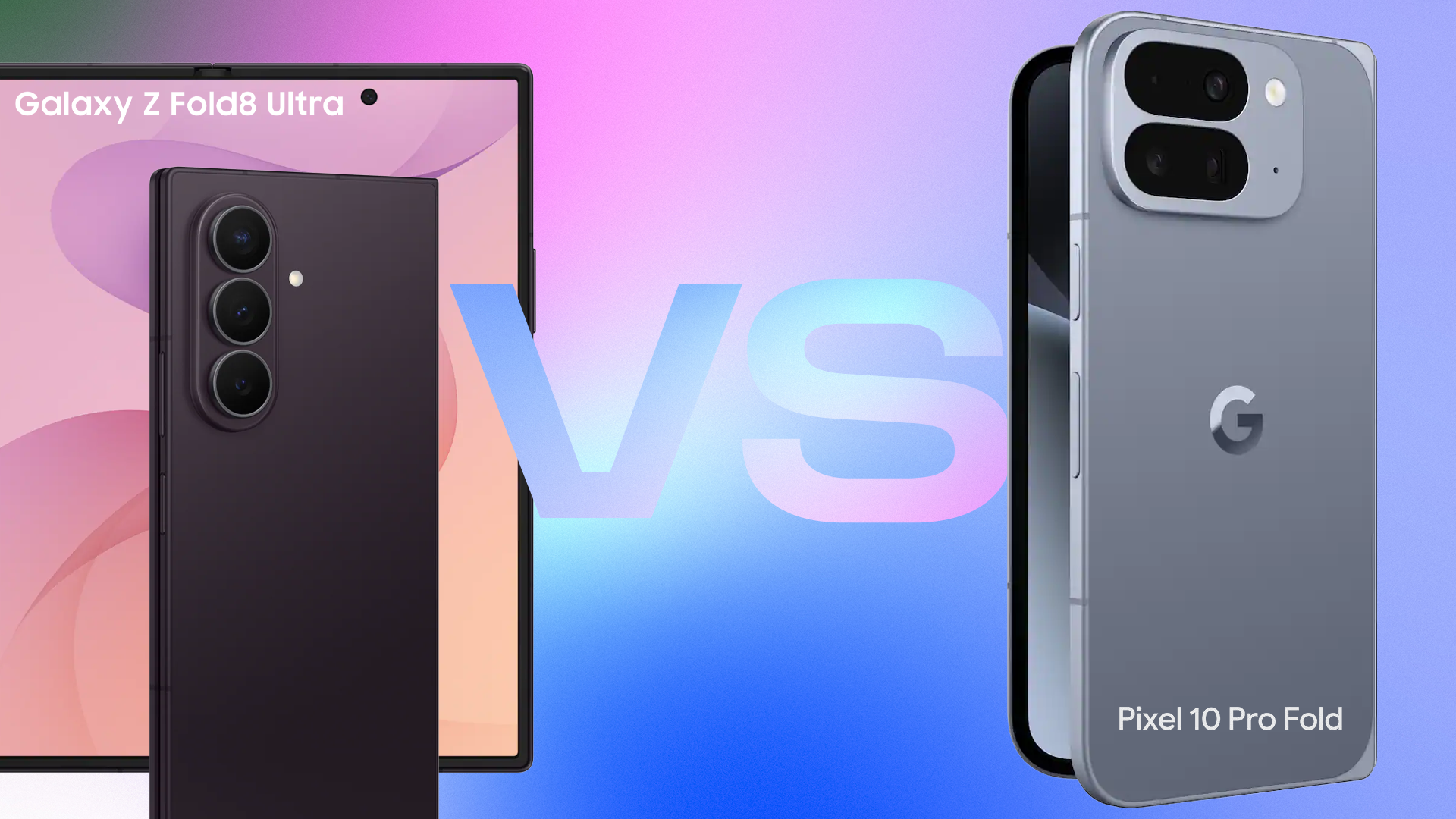
Samsung’s latest line of foldables includes the brand new Galaxy Z Fold 8 Ultra, which looks to be the true successor to last year’s Galaxy Z Fold 7. That’s because the Galaxy Z Fold 8 appears to be positioned as the more entry-level model, with a passport-style short and wide design that puts it more in line with Google’s now-discontinued Pixel Fold or the rumored iPhone Fold.
With its book-style form factor, the Z Fold 8 Ultra doesn’t look too dissimilar from another popular Android foldable: the Pixel 10 Pro Fold. The Pixel 10 Pro Fold starts at $1,799 for 256GB of storage, while the Galaxy Z Fold 8 Ultra is more expensive at $2,100 for 256GB of storage.
But each foldable phone has unique features that set them apart from each other, especially when it comes to design, durability and their cameras. Below, we compare the two book-style Android foldables to see how they match up.

Design and display
The Galaxy Z Fold 8 Ultra has a 6.5-inch AMOLED cover display as well as an 8.0-inch internal display when opened, both of which feature a 120Hz refresh rate. The Pixel 10 Pro Fold, on the other hand, has a 6.4-inch OLED outer display and an 8-inch main OLED screen. The Pixel 10 Pro Fold screens have a 120Hz variable refresh rate as well.
Much like its predecessor, the Galaxy Z Fold 8 Ultra has a long and slim form factor, measuring 4.1 millimeters thick when open and 8.9mm when closed. The Pixel 10 Pro Fold is ever so slightly thicker at 5.2mm when open and 10.8mm when closed. The Pixel 10 Pro Fold is a touch heavier at 258 grams, while the Z Fold 8 is notably lighter at 215 grams.

I’ll admit, when I have the Pixel 10 Pro Fold and 9 Pro Fold side by side, it takes me a moment to tell them apart. The 10 Pro Fold borrows heavily from last year’s design, down to the Corning Gorilla Glass Victus 2 cover and matte back glass.
Patrick Holland/CNET
That said, the Pixel 10 Pro Fold appears to be much more durable than the Galaxy Z Fold 8 Ultra. It is equipped with Corning Gorilla Glass Victus 2 for the cover and back, while the Galaxy Z Fold 8 Ultra uses a Corning Gorilla Glass Ceramic 2 cover and a Victus 2 back.
Another difference in the durability factor is that while the Galaxy Z Fold 8 Ultra is IP48 rated for dust and water resistance, the Pixel 10 Pro Fold has a higher IP68 rating, which gives it greater protection against dust and allows it to be submerged in up to 1.5 meters of water for 30 minutes. That means the Pixel 10 Pro Fold should be safe to bring to environments like the beach without worrying that particles of sand might make their way inside the phone.

Cameras
When it comes to cameras, the Galaxy Z Fold 8 Ultra holds the upper hand. It features a 200-megapixel wide camera, a 50-megapixel ultrawide and a 10-megapixel telephoto camera. The Pixel 10 Pro Fold, however, has a 48-megapixel wide camera, a 10.5-megapixel ultrawide and a 10.8-megapixel telephoto. Both have 10-megapixel selfie cameras on the front and main screens
On top of that, the Galaxy Z Fold 8 Ultra can capture video 8K at 30 fps, while the Pixel 10 Pro Fold can record video in 4K.

The Pixel 10 Pro Fold.
Patrick Holland/CNET
Battery and performance
The Galaxy Z Fold 8 Ultra ships with a very impressive 5,000-mAh battery, which is certainly a welcome upgrade over the 4,400-mAh battery in the Galaxy Z Fold 7. The Galaxy Z Fold 8 Ultra supports 45W wired charging and 20W wireless charging. Samsung is using silicon carbon battery technology for the first time in its foldable phones, which typically allows for larger capacity without needing to increase the physical size of the battery.
The Pixel 10 Pro Fold has a slightly better 5,015-mAh battery. In CNET’s testing, the Pixel 10 Pro Fold lasted well over a day with regular use, and its 25W charging speed recharged the phone from 0% to 51% in half an hour.

Like with previous Pixel handsets, the Pixel 10 Pro Fold is powered by Google’s Tensor G5 chipset. The Galaxy Z Fold 8 Ultra uses Qualcomm’s Snapdragon 8 Elite Gen 5 for the Galaxy’s processor, which is in line with the rest of Samsung’s mobile offerings.
The Galaxy Z Fold 8 Ultra that ships with 12GB of RAM costs $2,100 for the 256GB model and $2,300 for the 512GB model. The 1TB model gets 16GB of memory, but that costs $2,700. The Pixel 10 Pro Fold includes 16GB of memory in all of its variants, which include the 256GB for $1,799, 512GB for $1,919 and 1TB for $2,149.
Check out the below chart to compare even more details about the Galaxy Z Fold 8 Ultra and the Pixel 10 Pro Fold.

The Pixel 10 Pro Fold can easily last through a day, with some battery to spare.
Patrick Holland/CNET
Samsung Galaxy Z Fold 8 Ultra vs. Google Pixel 10 Pro Fold
| Samsung Galaxy Z Fold 8 Ultra | Google Pixel 10 Pro Fold | |
| Cover display size, tech, resolution, refresh rate | 6.5-inch AMOLED; 2,520×1,080 pixels; up to 120Hz variable refresh rate | 6.4-inch OLED; 2,364×1,080 pixels; 60 to 120Hz refresh rate |
| Internal display size, tech, resolution, refresh rate | 8.0-inch AMOLED; 2,256×2,504 pixels; up to 120Hz variable refresh rate | 8-inch OLED; 2,152 x 2,076 pixels; 1 to 120Hz refresh rate (LTPO) |
| Pixel density | Cover: 422ppi; Internal: 422ppi | Cover: 408ppi; Internal: 373ppi |
| Dimensions (inches) | Open: 6.23 x 5.6 x 0.16 in; Closed: 6.23×2.87 x 0.35 in | Open: 6.1×5.9×0.2 in; Closed: 6.1x3x0.4 in |
| Dimensions (millimeters) | Open: 158.4×143.2×4.1mm; Closed: 158.4×72.8×8.9mm | Open: 155.2×150.4×5.2mm; Closed: 155.2×76.3×10.8mm |
| Weight (grams, ounces) | 215g (7.58 oz) | 258g (9.1 oz) |
| Mobile software | Android 17 with One UI 9 | Android 16 |
| Cameras | 200-megapixel (wide), 50-megapixel (ultrawide), 10-megapixel (telephoto), 10-megapixel (cover screen selfie) | 48-megapixel (wide), 10.5-megapixel (ultrawide), 10.8-megapixel (5x telephoto) |
| Internal screen camera | 10-megapixel | 10-megapixel (inner screen); 10-megapixel (cover screen) |
| Video capture | 8K at 30 fps | 4K |
| Processor | Qualcomm Snapdragon 8 Elite Gen 5 for Galaxy | Google Tensor G5 |
| RAM/storage | 12GB + 256GB; 12GB + 512GB; 16GB + 1TB | 16GB + 256GB, 512GB, 1TB |
| Expandable storage | None | None |
| Battery | 5,000 mAh | 5,015 mAh |
| Fingerprint sensor | Side | Yes |
| Connector | USB-C | USB-C |
| Headphone jack | None | None |
| Special features | IP48 rating, Corning Gorilla Glass Ceramic 3 (cover screen), Corning Gorilla Glass Victus 2 (Rear), Advanced Armor Aluminum, 5G (sub6, mmW), Wi-Fi 7, 3,000-nit peak brightness, anti-reflective display, 45-watt wired charging, 20-watt wireless charging | IP68 rating, gearless hinge, cover and internal screen 3,000 nits peak brightness, Corning Gorilla Glass Victus 2 cover and back glass, Satellite SOS, ultra-wideband chip, Qi2-certified, free Google VPN. 7 years of OS, security and Pixel Drop updates |
| US price starts at | $2,100 (256GB); $2,300 (512GB); $2,700 (1TB) | $1,799 (256GB) |
| UK price starts at | £1,899 (256GB); £2,069 (512GB); £ 2,409 (1TB) | £1,749 (256GB) |
| Australia price starts at | AU$2,999 (256GB); AU$3,299 (512GB); AU$3,899 (1TB) | AU$2,699 (256GB) |

See full bio