dailynewsnblog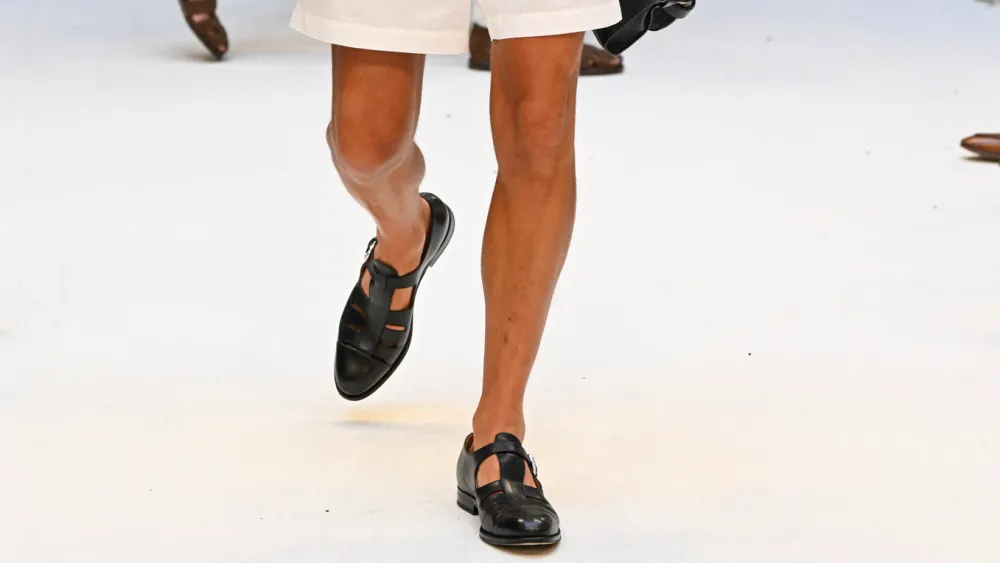
The summer heat? A desire to ditch worries over the war in Iran and oil prices? The giggle-ready idea of government officials co-signing fashion trends? A new twist in the dress-casual narrative?
Whatever it is, shorts are suddenly in the spotlight.
Like many trends and proto trends, this one started in Tokyo — but not with the cool kids in Harajuku, but by the office thermostat.
COLUMN: I Love Breaking Menswear Rules, but I Still Won’t Wear Shorts to Work
Yuriko Koike, currently governor of Tokyo, launched her “Cool Biz” campaign over 20 years ago when she led the country’s Environment Ministry, encouraging buttoned-up male and female workers to shed layers in scorching summers.
This summer, shorts were given the Cool Biz greenlight for men, sparking interest around the world as The New York Times, BBC and others picked up on the controversy, and the general dislike of leg hair in Japan.
Could it happen outside of Japan? Queries to a number of the big New York banks, companies with “professional” profiles and even several fashion brands, went unanswered.
Still, the dress code and defense thereof is not what it once was.
And while many people are aware that their company has a dress code, most don’t really know what it calls for until some kind of fashion mishap happens.
Largely, it is social norms, including workplace norms, that police the knees and below.

Shorts from the Thom Browne Spring 2027 ready-to-wear collection.
Giovanni Giannoni/WWD
Douglas Hand, an attorney at Hand Baldachin & Associates with a long list of fashion clients, said the unwritten dress code at his firm is “look professional.”
“Unless you are playing tennis or soccer or perhaps employed as a forest ranger, shorts do not look professional,” Hand said. “That said, as a fashion law firm we do support our clients and several have offered more tailored shorts that actually are intended to be worn with a jacket and tie as a suit.
“I’ve been known to wear those on occasions when the heat index has risen precipitously but I still want to show respect for my clients and respect for the work,” he said. “If a gentleman is going to wear shorts to work he should also ensure his legs are in shape and the shorts are tailored and fitted as a pair of slacks are — no drawstrings or elastic waistbands.”
That probably goes for most of the dressier professions.
After the 25-year headlong casualization of fashion and with the pandemic shift to work from home unwinding, everybody is becoming just a little more formal again, said Sonia Lapinsky, leader of fashion retail and managing director at AlixPartners.
“Assortments are now morphing and changing,” Lapinsky said. “Athleisure is no longer the headline of the day. That’s now behind us. People are looking for more variety in their wardrobes and don’t want to wear the same thing everywhere they go.
“Even footwear, casual footwear of course is still number one,” she said. “But younger generations want heels again. They feel like they missed out because there was a whole generation that never wore a pair of high heels. And now there’s a bit of nostalgia for the time when dress shoes were a thing.”
But the thrust behind the shorts hubbub in Tokyo is something that resonates in the broader fashion ecosystem.
“Nobody’s going away from comfort,” Lapinsky said. “The suiting needs to have a cut and fit that still feels more natural and more comfortable à la athleisure. And same with other areas of clothing. Shorts are part of that whole, we just want to be comfortable when it’s hot.”
New York, though, might not be so ready for the work short, even if it’s allowed.
“In the U.S., we’re so over-air-conditioned,” Lapinsky said. “I can see the rest of the world even adopting some of this cool clothing — it’s a heat wave in Europe that they’ve never seen before.”

![15-Hour Flights: Singapore Airlines’ 9 New Longest Nonstop Airbus A380 Routes [Map]](https://dailynewsnblog.com/wp-content/uploads/2026/07/shutterstock_2764064389_cropped.jpg)