dailynewsnblog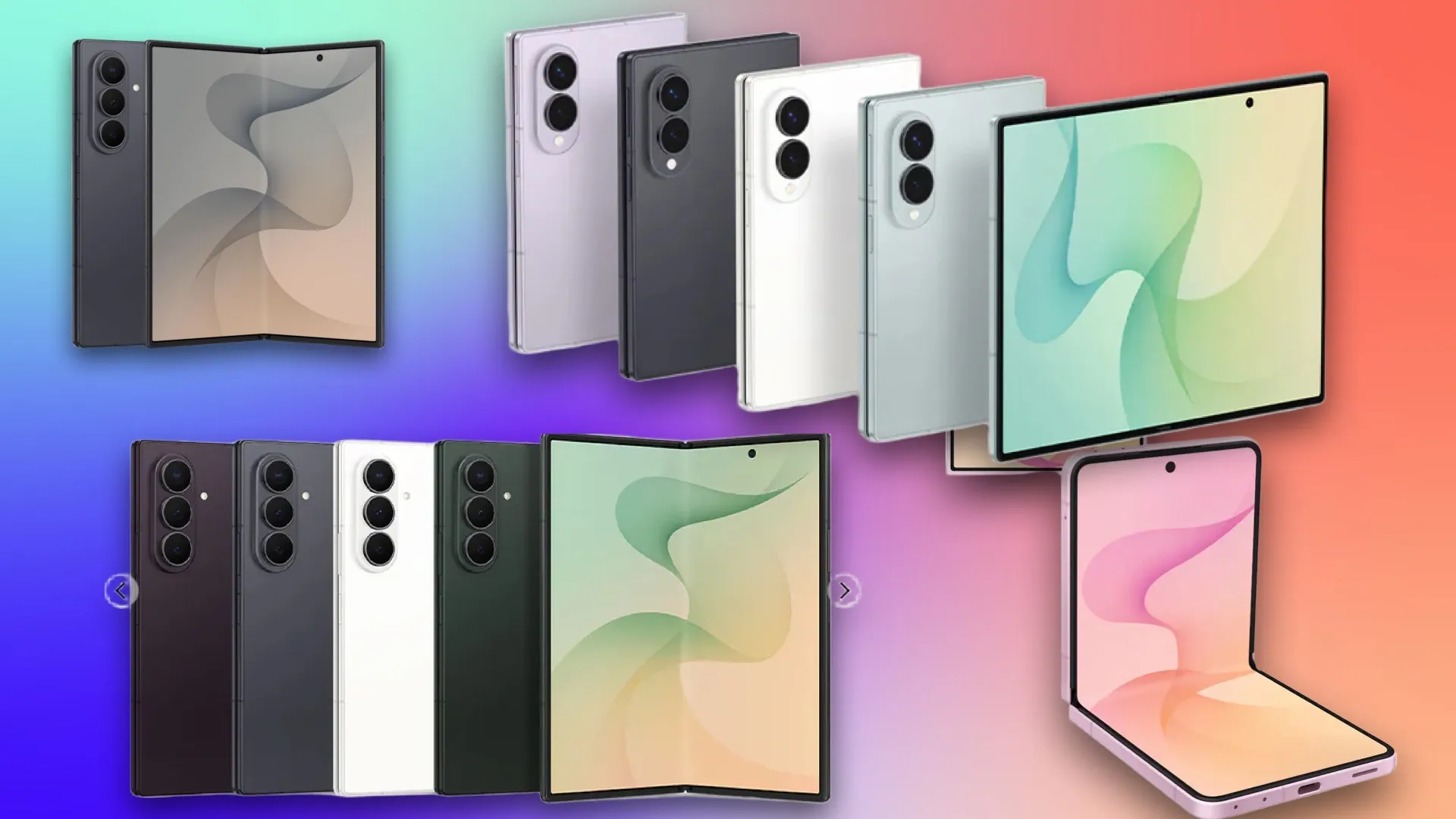
Turning the lavender Samsung Galaxy Z Fold 8 over in my hands, I marveled at how easy and comfortable it was to hold while folded open in portrait mode. I got my first look at Samsung’s array of new products at its Galaxy Unpacked event in London, but it was the new passport-style Fold I was drawn to first.
Historically — by which I mean for the past seven years — I’ve always harbored a Flip bias. It has hints of flip feature phones I’ve owned in days gone by, and the premise of making a big phone smaller just makes sense to me. But I think I’ve had my head turned by the new Fold 8.
I’ve long called for more diversity and playfulness in phone design, so I applaud Samsung for giving us four (if you include the Tri-Fold) phones to choose from. There is a part of me, though, that’s flummoxed by the amount of choice on offer – and I surely can’t be the only one.
I asked Rachel Roberts, product manager for Samsung America, to break down who should consider each of the devices and why. It all comes down to the individual and how you use your phone, she said.
The Galaxy Z Fold 8 Ultra is all about productivity. “This is the first time we’re bringing the Ultra level branding to the foldable portfolio,” said Roberts. “So you’ve got the premium performance, top of the line camera system, top of the line battery and charging.”
The Galaxy Z Fold 8, meanwhile, is for people who “want to get lost and immersed in content.” Whether for gaming or streaming in landscape mode, or social media scrolling and ebook reading in portrait orientation, this phone is for anyone seeking a high-end experience, but without productivity concerns.
Moving to the Galaxy Z Flip 8, its key selling point is still its “pocketability,” said Roberts. With more options than ever for using it while it’s closed, the Flex Window and the ability to turn it into a camcorder-style device appeal to people who appreciate the combination of compact design and creativity (Motorola’s Razrs do the same). “Those self-expressers that really lean into it,” she said.
The Z Fold line has been slightly more popular among older people and men, whereas the Flip line has skewed younger and female. It will be interesting to see whether the new passport-shaped Fold can split those differences evenly.
“It’s kind of the Goldilocks,” said Roberts – perfect for people who find the Z Fold 8 Ultra too big and the Z Flip 8 too small.
Is there a best foldable? Or just a best foldable for you?
We’re already putting Samsung’s new family of foldables through its paces, but if you’re seeking the “best” choice, you’ll need to look beyond star ratings and think about what you actually need from your phone.
“There is no single best foldable format,” said Francisco Jeronimo, vice president for data and analytics at IDC. “Each format resolves one set of compromises while introducing another, so the decision comes down to which trade-offs a given buyer is prepared to accept.”
The book-style Fold Ultra, he went on to say, offers a familiar smartphone experience with the option of a larger screen for working, but it isn’t the best for watching content due to its screen aspect ratio. This is a problem that’s solved by the new passport-style Fold, he added.

“However, when closed, it remains an uncommon format that is awkward to carry in a pocket, and typing takes up most of the available screen, so it is less practical than a standard smartphone in its folded state,” said Jeronimo.
Another trade-off with the Fold 8 is that its camera system is slightly inferior to that of the supposedly productivity-focused Fold Ultra.
“It is an intriguing decision by Samsung to position the Z Fold 8 as a content-centric device, but not to offer it with the top-of-line camera specs at the same time,” said Ben Wood, chief analyst at CCS Insight. It likely comes down to wanting to have an array of foldables at different prices.
In reality, we have to bear in mind that Samsung wants to have clear marketing messaging around each of its phones to set it apart, but that doesn’t mean most of us can be neatly divided up into people who value either productivity, content or size.
“Samsung would be naïve to think there is not a substantial overlap between the devices, but it is understandable that it needs to put a stake in the ground to position the products at a launch event,” he said.
There is also an experimental element in Samsung’s approach to adding new foldable devices. It’s not alone in doing so. Motorola has also built out its foldables portfolio this year, and many Chinese brands are taking a similarly exploratory approach.
“It is no surprise that manufacturers are throwing some mud around to see which form factors resonate with consumers,” said Wood. “The company that cracks the code and identifies the dominant design for foldables has a great opportunity for some upside on these more expensive, higher-margin devices.”

See full bio