By Laurie Chen
BEIJING, July 24 (Reuters) – U.S. threats to sanction Chinese AI developers over alleged intellectual property theft and export-control violations risk unravelling efforts to establish a bilateral dialogue on AI safety, analysts say, just as increasingly powerful models raise concerns over serious security breaches.
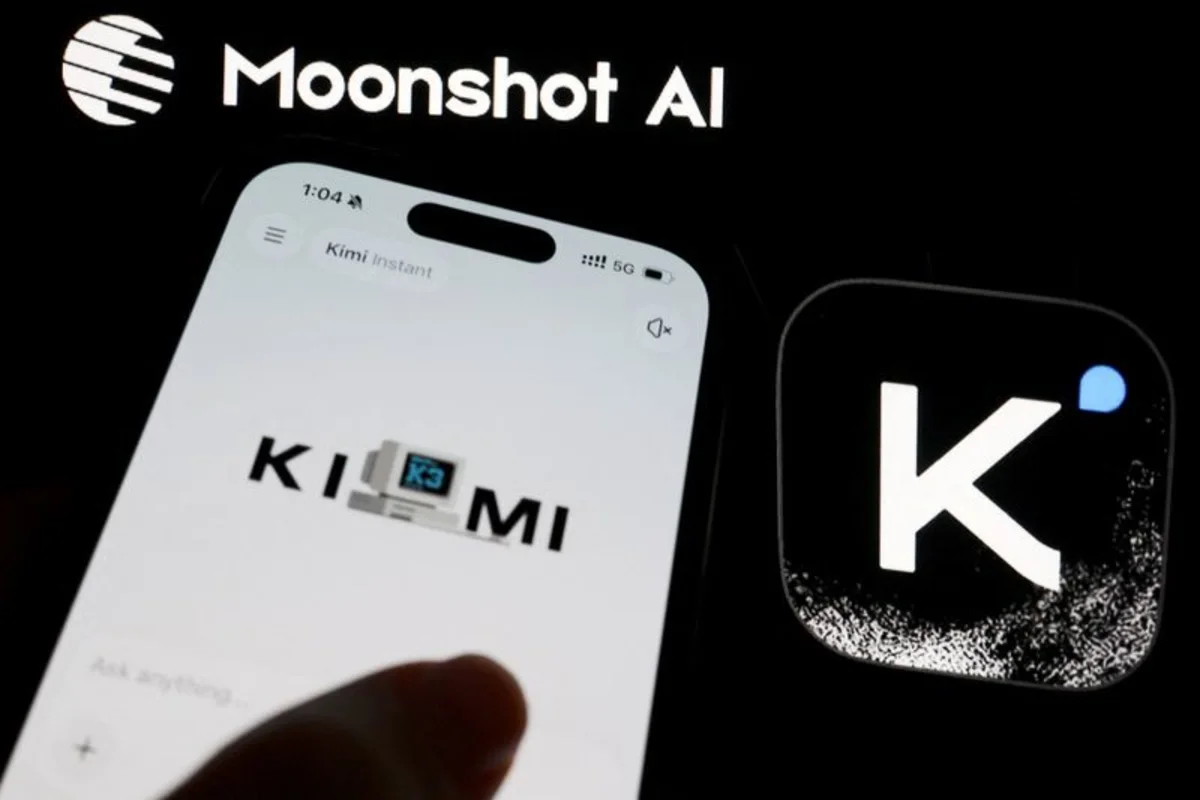
U.S. officials on Wednesday accused Chinese AI lab Moonshot of distilling its Kimi K3 model from Anthropic’s advanced Fable 5 model, prompting Treasury Secretary Scott Bessent to warn of potential sanctions.
Distillation is the process of training AI models using output from more advanced ones to lower the costs of training a powerful new AI tool.
The Commerce Department’s Bureau of Industry and Security is also investigating whether Chinese firms like Moonshot are accessing advanced U.S. chips illegally to train their models. A Moonshot spokesperson did not respond to Reuters’ request for comment.
The dispute exposes a growing tension at the heart of the U.S.-China AI race. Both sides increasingly view frontier AI as a strategic asset and a security risk, yet experts argue cooperation on safety standards is becoming more urgent as powerful models could be misused for cyberattacks or other harmful applications.
The accusations, coupled with reports Washington is weighing restrictions on Chinese open-weight models, could provoke tit-for-tat measures and jeopardise a planned U.S.-China AI dialogue in September, analysts say.
The tensions come atop years of U.S. export controls designed to curb China’s access to cutting-edge chips, measures that have increasingly dominated trade talks between the two countries.
“Depending on the number of Chinese companies targeted, (and) the nature of the punitive actions taken… the retaliation has the potential to scuttle both the AI dialogue and the September 24 meeting between Presidents Trump and Xi,” said Paul Triolo, a partner at DGA-Albright Stonebridge Group.
Beijing meanwhile is considering whether to restrict overseas users’ access to its models as a retaliatory measure, Reuters previously reported.
CLOSED AND OPEN-SOURCE SECURITY RISKS
New York-based Hugging Face last week used a Chinese model, Z.ai’s GLM-5.2, to contain a cyberattack by a rogue OpenAI agent that escaped during safety testing, since American closed models’ safety guardrails were ironically too strong.
As Chinese and U.S. frontier models achieve recursive self-improvement (RSI), where systems can autonomously enhance their own capabilities, researchers say both countries have an incentive to cooperate on safety standards before a more serious incident occurs.
Industry experts are also highlighting the risks posed by open-weight models, which can be downloaded, modified and redistributed with little oversight, limiting the effectiveness of software-based export controls.
“Godfather of AI” Yoshua Bengio warned at China’s flagship AI forum last week that the deployment and sharing decisions of open-weight models are irreversible, and their safeguards are easier to remove.
“The logical thing to do is to find a good evaluation of these models, share the models that are not too dangerous, and not share those above the threshold of risk,” he said via videolink.
RESOURCE, GEOPOLITICAL CONSTRAINTS
Chinese AI models must undergo government safety and content reviews before release, though current rules do not cover post-release modifications.
Unlike U.S. giants OpenAI and Anthropic, many Chinese AI labs lack the computing resources for extensive safety training and instead focus on improving model capabilities, industry observers say.
“It’s plausible China reconsiders allowing open-weight releases for frontier models down the line, but the bar for doing so is high,” said Kristy Loke, a MATS research fellow studying China’s AI governance.
Some AI safety researchers argue that frontier models in both the U.S. and China should face stricter pre-release testing and independent third-party evaluations.
In the U.S., firms can voluntarily submit models for testing by the state-funded Center for AI Standards and Innovation (CAISI), though some lawmakers have called for mandatory federal reviews.
“In an ideal world, the two countries will come together to work on safer models… agree to build common standards around pre-release testing and set red lines for the most advanced open models,” said Loke.
DIVIDED RESPONSE ON CHINESE AI MODELS
Some U.S. government and AI industry officials remain split on how to respond to Chinese models, which account for about 60% of token usage by U.S. companies on the OpenRouter platform.
OpenAI and Anthropic have lobbied Washington against lower-cost Chinese models, arguing they could undermine their business models.
OpenAI lead strategist Dean Ball wrote on X that the Trump administration could “create large amounts of regulatory risk around the use of open-weight Chinese models” to curb their adoption by U.S. firms.
White House AI adviser David Sacks countered that leading U.S. labs “want the government to eliminate their open-source competition” and argued for fair competition, adding in another post that the “Kimi Panic needs to stop”.
“As long as we don’t sabotage ourselves with unnecessary rules, the U.S. will continue to win,” he said.
(Reporting by Laurie Chen in Beijing; Additional reporting by Samuel Shen in Shanghai; Editing by Eduardo Baptista and Shri Navaratnam)


 dailynewsnblog