dailynewsnblog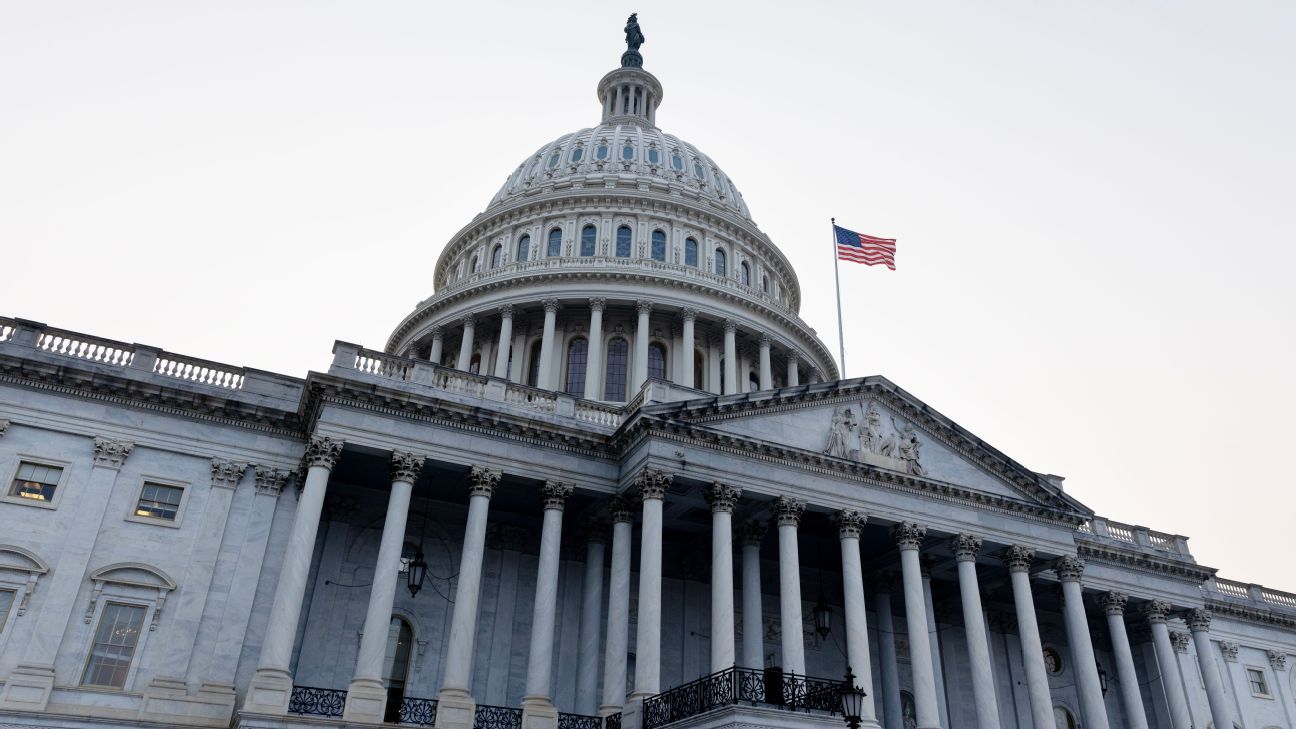
Dan Murphy
Close
Dan Murphy
ESPN Staff Writer
- Dan Murphy is a reporter on ESPN’s investigative and enterprise team. Reach him at daniel.murphy@espn.com.

Multiple Authors
An expansive federal bill aimed at reshaping how college sports are governed is not expected to be put to a full vote in the U.S. Senate before Congress takes its August recess, a congressional source told ESPN on Thursday.
The Protect College Sports Act, a 100-plus-page piece of legislation that would create an antitrust exemption for the NCAA to enforce spending caps, transfer rules and eligibility limits in college sports, was voted out of the Senate Commerce Committee in June with hopes of making it through the full Senate by the end of the summer.
Sen. Ted Cruz, R-Texas, one of the bill’s co-authors, has called it the “last, best hope” for a college sports-related law after years of schools, conferences and the NCAA lobbying for help. But without a Senate vote in early August, the bill faces a very small window of opportunity to get through Congress prior to November’s elections.
College sports leaders have been asking for help from Congress since a Supreme Court decision in 2021 made clear that schools could not collude to limit the earning potential of college athletes. That decision, coupled with state laws that forced the NCAA to allow athletes to make money via name, image and likeness deals, sparked an onslaught of legal challenges that have made it difficult for the association to enforce many of its rules.
Despite wanting a new law, the two most powerful conferences, the SEC and Big Ten, opposed the bill as written because they believe several provisions unfairly targeted their leagues. Cruz and Sen. Maria Cantwell, D-Wash., met with college sports officials in Washington, D.C., this week to discuss changes to the bill. Their staffs are continuing to meet to tweak language, according to a congressional aide.
The bill would create an opportunity for schools to sell their media rights as one large entity rather than on a conference-by-conference basis. While pooling their rights is voluntary in the bill, Big Ten and SEC leaders were concerned that they could be forced to give up some of the substantial financial advantage they’ve built through the TV rights deals. As it is currently written, the bill also would prevent the Big Ten and SEC from adding more members in the future. That was one of several areas the senators were considering tweaking in order to garner support from the two leagues.
On Thursday, a reporter from Punchbowl News asked Senate Majority Leader John Thune, who decides if the bill will reach the Senate floor for a vote, for an update on the “NIL bill” and another unrelated piece of legislation. Thune said, “I don’t think we’ll be able to get them done.” A source confirmed to ESPN that Thune was referring to the Protect College Sports Act coming to a vote in August.
Earlier in the day, before Thune’s news emerged, SEC commissioner Greg Sankey told ESPN that the SEC — along with other leagues — were still waiting to see new language in the bill.
“We have not seen language,” Sankey said. “We need to see language.”
ESPN asked Sankey if it felt like time was running out on the Protect College Sports Act, as August recess looms and the midterm elections will soon take up much of the oxygen in Washington.
“I think everyone would agree, sooner is better, but Congress does work best on deadlines,” Sankey said. “I think we’ve seen that over and over. And I fully appreciate that they’re engaged and they want to be careful about sharing text, but to understand what changes (are).”
He added that it has been more than three weeks since they’ve seen anything substantial.
“A lot of conversations, but we really need to see what adjustments are being made to determine our position,” he said.
Sankey added that the SEC and Big Ten identified 10 issues up front. He mentioned a few, including that he thinks any conference expansion parts of the bill should include all the power leagues, not just the SEC and Big Ten. He restated his position that media rights pooling should be voluntary.
Sankey added: “I still don’t understand why there’s football scheduling. Congress has a lot to do. I don’t think it should be involved in football scheduling. But what adjustments can be made? And we’ve proposed those. We haven’t seen the outcome.”