dailynewsnblog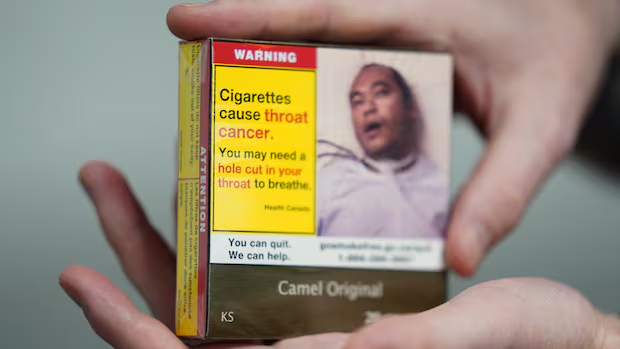

Listen to this article
Estimated 5 minutes
The audio version of this article is generated by AI-based technology. Mispronunciations can occur. We are working with our partners to continually review and improve the results.
A new series of graphic images warning people of the dangers of smoking — from mouth cancer to heart disease and stroke — is rolling out across Canada.
The images, including one showing bloody urine in a toilet bowl and another showing a cancer affected colon, are among 13 new warning labels that will be required on cigarette packages by August 1.
One image shows a baby enveloped in smoke alongside a warning about the harms of second-hand smoke. Another shows a person’s tongue with cancer and says 36 per cent of people with the disease die within five years.
A Health Canada official told The Canadian Press that the new messaging will appear on packages of cigarettes, little cigars and cigarette tobacco for two years, and on all other tobacco products for three years.
The set of warnings will then rotate back to messages that have been featured since January 2024. Messages about the benefits of quitting will also be added to the extended upper flap inside cigarette packages, Karine LeBlanc told CP.
Six new messages are also being printed on individual cigarettes, such as “Tobacco smoke is toxic” and “Cigarettes harm children.”

New, pushier anti-smoking messages will soon be literally in the face of smokers on every cigarette they puff. Cigarette packaging will also receive an update. Host Ian Hanomansing speaks to a public health psychologist and a psychiatrist on whether they think the changes will make a difference.
“These health warnings work — they have been shown to reduce smoking,” Rob Cunningham, a senior policy analyst at the Canadian Cancer Society, said in a statement Wednesday welcoming the new images.
“Graphic images cut through the noise. They show the devastating health effects of tobacco instantly, making the warnings far more impactful and more memorable. Rotating to a new set is important to keep warnings fresh and avoid them from becoming stale.”
The new warnings come as the federal government pushes to reduce tobacco use to less than 5 per cent by 2035.
According to Health Canada, about 48,000 people die each year in Canada from tobacco use, which the department says is associated with more than 40 “debilitating and often fatal diseases” and can make common illnesses more deadly.
Cigarettes have killed more than one million people in Canada since 2000, Health Canada says on its website.
‘Increases in effectiveness’
Over the past decades, researchers have examined how graphic photos on cigarette packages and other tobacco products affect usage rates.
Geoffrey Fong, a professor at the University of Waterloo who studies tobacco use and policies in Canada and around the world, said research has shown that graphic images lead to “significant increases in the effectiveness” of health warnings.
Fong said images make people more likely to report reading the warning labels closely, think about the health risks of smoking and consider quitting.
“It’s a powerful message that is delivered to the right people at the right time,” he told CBC News in a phone interview. “If you are a 10-cigarette-a-day smoker, you are going to be getting 3,650 — at least — exposures to the warning labels in a year.”

Canada was the first country to require pictures on its cigarette package warnings, in 2001. New images were rolled out in 2012 and again in 2024.
Fong said it is critical to update the images because, like all public messaging, they can lose their effectiveness over time.
“I think it’s really important to make sure that the messages … do so in a graphic and forceful way that communicate the many, many harms of cigarettes and cigarette smoke to the population,” he said.
Other measures
While the new images were welcomed Wednesday, advocates have been urging Canada to do more to discourage smoking, particularly among young people.
Some have pointed to the United Kingdom, where lawmakers in April approved a bill to bar children under age 17 from buying cigarettes and enact new restrictions on vaping and other nicotine products. The legislation will come into effect in 2027.
The Lung Health Foundation, a Canadian charity, said in May that “a generational tobacco ban holds real promise for protecting youth.”
Such a measure also “must be paired with robust prevention strategies, cessation supports, and public education to meaningfully reduce smoking and vaping rates” across Canada, the group said.
A spokesperson for Health Minister Marjorie Michel told The Canadian Press that the government is monitoring “measures taken by like-minded countries to reduce youth smoking, including the United Kingdom’s recent initiative.”
“However, the Government of Canada has no plans to introduce a similar prohibition at this time,” the spokesperson said in a statement.