dailynewsnblog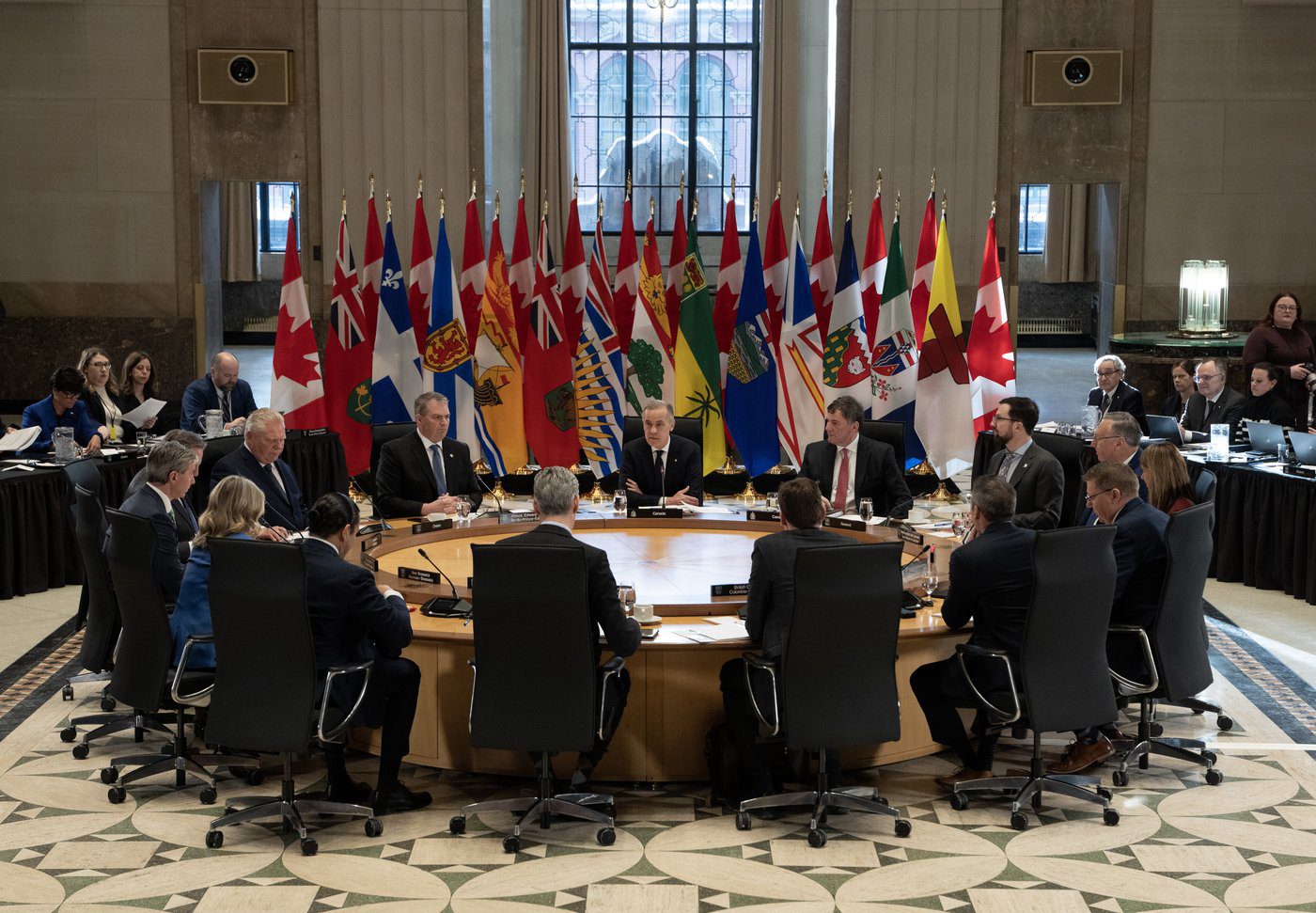
CHARLOTTETOWN — Domestic trade and major projects will be on the agenda as Canada’s premiers gather Tuesday in Prince Edward Island for a three-day meeting coloured by a renewed tariff threat from U.S. President Donald Trump.
The annual summer gathering of provincial and territorial leaders will culminate with Prime Minister Mark Carney joining the discussion Thursday. The premiers will also meet with Indigenous leaders later Tuesday.
Key issues among the provinces have included efforts to cut down any remaining barriers to internal trade and advocating for big infrastructure projects that could bring investment and jobs to their regions.
But there’s also fresh economic uncertainty after Trump on Monday signed an executive order to impose 50 per cent tariffs on certain Canadian products within 30 days.
Senior White House officials say it’s in response to provincial bans on U.S. liquor, Canada’s supply managed dairy system and quotas on certain U.S. vehicles and will not apply to energy, potash, fish or other goods already facing separate sector-specific tariffs.
Reached ahead of the Council of the Federation and First Ministers’ Meeting and before Trump’s latest blow, several premiers said they were entering talks keen to strengthen Canada’s position.
Ontario Premier Doug Ford’s office said he will push counterparts to cut “red tape” and move quicker to get big projects built to shield the nation’s economy from global instability.
“Canada must move quickly to build the roads, transit, energy, mining and critical infrastructure projects needed to strengthen our economy, create good-paying jobs and reduce our reliance on other countries,” Ford’s office said in a statement.
A spokesperson for Alberta Premier Danielle Smith said she’ll continue efforts to eliminate any limits to cross-provincial trade, including restrictions on alcohol.
“Alberta will also continue to advocate for policies that remove federal barriers to trade and investment, so that we can get major nation-building projects built, get more of our resources to market, and drive generational economic growth as a world-leading energy superpower,” spokesperson Sam Blackett said.
Lori Turnbull, political science professor at Dalhousie University, said she doesn’t expect any “earth-shattering” announcements.
But she will be watching for any change in the tenor of provincial-federal relations, noting it has been largely collaborative so far.
“Carney’s been there long enough now that the ‘get to know you’ stage of the relationship is over and I wouldn’t be surprised if they pushed him a little harder this time,” Turnbull said of the premiers.
New Brunswick Premier Susan Holt hinted she may be looking to clinch an energy deal after the Carney government advanced a new West Coast oil pipeline with Alberta, signed a major clean energy and infrastructure deal with British Columbia, and backed a proposed oil pipeline from Alberta to Ontario.
“I’m optimistic that you’ll see…some more specifics on agreements in terms of energy partnerships as we advance those discussions with my colleagues as well as with the prime minister,” Holt said in an interview, without revealing further details.
Despite a revived effort for big national projects, Turnbull said premiers will inevitably “go back to their old song book” and demand federal help with basic provincial responsibilities like health care and managing the affordability crisis.
Before news of Trump’s new tariff threat, the U.S. president was already top of mind for Manitoba Premier Wab Kinew, who stressed the need “to ensure that the national unity against the Trump threat is maintained” while making sure provinces “have the resources for health care and education at the same time.”
Trump’s levies on Canadian goods have continued to affect every Canadian province, including Ontario’s steel, fabrication in Alberta and aluminum production and forestry industries in British Columbia, Quebec and Atlantic Canada.
While Ottawa has responded with reciprocal tariffs, emergency funds and buy Canadian policies, premiers have called on Carney to prioritize a strong outcome on the Canada-U.S.-Mexico Agreement known as CUSMA.
B.C. Premier David Eby said that he would tell Carney that no trade deal with the U.S. is better than a bad one.
“It has been proven over time, that Canada’s approach has been the right one, which is to resist making a bad deal for the purposes of getting a deal done quickly,” Eby said in an interview ahead of meeting his counterparts.
While the premiers may have common struggles and goals, there are also divisions within the group of 13.
Chief among them could be Smith’s approach to separatism forces in her province.
“The separatism conversation continues in that province, and there are strong divisions between the premiers about how Premier Smith is handling that,” B.C.’s Eby said.
Former New Brunswick premier Shawn Graham, who hosted a Council of the Federation meeting in 2007, says most of the real work is done at informal one-on-one chats after the big roundtable discussions.
“There was always the national agenda that you were trying to achieve, but it was the side meetings that I found most effective at hammering out issues that may have been stalled,” he told The Canadian Press.
Premiers also have their own priorities to push.
Ford’s office says the Ontario premier has a series of proposals to better protect police officers.
During a provincial wildfire update on Monday, Ford said he also plans to discuss the need for a national fire strategy at the premiers’ meeting.
“We need the support from the federal government,” he said.
Kinew says he wants reforms to disaster financial relief and funding for the National Action Plan to End Gender-based Violence.
And Yukon Premier Currie Dixon says he’ll be working to ensure “northern perspectives and challenges remain part of those discussions.”
Graham said current economic pressures echo challenges during the global recession in 2009 — and teamwork is crucial.
“Any time you can bring premiers together to strengthen the Confederation, it’s a good thing.”
This report by The Canadian Press was first published July 21, 2026.
— With files from Ian Bickis in Winnipeg, Wolfgang Depner in Victoria and Elissa Mendes and Allison Jones in Toronto.
Eli Ridder, The Canadian Press