dailynewsnblog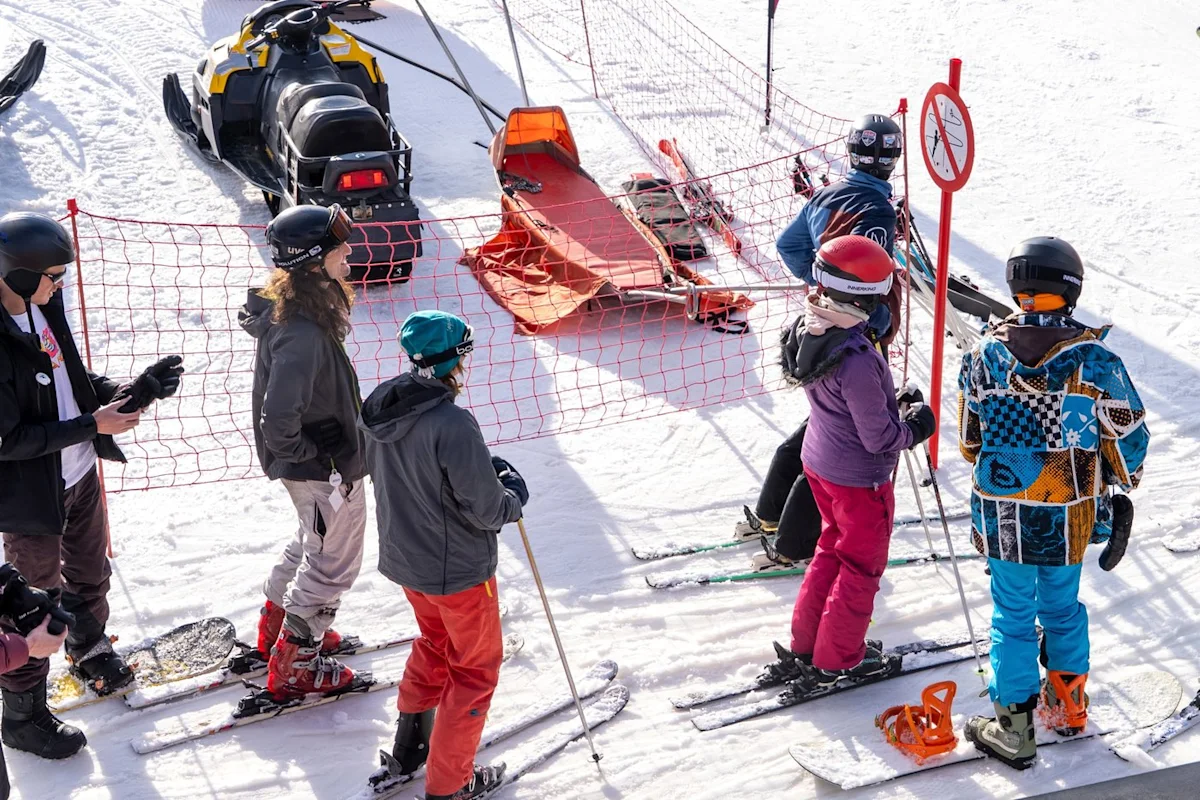
BUTHA-BUTHE, Lesotho (AP) — One may not expect thousands to flock each winter to Lesotho but for many ski enthusiasts from across southern Africa, the small, landlocked mountain kingdom has become the go-to place in recent years.
Lesotho’s high elevation and mountainous terrain combine to make it the coldest country on the continent, with temperatures in the highlands typically plunging to minus 8 degrees Celsius (about 18 degrees Fahrenheit) between June and August.
The Afriski Mountain Resort, some 3,200 meters (10,499 feet) above sea level, nestled in the northern Maluti Mountains, is Lesotho’s single fully operational ski resort — and the only one in sub-Saharan Africa.
The majestic snow-covered landscape is ideal for skiing, and both seasoned and new visitors enjoy the slopes that are spread over 17 hectares (42 acres) surrounding the resort — about the size of 24 standard soccer pitches. The resort opened 25 years ago, a short bus or car ride from the nearest major town of Butha-Buthe, about 80 kilometers (50 miles) away.
Last year, tourism contributed about 7% to Lesotho’s annual GDP of some $2.6 billion. For its part, Afriski provides a chunk of needed cash in a country cited by the World Bank as one of the poorest in the world — and its artificial snow machines ensure it stays open throughout the Southern Hemisphere’s winter.
Thousands come to the country Trump says no one’s heard of
U.S. President Donald Trump may have joked in 2025 about Lesotho being a country that “nobody has ever heard of” but just a year earlier, the kingdom, bordered on all sides by South Africa and with a population of 2.3 million, celebrated 200 years of the founding of the Basotho nation and 58 years of independence from British rule.
Located in its entirety at and over 1,000 meters (3,280 feet) above sea level, Lesotho sees a lot of snow — and skiing is growing in popularity here from a rare sport previously mainly associated with North America and the European Alps.
Most people drive into Lesotho from neighboring South Africa but international visitors can also fly in to the airport in Maseru, the country’s capital.
Afriski’s CEO, Theo Ferreira, says almost 70% of the visitors come from South Africa; the rest are mostly from Lesotho or elsewhere in southern Africa. The resort now has 227 full-time and seasonal employees, nearly all Lesotho nationals, with about 30 South Africans, working mainly as skiing instructors, he said.
While the resort has rooms for 420 overnight guests, the nearby Butha-Buthe and Mohlokong towns can offer extra accommodations in peak season. The busiest day so far this year saw over 1,400 visitors while in 2025, the record was over 1,600 day visitors and those staying overnight or longer, Ferreira said.