dailynewsnblog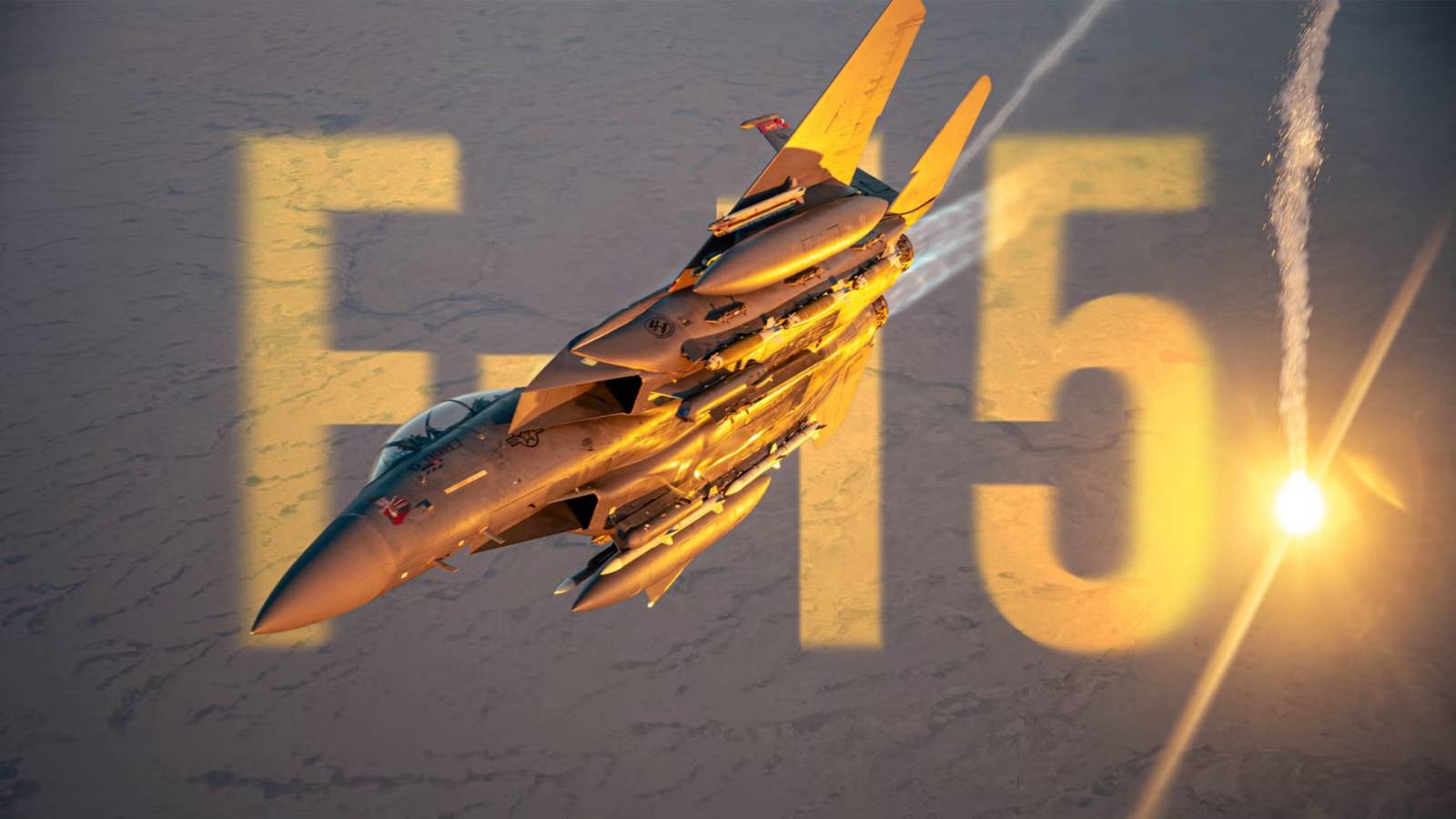
In February of this year, the State Department approved a foreign military sale for the Kingdom of Saudi Arabia that opens up the potential for a $3 billion fighter jet deal. Despite speculation that the Kingdom may be procuring the Lockheed Martin F-35 Lightning II, they are in fact seeking to upgrade the fleet of  Boeing F-15SA Eagle air superiority fighter jets. Boeing’s multi-billion dollar upgrade program is explicitly designed to close the technology gap and bring the Royal Saudi Air Force F-15SA fleet up to parity with the US Air Force’s F-15EX Eagle II.
In fact, the US Air Force is retaining only a fraction of its existing F-15E Strike Eagle fleet in order to procure a large number of the F-15EX while executing a similar upgrade program for the legacy F-15Es that the service chooses to retain. The RSAF has the advantage that the F-15SA already shares the exact same physical airframe design and advanced fly-by-wire flight control system as the F-15EX; the conversion does not require heavy structural rebuilding.
In addition to this large contract for sustainment and mechanical improvements, Saudi Arabia is spending $5 billion on new systems to modernize its fleet. The F-15SA shares a number of key commonalities with the newer F-15EX that make it possible for the RSAF fleet to be upgraded to almost the same standard as the Eagle II. This will actually make the Saudi Eagles superior to the USAF Strike Eagles after they are upgraded.
F-15SA: Buffing Up The Eagle

While the F-15SA shares its structural airframe design with the Eagle II, its internal computing and electronics package sits right between the older Strike Eagle and the cutting-edge Eagle II. Both the F-15SA and F-15EX have two additional weapons stations that are open for air-to-air missiles during intense aerial engagements, thanks to their Advanced FBW Avionics. This increases its missile capacity from eight to twelve and makes it the highest payload fighter jet in the Western Bloc of air forces.
The RSAF F-15SA also has the same Advanced Display Core Processor II used in the F-15EX, which makes it possible to compute billions of instructions per second. These systems are crucial to the open mission system software that allows for integration of emerging technology to effectively ‘future-proof’ the airplane as threats evolve.
The USAF’s F-15Es have less powerful computers on board and therefore cannot run all of the same capabilities as the F-15SA, but they are receiving similar electronic warfare upgrades to bring the older planes up to par. Ultimately, the Strike Eagle will not be as capable as the Saudi Eagles or the Eagle II, but given the greater service life they have already put under their belt, additional investment is better spent on new airframes.
The Eagle Gets Smart: Digitalized F-15s

The legacy F-15 fleet is being reduced as the US Air Force works to balance the budget for its fleet recapitalization, which will see the addition of the first combat-ready sixth-generation airplanes in history in the coming years. Among them is the storied Boeing F-15E Strike Eagle, which boasts one of the best combat records in military aviation history. Only 99 of the 218 fighter jets with the most advanced technologies and more potent powerplants will remain in the fleet.
The United States Air Force has chosen to keep and modernize F-15Es equipped with the F100-PW-229 engines while decommissioning the 119 airframes equipped with the F100-PW-220. The remaining jets will be modified with the Eagle Passive Active Warning Survivability System, which some already have, significantly improving electronic warfare capabilities. Meanwhile, the RSAF F-15SAs are powered by General Electric F110-GE-129s, which is exactly the same pair of engines found in the F-15EX.
The USAF is converting its Cold War-era fighter and ‘bomb truck’ into a durable, high-capacity partner for next-generation fighters and bombers by standardizing its electronic package across both types in the future F-15 fleet. The F-15E will be able to easily integrate with the 21st Century ‘kill web’ and ‘combat cloud’ designed around next-gen platforms. This will allow the Legacy aircraft to fight against a near-peer adversary on the battlefield of tomorrow.
APG-82 Radar: Ultra Long Range Firepower

In addition to the superior EW suite, the RSAF fleet will upgrade its F-15SAs with RTX-Raytheon’s APG-82 active electronically scanned array because it is identical to the one going into the F-15EX. These upgrades fall under the umbrella of the $5 billion hardware package. This radar greatly enhances the effective range of the F-15’s primary air-to-air weapon in beyond visual range engagements, the AIM-120 Advanced Medium-Range Air-to-Air Missile. Raytheon announced last year that it set a new distance record using this radar with the AIM-120, according to Air & Space Forces magazine.
Catch what other flight trackers miss
Emergency squawks, holds, NOTAMs — live signals, no signup.
Open tracker
Catch what other flight trackers miss
Emergency squawks, holds, NOTAMs — live signals, no signup.
Open tracker
The RSAF’s primary operational threat is not advanced high-altitude Russian or Chinese stealth fighters. Instead, their immediate threat environment consists of low-altitude, low-radar cross-section targets. That specifically includes threats like loitering munitions, cruise missiles, and suicide drones. The new radar will dramatically reduce ground clutter and significantly improve the fidelity and speed of targeting these kinds of threats.
The RSAF operates advanced variants of the AMRAAM. With a legacy mechanical radar, a Saudi pilot could fire an AMRAAM at long range, but the radar could only feed guidance updates to a very limited number of missiles simultaneously. The APG-82 allows an RSAF F-15SA to track multiple aerial threats across a massive arc simultaneously. This allows RSAF pilots to execute more accurate and higher-volume look-down/shoot-down tactics.
The APG-82 digitally filters out the desert terrain reflections entirely, isolating the micro-signatures of low-flying drones at ranges far exceeding any previous Saudi capability. It can transmit independent, continuous data-link guidance updates to multiple AMRAAMs mid-flight. A Saudi pilot can engage a swarm of drones or a formation of hostile aircraft at maximum missile range, fire a volley, and maintain solid tracks on all of them even while performing high-G defensive maneuvers.
Tried & True: Improving On Excellence

The EPAWSS was developed by BAE Systems and transforms the Legacy F-15E Strike Eagle into a digital-age combat system. Defensive sensors and offensive jamming can blind or deceive enemy targeting systems, which makes the Eagle much more survivable. Both the USAF and the RSAF Legacy Eagle fleets will be dramatically superior thanks to the addition of these new systems.
In order to make room for the next F-15EX, a real 4.5-gen fighter with even more power and performance, the legacy aircraft from the 1970s, the F-15C/D, are being phased out quickly. As they identify targets for the Eagles to strike with standoff munitions, these two aircraft will play a critical role as missile truck platforms supporting next-generation fighter jets behind enemy lines.
The RSAF does not need to do this with its fleet thanks to the fact that all the jets have a great deal in common with the latest and greatest iteration of the Eagle, and their airframes are very young by comparison. Although no variant of the F-15 will ever be stealthy like the F-22, the powerful electronic warfare suite allows these aircraft to penetrate deeper into contested airspace thanks to advanced countermeasures.
In addition to improving the Strike Eagles, the Air Force declared that it will produce twice as many new F-15EX Eagle II models to replace the Strike Eagle, increasing the initial figure from 129 to 267. According to Boeing’s full-rate schedule of two per month, there are already 25 examples in service, and it anticipates receiving 24 more annually at a cost of $3 billion. In contrast to prior years when annual targets consistently decreased, the USAF has turned around.
Teamwork Makes The Dream Work: Loyal Wingman Drones

EPAWSS is so effective at jamming that it helps non-stealthy F-15s survive in high-threat environments. Unlike the 1980s-era analog Tactical Electronic Warfare System, EPAWSS uses high-speed digital processing to monitor and jam threats across the entire electromagnetic spectrum simultaneously. Yet, this is just the first step towards a digital revolution for the venerable Strike Eagle. Along with enhanced cockpit avionics and data link capacity, new interoperability with future weapon systems is coming.
In the future, the F-15E is expected to be upgraded with systems that will make it capable of coordinating with and controlling collaborative combat aircraft, or loyal wingman drones. Loyal Wingmen are intended to be cheap enough to be attritable and literally act as a kind of ‘missile sponge’ to take the hit for a crewed aircraft if a hostile missile cannot be defeated by any other means. The drones fly directly into the teeth of enemy defenses.
These advanced uncrewed tactical airframes are expected to make up the bulk of the USAF fleet in the future, with crewed platforms acting as the ‘quarterback’ on the battlefield. The Air Force is planning to acquire as many as 1,000 of these drones, and they will be interoperable with every aircraft in the US military, as well as many allied nations, once full integration is complete in the 2030s.





![9 Labor Day Mattress Sales From Organic Brands [2026]](https://dailynewsnblog.com/wp-content/uploads/2026/09/avocado-mattress-labor-day-sales.jpg)