dailynewsnblog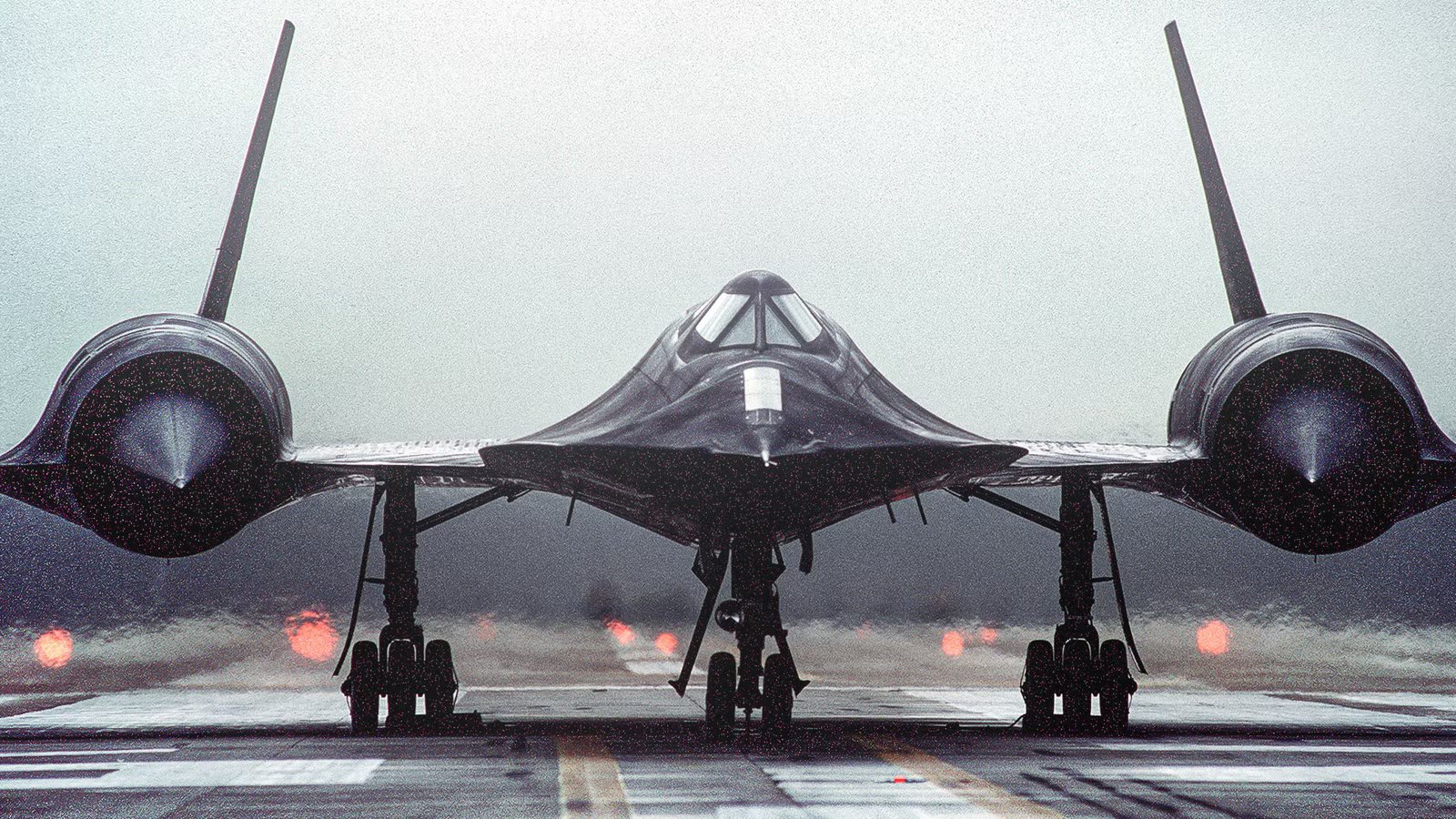
The Lockheed SR-71 Blackbird is likely the only aircraft that ever made maintenance technicians happy when it came back as a ‘code two’ with just minor technical issues upon landing. Although the typical US Air Force maintenance master chief would only be happy if a plane came back with zero malfunctions, that luxury was not on the menu with the famous Skunk Works spy plane.
The complex construction of the Blackbird, combined with the incredibly grueling conditions of its flight regime, subjected the plane to unheard-of conditions that would tear apart a lesser aircraft. Astonishingly, while the Mach 3 flights that the plane flew exposed it to temperatures in excess of 1,000°F (538°C) regularly, it actually made the titanium of the plane’s ‘bones’ stronger, according to the Smithsonian. Still, every seized screw or minor mechanical glitch demanded a full post-flight evaluation to prevent a tragic disaster the next time a Blackbird took off.
Wheels Down In The Skunk Works Super Jet

First and foremost, the sheer heat that the Blackbird endured was an obstacle to ground crews after landing. Cruising at Mach 3.2 generated friction that heated the aircraft’s outer skin from 400°F (204°C) to over 1,200°F (649°C). Add to that the persistent fuel leak of the plane, and the working environment is already messy and complex before even beginning the first task. In the midst of all this, highly trained technicians had to perform precise inspections to ensure that every SR-71 was still safe to fly after touchdown.
According to the CIA, it took an average of five structural specialists roughly six hours just to scan the exterior, which included examining every single titanium and plastic spot weld on the top of the wings to ensure no microscopic fractures had formed during the supersonic flight. Just the routine mission preparation on a perfectly fine airplane took over 18 hours to complete, but a post-flight maintenance cycle could demand more than 27 hours of labor, as Blackbirds.net recounts.
The Tedious Thermal Tendencies Of Titanium

The physics of flying at Mach 3.2 caused the Blackbird’s metal to expand significantly in flight and contract upon landing. At the same time, the SR-71 was a titanium airframe subjected to violent vibrations and thermal stress; structural integrity was paramount. Because of this severe heat-cycling, any screws, panels, or fasteners removed during post-flight inspections had to be literally baked in an oven by maintenance crews before re-installation. This prevented the parts from seizing or warping due to deformation.
Once a Blackbird was defueled and cooled down, a small army of dedicated specialists executed a highly choreographed inspection routine. Before any panels were opened, ground techs conducted a slow, meticulous visual and tactile sweep of the entire exterior. One of the first steps for the ground crew was to use specialized lights to check for titanium panels that were permanently warped or buckled due to extreme aerodynamic pressure. Techs even ran their fingers along panel seams to ensure no edges had been lifted, which would cause a catastrophic disaster on the next flight.
The act of putting a 140,000-pound (63,503 kg) aircraft on the ground at over 200 mph also placed immense stress on the landing gear every time a Blackbird returned from its mission. Air Force techs used portable X-ray or eddy-current testing devices on the landing gear struts and wheel hubs to scan for invisible, internal metal fatigue that could cause the gear to collapse. Its unique BFGoodrich tires were infused with aluminum powder to resist melting, and ground crews required careful inspection to prevent blowouts that could endanger the jet.
Inside The SR-71 Flight Deck

Stepping inside the Blackbird’s flight deck, the life support post-flight inspections for the SR-71 Blackbird were uniquely grueling because the aircraft was essentially a spaceship. Disregarding the stress of the intense speed and heat that the Blackbird put on its pilots, flying at its cruising altitude of 85,000 feet (25,908 meters) alone can cause human blood to boil. The David Clark S1030 full-pressure suits were identical to early NASA space suits, as Heroic Relics records. Pilots typically had to be helped out of the gear before the entire system was disassembled, sanitized, dried out, and then fully inspected.
Evaluating the Blackbird’s crew support systems after a mission required two separate teams to work on the cockpit equipment and the pilot survival gear separately. Standard aircraft use ambient air to cool the cockpit. The SR-71 could not do this because its ram-air was scorchingly hot. Instead, the Blackbird used liquid nitrogen cryogenic plumbing that required both tedious flushing and drawing cycles to ensure functionality as well as corrosion prevention.
The system couldn’t just be turned off when the plane landed; rather, it drained intentionally following a schedule to avoid a runaway malfunction that could damage its internal components. Then all the cooled components had to be dehydrated or ventilated as quickly as possible to eliminate excess moisture. The cockpit seals were similarly demanding, and the ground crew had to manually inspect the entire perimeter rubber seal for microscopic cracks or blistering before conducting a vacuum test.
As with everything else in the Blackbird, the SR-71 ejection system was in a league of its own due to the conditions it had to endure if it was to function properly during a Mach 3 ‘punch out.’ Not only did it contain rockets and drone parachutes, but it also had an independent oxygen supply. Every part of the explosive seat had to be within exacting tolerances before the next sortie.
Heart On Fire: The Blackbird’s Powerplants

The Pratt & Whitney J58 engines powering the SR-71 were not standard turbojets. These powerplants were complex hybrid turbojet/ramjet engines capable of continuous afterburner operation at Mach 3 and higher. The post-flight inspection of the J58 was an intensive, tedious undertaking requiring dedicated specialists to spend hours poring over a checklist with hundreds of items. The first step was to draw a sample of the uniquely heavy engine oil while it was still hot for analysis at an on-site laboratory; if traces of metal were detected, then a complete engine swap would be initiated.
After every mission, the ground crew would use fiber optic borescopes to inspect all nine compressor stages and the two-stage turbine section of the J58 for thermal cracking or foreign object damage. The tips of every turbine blade were also inspected to confirm that they were not making contact with the engine shrouds. Then the chemical injection system, or TEB, was checked to verify its nitrogen-pressurized reservoir was intact, as any failure could lead to a catastrophic ignition of fuel and eruption of fire.
Then the Blackbird’s unique engine inlet ‘chines’ with their moving conical aerospikes were assessed after every sortie. Engine mechanics would literally climb inside the ducts to perform visual inspections once they cooled down. The moving spikes had to be precisely calibrated, according to Code One. Technicians manually measured the spike travel clearance to ensure the hydraulic actuators hadn’t warped or drifted out of alignment. While all of that was going on, the landing gear and tires were being electronically scanned to ensure that they would not fail on the next touchdown.
Exotic Fuel For An Extreme Jet Plane

The Blackbird had no rubber fuel bladders, as they would have melted at Mach 3. Instead, the titanium skin panels were sealed to serve as the actual walls of the fuel tanks. On the ground, the cold titanium contracted, leaving thousands of tiny gaps. Managing this constant weeping of JP-7 fuel turned the post-flight period into a labor-intensive, hazardous, and highly meticulous operation. That meant the aircraft could not safely sit in a hangar fully loaded while leaking; a massive chunk of post-flight time was dedicated just to de-fueling.
Even though JP-7 fuel had an incredibly high flashpoint, meaning it was very difficult to accidentally ignite with a spark, it created a severe environmental and physical hazard in the hangar. Technicians had to continuously wipe down the exterior landing gear, electrical bays, and tires to ensure the corrosive fuel didn’t degrade non-titanium components. Crews spent hours placing graduated catch-pans under the aircraft to measure leak rates. If a spot dripped more than a specific number of drops per minute when a ground tech timed it, the aircraft was grounded.
The SR-71 was expected to leak due to unique construction, but maintenance manuals drew a strict line between acceptable ‘weeping’ and dangerous ‘puddling.’ Locating the exact source of a subsurface leak was a nightmare, as fuel could leak from a forward tank panel, run along the internal framework, and actually drip out near the tail. When a leak exceeded limits, technicians had to perform one of the most hated jobs in the Air Force: resealing the tanks.
The SR-71 fuel tanks had to be completely drained, purged with air for days, and checked for toxic fumes before a technician could crawl inside. A mechanic had to slide into the pitch-black, cramped ‘coffin-like’ interior of the wing tank. They then applied a fresh layer of sealant by hand. This sealant required an incredibly strict curing timeframe before the aircraft could even be refueled for tests, adding days to the turnaround. Only after all that could the jet be worked up to operational status.




![9 Labor Day Mattress Sales From Organic Brands [2026]](https://dailynewsnblog.com/wp-content/uploads/2026/09/avocado-mattress-labor-day-sales.jpg)