dailynewsnblog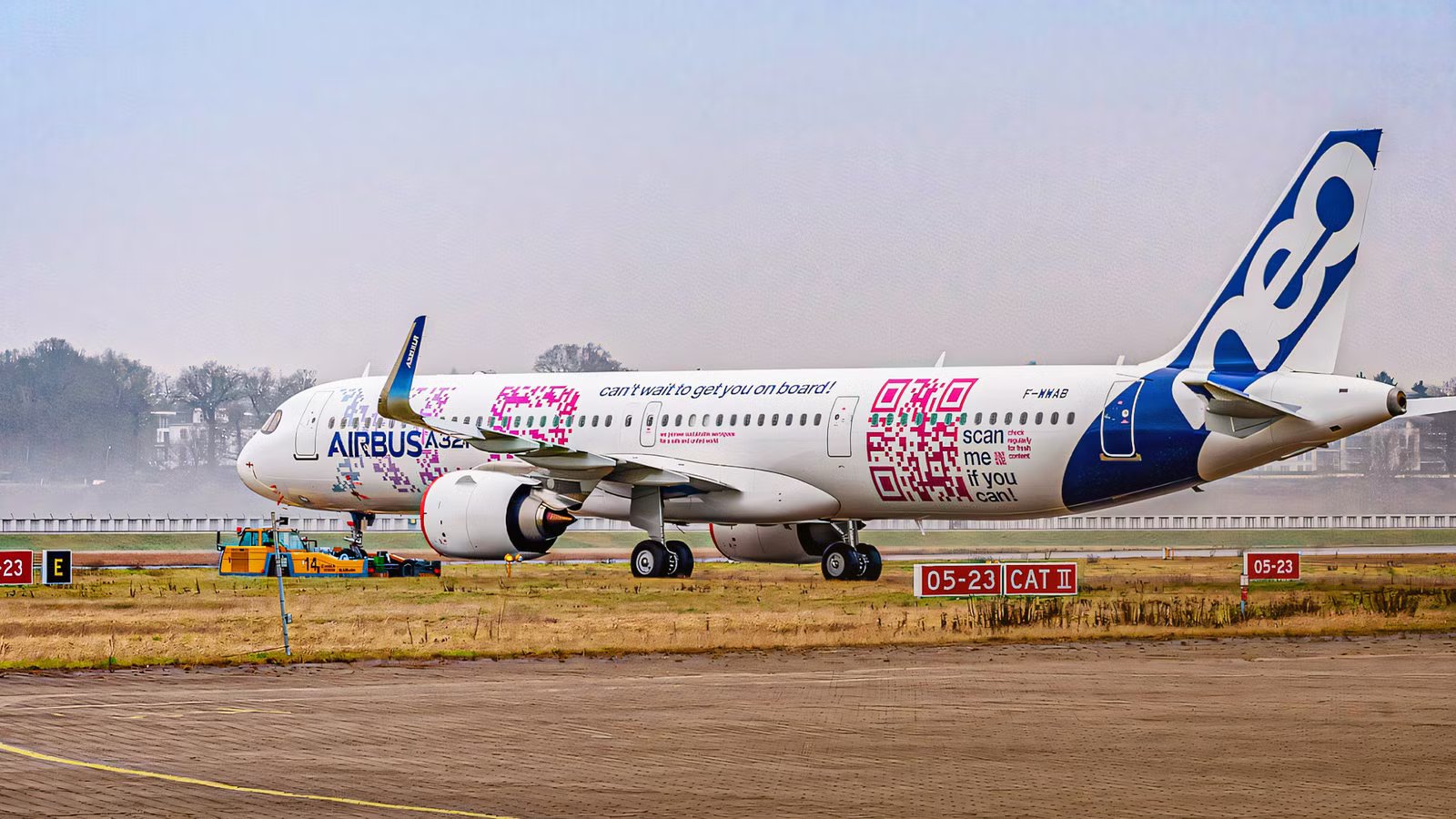
For decades, the “middle of the market” has represented one of commercial aviation’s most intriguing opportunities. The segment sits between traditional narrowbody and widebody operations, serving routes that are too long for standard single-aisle aircraft yet too small to consistently justify larger twin-aisle jets. Airlines have long searched for an aircraft capable of connecting secondary cities across the Atlantic, opening thinner long-haul markets, and replacing aging Boeing 757s without the cost of operating a widebody. Until recently, no manufacturer offered a purpose-built solution.
That has changed with the Airbus A321XLR. After years of development, the aircraft entered commercial service in 2025, with airlines including Iberia introducing the type before IndiGo became the first operator in Asia after taking delivery of its initial aircraft in January 2026. Airbus designed the A321XLR specifically to extend the reach of the successful A321neo family while maintaining narrowbody economics.  Boeing, meanwhile, has no comparable aircraft in production. Instead, its long-discussed New Midsize Airplane, often referred to as the 797, remains a concept rather than a certified product. The result is a competitive gap that has become increasingly difficult to ignore as airlines continue placing orders for Airbus’ longest-range single-aisle aircraft.
Boeing’s Middle Of The Market Problem Began With The 757

The roots of Boeing’s current challenge stretch back more than two decades. When production of the Boeing 757 ended in 2004, the company effectively exited a market segment it had once dominated. The 757 developed a loyal following because of its unusual combination of range, passenger capacity, and strong takeoff performance. Airlines used it on everything from domestic transcontinental routes to transatlantic services linking secondary cities that could not support larger widebody aircraft. Few aircraft offered similar versatility.
At the time, Boeing expected airlines to transition toward either larger versions of the 737 or smaller widebody aircraft such as the 787 Dreamliner. However, neither proved to be a direct replacement. Even the largest 737 MAX variants lack the range and payload flexibility of the 757 on many missions, while widebodies introduce substantially higher acquisition and operating costs. Airbus recognized the opportunity differently. Rather than designing an entirely new aircraft, it progressively expanded the capabilities of the A321neo. First came the A321LR, followed by the A321XLR, which pushed the platform even further through additional fuel capacity, aerodynamic refinements, and increased maximum takeoff weight.
When the A321XLR received European certification, Airbus openly positioned the aircraft as a solution to the market left behind after the 757’s retirement. Boeing executives, meanwhile, indicated that the company preferred waiting for future engine technology before committing to a new design. While that approach may ultimately produce a more capable aircraft, it has also allowed Airbus to establish a substantial first-mover advantage. Industry observers increasingly describe the situation as one Boeing largely created itself. By discontinuing the 757 without developing a true successor, the manufacturer left an opening that Airbus has steadily expanded into one of the industry’s strongest commercial positions.
The A321XLR Gives Airlines Capabilities They Could Not Previously Buy

The A321XLR’s appeal extends beyond its impressive range. More importantly, it allows airlines to rethink how they build international networks. Airbus lists the aircraft’s maximum range at approximately 4,700 nautical miles (8,704 km), enabling flights that previously required either larger aircraft or intermediate fuel stops. That opens hundreds of city pairs that generate sufficient demand for around 180 to 220 passengers but not enough to consistently fill an Airbus A330 or Boeing 787. This capability fundamentally changes route economics. Airlines can introduce nonstop service between smaller metropolitan areas while reducing financial risk. Instead of committing to a 250-seat or 300-seat widebody, they can test new markets using a single-aisle aircraft with significantly lower trip costs.
United Airlines illustrates this strategy particularly well. The carrier has ordered the A321XLR to replace portions of its aging 757 fleet while expanding long domestic and transatlantic flying. Many of the aircraft’s future missions resemble the very routes the 757 pioneered decades ago, connecting cities where demand exists but remains insufficient for larger aircraft. The aircraft also appeals to airlines operating outside traditional hub-and-spoke systems. Rather than funneling passengers through major connecting hubs, carriers can increasingly offer nonstop flights between secondary cities, improving convenience while reducing congestion at busy airports.
Operational efficiency further strengthens the business case. Because the A321XLR shares a common type rating with other A320 family aircraft, airlines already operating Airbus narrowbodies require far less additional pilot training than would be necessary for an entirely new aircraft type. Maintenance procedures, spare parts inventories, and crew scheduling similarly benefit from fleet commonality. The result is an aircraft that minimizes both financial and operational barriers to network expansion. For airlines evaluating new long-haul opportunities, that flexibility often proves as valuable as the aircraft’s additional range itself.
Airbus Has A Significant Head Start

Even if Boeing decided to launch a direct A321XLR competitor tomorrow, bringing it to market would take years. Designing a clean-sheet commercial aircraft is a lengthy process involving conceptual design, supplier selection, manufacturing, flight testing, certification, and production ramp-up. Industry estimates generally place the timeline at eight to ten years before a new aircraft enters airline service, assuming the program proceeds without major delays. That reality gives Airbus a valuable competitive advantage. By the time a Boeing competitor could realistically enter service, the A321XLR will already have accumulated years of operational experience across multiple continents. Airlines will have established route networks around the aircraft, pilots and maintenance crews will be fully trained, and leasing companies will have built sizable portfolios around the type.
This first-mover advantage extends beyond aircraft deliveries. Every additional A321XLR order strengthens Airbus’ existing A320neo ecosystem, encouraging airlines to standardize on a family of aircraft that ranges from the A319neo to the A321XLR. Once a carrier commits to that fleet strategy, switching to a completely different manufacturer becomes increasingly expensive because of pilot training, maintenance infrastructure, spare parts inventories, and operational planning. Boeing’s New Midsize Airplane concept has generated discussion for years, but the company has repeatedly shifted its priorities, focusing first on the 737 MAX’s return to service, then on certification challenges involving the MAX 7 and MAX 10, and, more recently, on stabilizing production across its existing programs. Those priorities are understandable, but they have also delayed Boeing’s ability to address a growing gap in its product lineup.
Meanwhile, Airbus continues to refine the A321neo family rather than stand still. As production increases and operators accumulate experience, the manufacturer can introduce incremental improvements while building on an already successful platform. By the time Boeing fields a competitor, Airbus could already be developing the next evolution of its narrowbody family. That timing helps explain why many analysts view the A321XLR as more than just another aircraft. It represents a strategic lead that becomes more difficult to overcome with each passing year.
Airline Orders Suggest The Market Favors Airbus’ Approach

Commercial aircraft programs ultimately succeed or fail based on customer demand, and recent order activity indicates airlines increasingly favor Airbus’ strategy for the middle of the market. The A321neo family has become Airbus’ strongest-selling product, with the A321XLR representing the longest-range and most capable member of that lineup. Through 2026, Airbus has an overall order lead driven largely by continued demand for the A320neo family, particularly airlines seeking additional flexibility without moving into widebody operations. Industry analysts note that carriers value the ability to open new routes while keeping operating costs under control, especially as fuel efficiency and profitability remain central considerations.
The appeal varies by airline. Network carriers see opportunities to replace aging Boeing 757s, launch thinner transatlantic services, and strengthen secondary international markets. Low-cost airlines view the aircraft as a way to expand into longer sectors while maintaining the economics of a single-aisle fleet. Even leasing companies have embraced the type because it appeals to a broad range of operators across different business models. That does not mean every airline considers the A321XLR the ideal solution. Some carriers continue to prefer larger narrowbodies for shorter, high-density routes, while others believe smaller widebodies such as the Airbus A330neo or Boeing 787 provide greater flexibility on longer sectors with stronger cargo demand. Airlines operating extensive hub networks may also find that larger aircraft better suit their traffic patterns.
Those differences illustrate an important point. The middle of the market is substantial, but it is not universal. Boeing’s hesitation partly reflects uncertainty about whether demand justifies investing tens of billions of dollars in an entirely new aircraft program when other priorities compete for resources. Nevertheless, the absence of a direct competitor means Airbus currently defines the segment almost by default. Airlines interested in an aircraft with the A321XLR’s unique combination of range, capacity, and operating economics have only one realistic manufacturer from which to choose.
Boeing’s Greatest Challenge Is Strategic Rather Than Technical

The A321XLR does not guarantee Airbus permanent dominance, nor does it mean Boeing cannot eventually return to the middle of the market. Boeing remains one of the world’s leading aerospace manufacturers with a long history of developing successful commercial aircraft. The company’s challenge is determining when technological advances, particularly in next-generation engines, justify launching a new program that can outperform rather than merely match Airbus’ offering.
Until that happens, Airbus occupies an enviable position. The A321XLR allows airlines to replace aging 757s, develop long, thin international routes, and expand point-to-point flying using an aircraft that is already certified, in commercial service, and backed by the world’s best-selling narrowbody family. That combination gives carriers a practical solution today instead of a promise for tomorrow.
For Boeing, the concern is not simply losing aircraft sales. It is allowing Airbus to shape airline network strategies for the next decade. As more carriers build fleets, train crews, and develop route maps around the A321XLR, the cost of switching manufacturers increases. By the time Boeing introduces a competitor, many of the most attractive opportunities in the middle of the market may already be firmly established, making Airbus’ early lead far more valuable than the aircraft itself.




![9 Labor Day Mattress Sales From Organic Brands [2026]](https://dailynewsnblog.com/wp-content/uploads/2026/09/avocado-mattress-labor-day-sales.jpg)