dailynewsnblog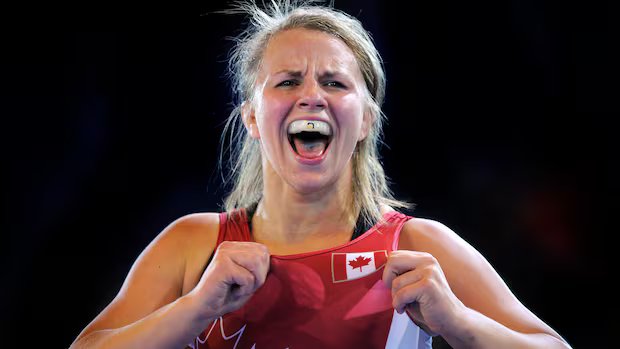
Erica Wiebe’s first taste of the Commonwealth Games experience came back in 2014 in Glasgow. Now, 12 years later, the two-time Commonwealth wrestling gold medallist is back at the Games in the Scottish city, but in a much different role: chef de mission for Canada’s team.
CBC Sports spoke with the 2016 Olympic champion from Stittsville, Ont., native who now resides in Calgary, about the past, present, and future of the Commonwealth Games.
CBC Sports: You’ve moved from competing at the Commonwealth Games to a different kind of role for Team Canada. For any Canadian sports fans new to the concept, how would you explain what a chef de mission does?
Erica Wiebe: Ooh, I’m still trying to figure that out (laughs). But, in summary, a chef is the number one supporter for Team Canada – they’re the face of Team Canada. They help to support the athletes, cheer on the team, but then also kind of deflect and navigate any issues so that athletes can just focus on performing their best.
CBC: Your commitment to diversity, equity, and inclusion (DEI) in sport was mentioned as one of the chief reasons you were selected as chef de mission. With diversity being a hallmark of the Commonwealth Games, did taking on this role seem like a natural fit for you?
EW: I mean, yeah, I think that sport is this field of play that everyone can come on and enjoy and be part of. So, creating the conditions for that to happen is so important for me.
When I think about the Commonwealth Games, it’s an integrated multi-sport Games. In Glasgow, we will have the largest Para sport program ever in history, and we’ll have 35 Para athletes representing Team Canada – we’re really excited about that.
When you think about the 74 nations that make up the Commonwealth system, it’s from all around the world, and we really have more in common than we don’t.

Canadians ready to compete at the Glasgow 2026 Commonwealth Games in both familiar sports and new ones.
CBC: How ready are you feeling for the Games?
EW: You know what – as an athlete, people would always ask me, ‘are you ready?’ And I [would say], ‘no, I don’t need to be ready until the moment the whistle blows,’ realistically. So, I feel a little bit like that, to be honest. I kind of don’t know what I’m getting myself into.
I’m trying to prepare the schedule, prepare how I want to show up and feel, which is the exact same process that I had as an athlete. I’m in this life after sport [but] I do go back to think about a lot of the processes and systems that helped me perform my best as an athlete, in a slightly different context and a slightly different arena. The same processes will help me perform as a chef.
So, I’ll get lots of sleep, I’ll hydrate, I’ll be kind of regulated emotionally so that I can meet whatever challenge comes.
CBC: What are you most excited about when it comes to the Commonwealth Games?
EW: Getting to see the athletes behind the scenes, but then also watching them transform on the stage of a performance environment. You know, when you get to see an athlete go out there and do what they work so hard for – to perform, to compete, to do it with joy, and love, and passion that we do see between Team Canada – that for me, it’s just a true privilege. I’m just humbled beyond belief to be the chef of Team Canada for the 2026 Commonwealth Games.
CBC: Is there anything you’ll be focusing on the most during the Games?
EW: I think there’s two really cool things about this edition of the Commonwealth Games. One is the environment that it’s in, in Glasgow. The Games themselves are in an eight-mile radius, but Team Canada is divided actually into three hotels. So, my role as chef will be really focusing on continuing to have an integrated, holistic, equitable experience for all Team Canada athletes that allows them to perform at their best, and being able to make sure I can get to every venue.
Another really cool thing about the Commonwealth Games this year is that all Team Canada uniforms will have the Right To Play logo on them. This intersection between sport for development [and] sport as a tool for improving children’s lives through play, will actually be exposed at the high-performance sport level with Team Canada athletes. That partnership between Right To Play and Commonwealth Games Canada is incredibly strong and a powerful change maker, and so to see it come to life at the Commonwealth Games, and help enable that – I’m super excited.
CBC: How did you first get involved with the Commonwealth Games?
EW: As an athlete, the Commonwealth Games are a really key milestone in my Olympic preparations, and my career preparations. I like to think about when I won gold in 2014, that was a kind of validation that I could do it on the world’s biggest stage, and set me up for that [Olympic] success that I had in Rio.
I’ve been very involved, kind of in sport, and giving back. So when the call came for chef de mission for 2026 for Glasgow, I give back in a lot of different ways, but I thought this would be a really cool, really scary way to kind of step into a new role.
CBC: What’s your favourite Commonwealth Games memory?
EW: My favourite memory in Glasgow, the 2014 Commonwealth Games, was a couple days before competition. Me and my team members went into the downtown area [and] into this market, and there was a massive candy booth. We all picked our favourite candies that we would eat, kind of like a treat before competition, and then binge on afterwards.
And we got those crazy hats that I ended up wearing on the podium, and just the memories of my team members, and us going through that process together, it’s those things that define my career in the Games.
CBC: The move of these Games from Victoria to Glasgow – what does it signal about the future of the Commonwealth Games? Are they still relevant as a launching pad for Canadian athletes toward the Olympics?
EW: The Commonwealth Games does continue to be a key milestone for teams. Athletics Canada is sending their largest team ever. They’re using it as a very clear, distinct prep for L.A. 2028. I know that was my experience as well, going into my Olympic Games. The Commonwealth Games is a really key event on a very tight – very busy – sport calendar across a quad[rennial].
Now, when Victoria, Australia’s funding fell through they couldn’t host the Games and Glasgow stepped up. They have no government funding. They’re operating on a very tight budget. They’re doing an extremely sustainable and reimagined way. A similar sport program, but I think it showcases that these Games can be done in unique environments.
The legacy of Commonwealth Games will continue to live on. Ahmedabad is hosting the next Commonwealth Games in India in 2030 and they’re looking to use it as a launch pad to host an Olympic Games, to really showcase the kind of emerging power of Indian sport.
So, I think we’re not going to see the last of the Commonwealth Games, and Glasgow is going to be an incredible Games with some exciting athletes, exciting sport moments, and a big legacy for Commonwealth sport.
The Commonwealth Games begin Thursday with the opening ceremony (2:30 p.m. ET, CBC Gem, CBCSports.ca) and CBC will feature full live streaming coverage throughout the event. Check the CBC Sports broadcast schedule for full details. CBC Sports will also debut its live story page coverage throughout the Games.
This interview has been edited for length and clarity.