dailynewsnblog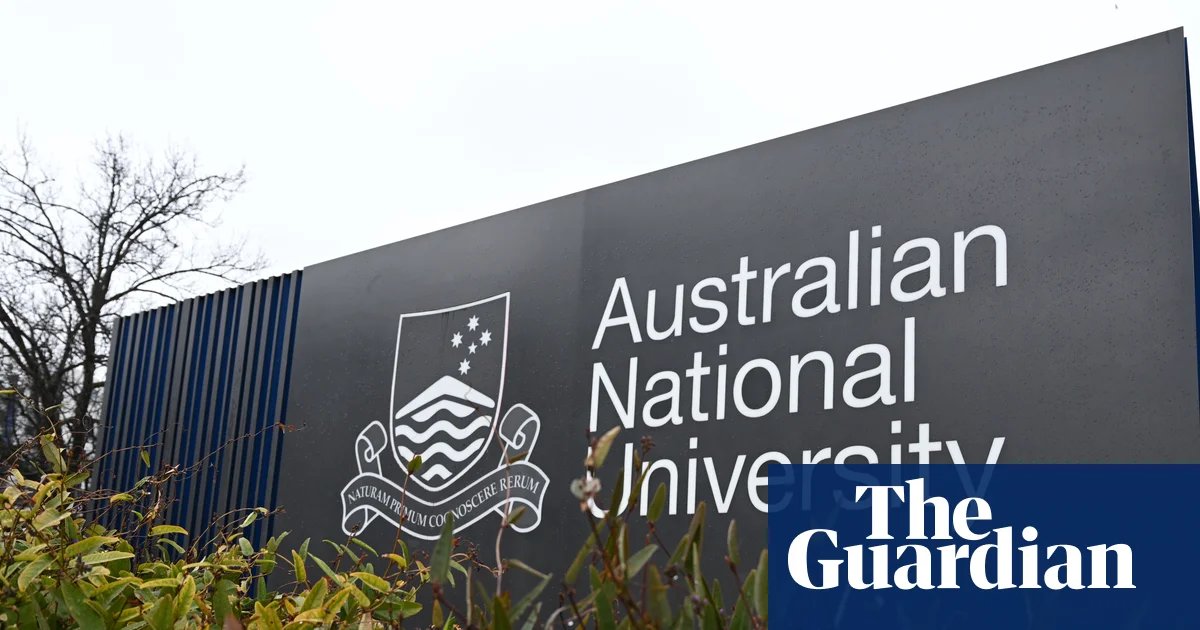
An academic at the Australian National University has accused it of a “hysterical” response to students using AI to cheat, as tertiary institutions rush to shore up the credibility of assessments.
But a colleague warned Australia is in danger of “shipping our national intellectual capability” to companies in California and China if educational rigour is not restored.
The Canberra institution is among the universities trying to counter the widespread use of AI amid concerns students are using the technology to cheat, or not adequately learning.
The 2025 Australian Digital Inclusion Index found 78.9% of secondary and tertiary students were using generative AI.
ANU has released a consultation paper to academic and teaching staff with three options, including classifying assessments as “secure” – completely free from the risk of AI cheating – or “insecure”. Another option would require students to declare in which stages of an assessment AI was used.
One ANU academic told Guardian Australia they supported the university’s moves, but said the process across the sector had so far been “panicked”.
“Everyone is adjusting in a panicked way, which is aggravated by a lack of resources to support teaching,” they said. “It makes the shift to secure assessment really complicated.”
Another ANU academic was critical of the university, and said it was not adequately consulting on the changes, warning they could unwind some of the progress in making assessments more inclusive for students with a disability or caring responsibilities.
“This is not an earnest consultation, this is a reactionary response, perhaps one would argue a hysterical response,” they said. “We are at a point of panic now. That panic has resulted in proposals that could see inclusion go backwards.”
The academic said their faculty had already issued draft guidelines ahead of the second semester, pushing for greater on-campus assessment.
“Teaching begins in less than two weeks … we’re being asked to do more at very short notice, with an utter lack of training.”
ANU law professor, Will Bateman, who leads research projects on the regulation of AI, said combating the infiltration of AI use in universities across Australia was critical to stop intellectual capability being shifted overseas.
“If we don’t address the erosion of the norms and rigour in our education created by AI, we are just shipping our national intellectual capability to companies in California and China,” he said.
Bateman said securing assessments did not mean all assessments would be in person, but that technology should be better equipped to respond to AI use.
“Responding to AI doesn’t automatically mean sending students back to exam halls en masse, but we need serious investment in fully-secure devices to ensure that students are actually learning the material we teach and to assure people outside the university that the degrees we issue are meaningful.”
The University of Queensland began implementing new policies to “secure” its assessments earlier this year, but drew criticism for scheduling in-person oral assessments during night hours and over the weekend.
The deputy vice-chancellor of education, Kris Ryan, told Guardian Australia his university had begun considering responses to AI use in 2023, but said it takes time for the work to be implemented, which was being done now.
“There has been a shift by some academics across the university to put on more traditional exams as part of their secure assessment strategy,” he said.
“We owe it to the community at large that we can say, hand on heart, that our graduates have the capabilities that we value.”
UQ classes assessments as secure or “open”. Ryan said secure assessments could include some AI use, but the university would require students to show “critical appraisal of how AI comes up with the answer”.
Ryan said he understood concerns that changes to exam structures could lead to some students being left behind, but he said the university was working with staff and students to accommodate those needs.
“I’ve got three teams working now, whether it’s scheduling, whether it’s the types of assessment we’re encouraging academics to do, whether its working directly with students to look at other alternatives.”
The University of Melbourne is also moving towards a process of “secure” assessments, with deputy vice-chancellor of education, Prof Gregor Kennedy, saying his institution was looking at more oral assessments as part of its AI response.
“The University is transforming its assessment approach to embed secure assessment types that ensure integrity and verify students’ work amidst the rise of AI tools,” Kennedy said.
“This evolution involves more secure assessments, including interactive oral exams that can be tailored to different disciplines and student needs, assuring our graduates’ highly regarded learning, skills and knowledge.”
Barney Glover, the new head of the Australian Tertiary Education Commission – an independent body tasked with overseeing key university reforms – said he was seeing more universities reintroduce oral exams to better test students, but warned universities would “need to be really responsible” in how they use or stop AI being used.
Despite the “challenges” posed by AI, Australia’s “world-class tertiary education system will adapt”, he said.