dailynewsnblog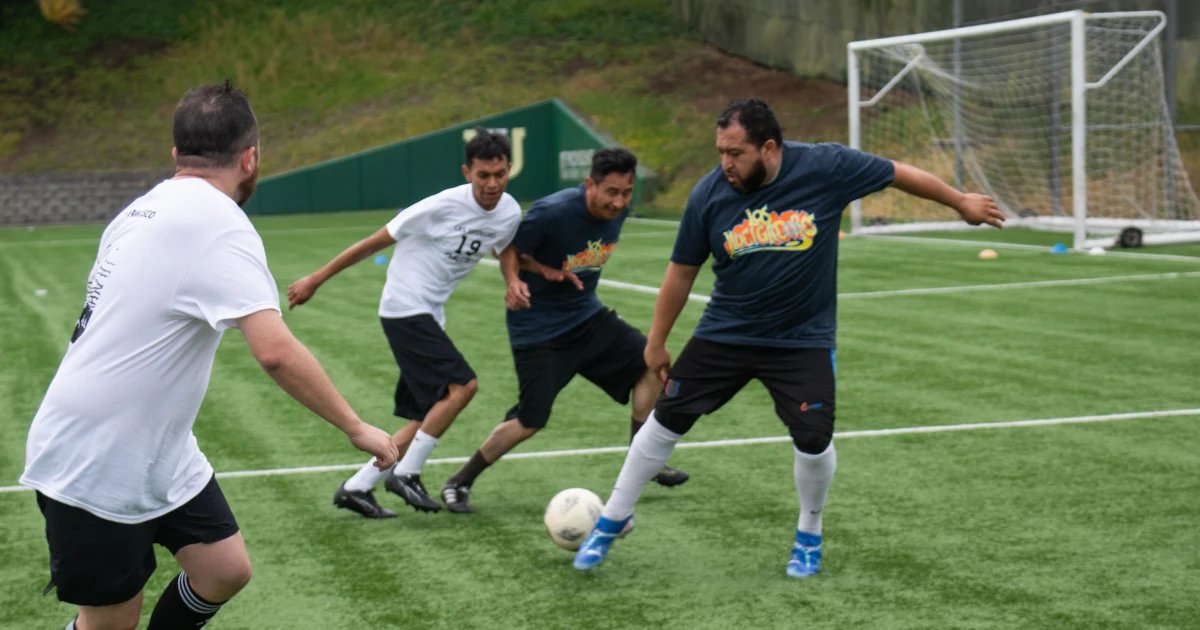
The first time Pedro Ayón and Serafín Andrade played soccer together was when they were both in ICE detention at a center in McFarland, California, a few years ago.
Subscribe to read this story ad-free
Get unlimited access to ad-free articles and exclusive content.

Ayón, born in Mexico and raised in the U.S., spent eight months in detention in 2021. Since no visits were allowed due to the pandemic, his only option to see people was to go out to the yard to kick a ball around with his fellow inmates.
“When we were allowed recreation for an hour, half an hour, we often went out and that was a way to feel free, to enjoy ourselves, to be able to share and in any way forget about the situation we were in,” he said. “It’s a ball, right? But it does things you wouldn’t think of — being able to heal people just by kicking the ball around.”
Amid the confinement and the sadness of being away from his family, soccer allowed Ayón to forge great friendships like the one with Andrade, who spent a year and a half in immigration detention at the same center, McFarland’s Central Valley Annex.

The power of play to heal the trauma of detention led a group of people to create a soccer tournament in California that brings together worlds that rarely intersect on a field: former ICE detainees, family members of those still incarcerated, immigration lawyers, activists and community organizers. The teams are mixed, so men and women play on the same field, divided into four pitches where they face off in five-a-side matches.
The idea was simple: to organize an annual tournament to share experiences, play sports and raise funds to help people detained and those released from ICE facilities. Thus, “CCIJust Goals” was born, and in June it celebrated its fourth edition at the Negoesco Stadium at the University of San Francisco.
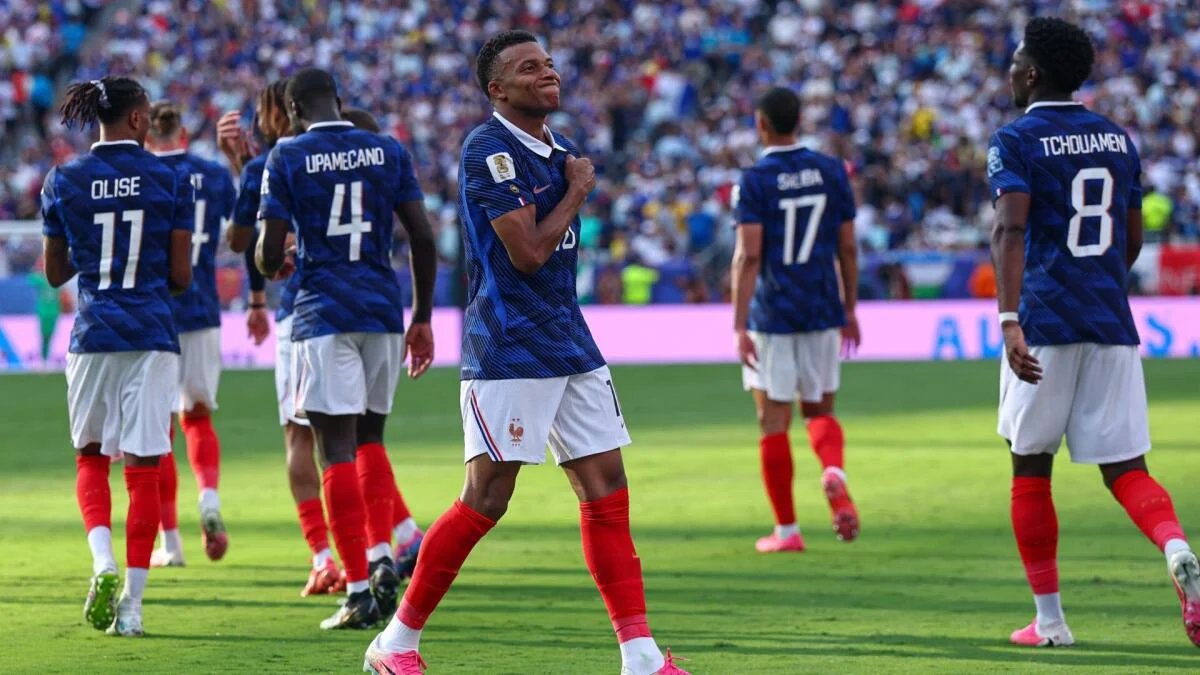
One hundred amateur soccer players participated this year, divided into 10 teams and caught up in the spirit of the World Cup, which had just begun.
“Many people arrived wearing jerseys of their countries, or of other nations. They were very excited to have that connection with the World Cup,” said Edwin Carmona-Cruz, executive director of California Collaborative for Immigrant Justice (CCIJ), a nonprofit organization that uses legal services to fight for the release and empowerment of immigrants detained in California.

Carmona-Cruz recalls that during legal consultations with detainees, he repeatedly heard the same thing: “Many people inside tell us, ‘That’s the moment when I feel free and I can be on a team with someone from another country who doesn’t speak my language, but we’re on the same team and we’re fighting for the same thing.’”
As evidenced by the World Cup, Carmona-Cruz said, soccer speaks a universal language.
To participate in the CCIJust Goals tournament, each team must raise at least $1,000 to register, and, according to Carmona-Cruz, the funds are used to support legal services for people currently detained by ICE, such as a Salvadoran man who is currently being held at the California City Detention Facility.
Speaking to Noticias Telemundo from the facility, the Salvadoran detainee, who asked to remain anonymous, said that he and others play soccer during their daily recreation hour in the center’s yard.
“We only get one hour of recreation to go out to the yard. The other 23 hours we are locked up, in the cell or in the dormitory,” he said.
The detainee said that after organizing the teams, they have about 40 minutes left to play: “They are the best 40 minutes of the day,” he said.
Some of the balls don’t have too much air, he noted. “There are people who love scoring goals and, even if the ball is punctured, that’s how we play,” he said.

The Salvadoran immigrant said it was hard not being able to watch the World Cup matches on TV. And although he couldn’t participate in the Just Goals tournament in San Francisco, he designed the logo for the uniform worn by the CCIJ team, which is called The Strikers, a direct reference to the protests inside detention centers.
The Salvadoran immigrant, who’s been drawing since he was a child, took a week to draw the team’s logo, which features the colors orange, yellow and navy blue. He hopes to play on the team, he said, when he’s out of detention.
‘Soccer has united us’
The CCIJust Goals tournament has allowed participants — whether they are former detained immigrants, activists, or lawyers — to meet and share their experiences beyond immigration courtrooms and detention centers.
One of the people who best embodies that meeting of worlds is Lee Ann Felder-Heim, an immigration lawyer from the Asian Law Caucus organization. She has participated in three of the four tournaments that have been held, scoring goals as a midfielder.
“I grew up playing soccer and I love soccer,” said Felder-Heim, 36, who learned to play on Arizona fields when she was 6. “When I’m stressed, I find a field, play with my friends, and it’s the same thing that people in detention do when they finally get an hour to go outside.”
Accustomed to “very heavy and formal” conversations with clients and colleagues, Felder-Heim values the tournament as an opportunity to have fun and “celebrate the things that unite us, such as our love of soccer.”
Connecting and healing trauma
What Pedro Ayón remembers most about the matches when he was in immigration detention was not the competition, he said, but the brotherhood between people who did not share the same language: Russians, Japanese, Chinese, Latin Americans, all became brothers by kicking the same ball.
“Football was more than a game. It was more than a code. It was more than a sport. It was the way we could connect,” he said.
Ayón’s experience is backed by science. A study published in May in the American Journal of Community Psychology by researchers from Rutgers University and Arizona State University, based on 529 Latino immigrants, demonstrated that a safe and inclusive environment is linked to a decrease in anxiety and stress.
Germán Cadenas, director of the Global Mental Health and Immigration programs at Rutgers University and the study’s co-author, said playing soccer can be a form of “collective care and resilience.”
Andrade, 41, who came from Mexico at the age of 4, said that when he was in immigration detention, “we used to play five-a-side tournaments because the field was so small, and that helped us with the stress, so we wouldn’t think about the bad things that were happening to us.”
He recalled being detained with people from Armenia, Germany, India, Canada and other countries. Andrade, who is currently studying sociology at the University of California, Berkeley, believes that the experience of playing soccer was fundamental in healing the trauma of the immigration arrest.
Ayón works in Sacramento helping people reintegrate to society after incarceration and is also a student at a community college. Like Andrade, both are actively involved with Just Goals.
Ayón still remembers what he felt when he went to his first tournament after he was out of immigration detention. “I felt free, I felt joyful, I felt blessed, I felt blissful, and I felt part of a community. I felt that part of me was representing my comrades who were still detained, because I know how football united us in there and made us forget.”
Scrutiny over detention conditions
According to NBC News data, there were more than 60,000 immigrants detained in the U.S. at the beginning of April.
In California, the immigrant detainee population in California grew by 162% between 2023 and 2025.
The state’s fifth report on immigration detention centers published in May by California’s Department of Justice stated that six detainee deaths took place between September 2025 and March 2026 — the most since the state’s DOJ has compiled these reports.
The report stated it found “declining conditions” for detainees, including “inadequate medical care, delay in medical treatment, overcrowding, inadequate food, excessive use of force by detention facility guards.”
In the case of California City — the center where the Salvadoran immigrant is being detained — the report documented inadequate access to recreational and outdoor activities.
Telemundo Noticias requested comments from ICE and Core Civic, the company that manages California City, but did not receive a response.
The Salvadoran immigrant was able to watch some Just Goals matches from the tournament through a tablet. Other inmates in Kern County did the same, cheering via video while the tournament was being played in San Francisco.
When asked how he felt about participating remotely as a spectator, the Salvadoran immigrant replied that it felt good to be part of something.
“It’s another connection,” he said.
For Carmona-Cruz, that connection is the heart of the tournament, and this year’s World Cup gives it a special resonance. “We use the tournament as a bridge between something like soccer and a topic as complex as immigration,” he said. “We know that with the World Cup, this can be replicated and implemented in other parts of the country.”
An earlier version of this story was first published in Noticias Telemundo.