dailynewsnblog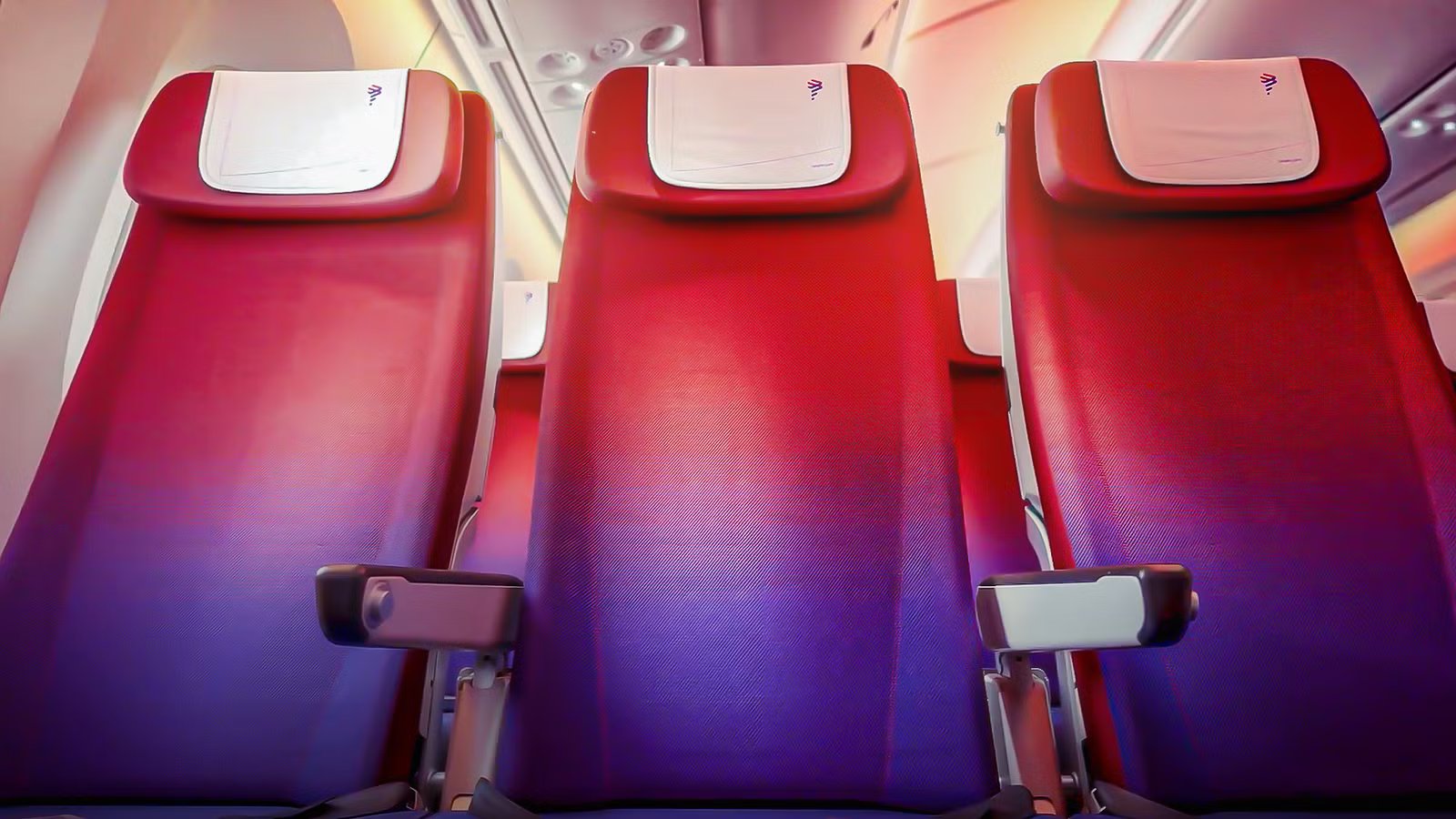
LATAM Airlines has been thriving in recent years, outperforming most of its competitors across the world. In the last financial year, the airline delivered an exceptional 16.2% operating margin, compared to the 7.2% average as reported by the International Air Transport Association (IATA). Unsurprisingly, the pan-South American airline continues to invest in digital innovation, passenger experience, in-flight entertainment, and fleet renewal to ensure sustainable growth going into the next decade.
Another of these investments is the airline’s introduction of a new premium economy product on its Boeing 787 fleet after having operated a strict two-class strategy in the past. LATAM is investing around $100 million into the retrofit that will help close the gap between the economy and business class. The new “Premium Comfort” cabin, as the product is called, is expected to be introduced in the first half of 2027.
Why LATAM Is Now Installing Premium Economy Class

LATAM’s move into long-haul premium economy appears to be part of a wider premiumization strategy at LATAM, after previously also having announced the introduction of a new business class product. This premiumization trend has in recent years been observed across the global industry following a surge in premium travel demand, but to a lesser extent in South America.
As part of this trend, widebody aircraft featuring premium economy cabins have steadily increased over the past decade, especially among carriers in North America and Europe. Nevertheless, most airlines in other regions are now catching up, as they have seen the profits premium economy cabins can generate. The same appears to be the case for LATAM, and now that the airline is growing its transatlantic network, the business case for the new cabin class is only getting stronger. Paulo Miranda, Vice President of Customers at LATAM Airlines Group, commented on the matter.
“Premium Comfort reflects our deep understanding of our customers’ evolving needs and our commitment to providing more options so every passenger can travel the way they want. It is a product that combines comfort, space, and high-level service with exceptional value, and it also represents a statement of how we envision the future of flying from South America to the world: a journey where privacy, design, and the warmth of our region come together to create a unique experience.”
While airlines often frame the introduction of a premium economy cabin around an improvement in passenger experience, the underlying motives are mostly economic. For airlines, the cabin tends to offer a higher-yield product that meets passenger demand for comfort at a lower price than business class. It is a product designed to attract both leisure travelers seeking more comfort and price-conscious business travelers, effectively filling the growing gap between economy and business class.
This Is What LATAM’s Premium Economy Will Be Like

The new cabin will feature the  RECARO PL3530 seat with a 40-inch (101.6 cm) pitch and 8-inch (20.3 cm) recline. For entertainment and connectivity, the new Premium Comfort cabin will feature 16-inch 4K screens, with Bluetooth connectivity and fast-charging USB-C ports. Each seat is also said to have an individual power outlet. The airline further states that “the onboard experience will be enriched with a carefully curated gastronomic offering and personalized service to elevate every moment of the journey.”
The new cabin’s design was created in collaboration with PriestmanGoode, a London-based leading design consultancy specializing in transport, product, and human-centered experience design. In the past, the firm has worked with other leading airlines, including more recently  Riyadh Air and SWISS.
According to the firm, LATAM’s premium economy cabin design celebrates South America as a land of plenty, rich in culture, color, and topography, with every detail carefully considered, from the form of the seat to the materials and finishes that surround the passenger. Maria Kafel-Bentkowska, Associate Director of CMF at PriestmanGoode commented on the new design.
“This new Premium Economy seat is inspired by the narrative developed by PriestmanGoode for the next generation of LATAM’s onboard products, celebrating the richness of South America. The colour palette, drawn from the region’s natural mineral hues and forms that echo the sand dunes and mountainous landscapes, creates a deeply rooted and immersive aesthetic. All of this is underpinned by both LATAM’s and PriestmanGoode’s commitment to selecting and designing with the most environmentally responsible materials available.”
LATAM Is Doubling Down On Passenger Experience

Channing Reid
As briefly touched upon before, LATAM is also investing in a new business class product featuring the Recaro R7 “mini-suite” seats with sliding privacy doors. This new product entered service last year before the airline had even completed its previous business class retrofit. In total, 24 787s out of 40 are being retrofitted.
Ten of these are Boeing 787-8, operating international and domestic flights in Chile, and 14 are Boeing 787-9, operating both international and domestic flights in Chile, Brazil, and Peru. The full retrofit is expected to be completed in the second half of this year. The introduction of these new seats is part of a larger $360 million retrofit, which also includes the airline’s standard economy cabin.
The airline is also investing in onboard internet connectivity with Viasat and an improved in-flight entertainment (IFE) system. For the latter, the company is drawing inspiration from strategic partner  Delta Air Lines, with the aim of making the IFE an integral part of the wider customer journey. This is a crucial part of the airline’s continued effort to improve its customer journey through implementing and improving its digital touchpoints. The investment in the wider passenger experience is translating into rapid growth of the carrier’s Net Promoter Score (NPS).
LATAM Airlines In 2026: Beyond The Cabin

Looking at the company’s recent financial performance, LATAM’s continued efforts appear to be paying off. In the last full financial year, the South American airline reported a nearly 50% increase in profit compared to the prior year, totaling $1.5 billion. Given Latin America is one of the world’s fastest growing aviation markets, LATAM is well-positioned to capitalize on this and achieve further growth. Especially when considering the airline’s massive loyalty membership across the continent.
The first signs for 2026 are proving strong for the airline, as the airline reported a 62.1% increase in profit for the first quarter of 2026 compared to the same period a year prior. Revenue grew more modestly at 21.7%, resulting in a historic and industry-leading operating margin of 19.8%.
LATAM Airlines Group Q1 Financial Highlights | |||
|---|---|---|---|
Q1 2026 | Q1 2025 | YoY change | |
Total operating revenue | $4.15 billion | $3.41 billion | +21.7% |
Passenger revenue | $3.66 billion | $2.94 billion | +24.4% |
Adjusted EBITDA | $1.31 billion | $962 million | +36.7% |
Adjusted operating margin | 19.8% | 16.8% | +3.0 percentage points |
Net income | $576 million | $355 million | +62.1% |
Source: LATAM Airlines Group, Q1 2026 Earnings Release | |||
This year the airline also opened a number of new long-haul connections, which can potentially strengthen the company’s underlying finances further. In March, flights between São Paulo Guarulhos International Airport (GRU) and  Amsterdam Schiphol Airport (AMS) commenced, followed soon after by flights to Brussels Airport (BRU). With the introduction of these routes, LATAM now serves one of Europe’s most lucrative integrated markets, the Benelux, with nine weekly frequencies. A third new route was introduced earlier this month connecting São Paulo and Cape Town International Airport (CPT) three times weekly.
LATAM’s Incredible Fleet Growth

Earlier this month, LATAM issued a press release stating that by the end of 2026, a total of 40 new aircraft will have entered the airline’s fleet, bringing the fleet to 410 aircraft. By the end of the decade, another 130 next-generation aircraft are expected to have joined the fleet.
“Fleet renewal is one of the most important investments we are making as a group because it allows us to grow more efficiently and better meet the region’s connectivity needs.” Sebastián Acuto, Vice President of Fleet and Projects at LATAM Airlines Group, stated. “South America has domestic markets with tremendous growth potential, and having a more flexible and diversified fleet gives us the capabilities we need to capture those opportunities.”
A large portion of these deliveries include A320neo, A321neo, and Boeing 787-9s, but also new aircraft types allowing LATAM to explore new markets. Among them are the Embraer E195-E2 and the Airbus A321XLR. While both will do so in their own ways, these types allow LATAM to open routes to new, thinner markets which were previously not economically feasible. The airline has an outstanding order for 24 E195 E2, with 50 options and 13 A321XLRs.
While it is certain the first Embraer aircraft will be deployed across Brazil’s domestic markets, some public uncertainty regarding the XLRs’ deployment remains. Airbus’ long-range narrowbodies were initially planned to operate from LATAM’s hub at Lima Jorge Chávez International Airport (LIM), but are now likely deployed elsewhere due to a controversial connection fee at the airport. One of the mentioned alternatives is Fortaleza’s Pinto Martins International Airport (FOR), which would also enable LATAM to deploy the aircraft on transatlantic services.