dailynewsnblog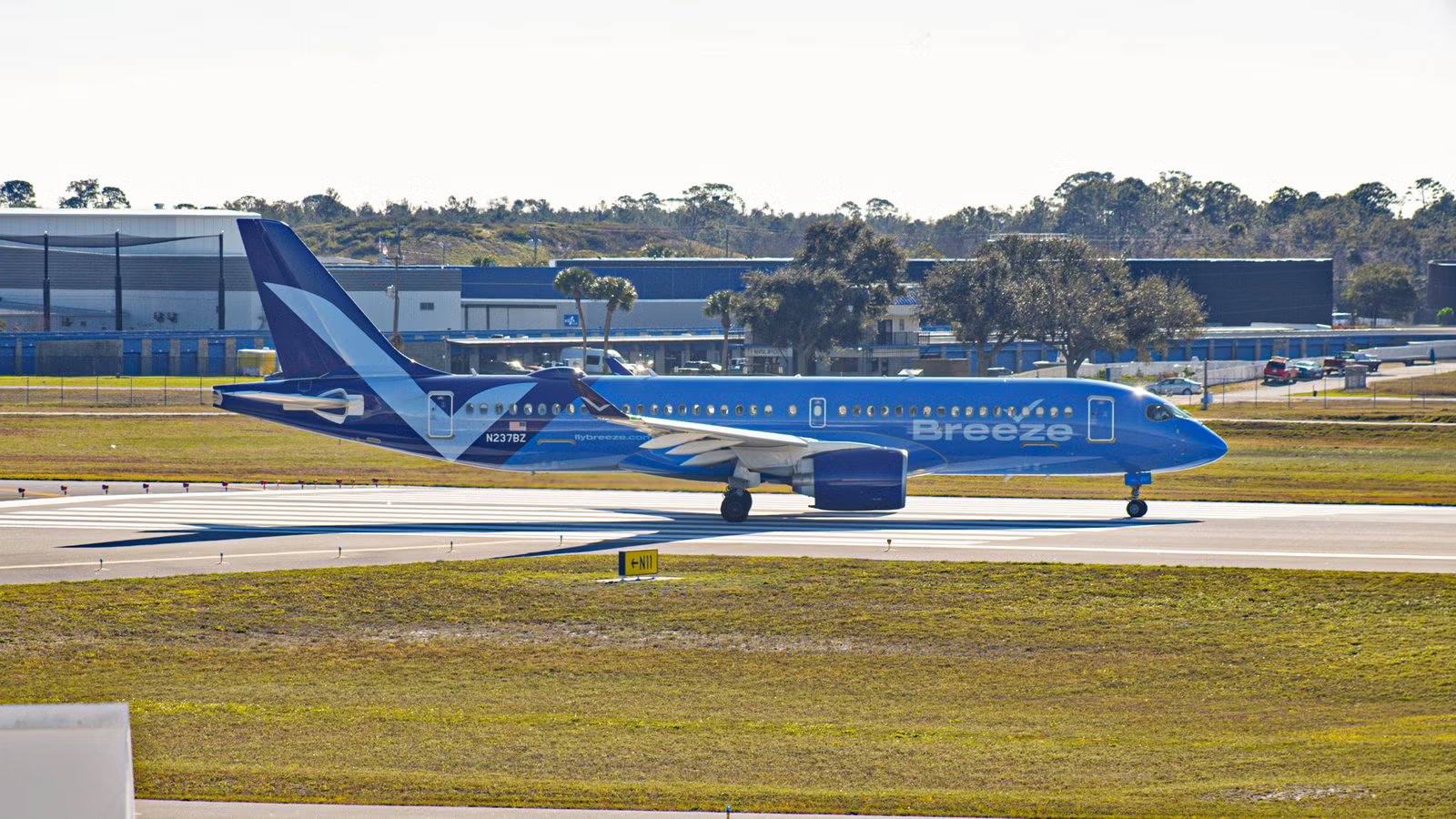
Launching 19 new and returning routes in just 72 hours would be an ambitious move for any airline. Yet for Breeze Airways, the expansion is less solely about adding destinations and more about validating a business model that many once questioned. Between July 1 and July 3, the airline expanded its network with routes connecting smaller US cities, pushing its July schedule to approximately 266 daily departures, about 44% more than in the same month a year earlier. Underpinning that growth is CEO David Neeleman’s belief that Breeze can profitably serve markets generating as few as 10 passengers per day each way (PPPD).
That philosophy helps explain why Breeze continues targeting city pairs largely ignored by other airlines. Of the 19 routes launched during the three-day expansion, 13 operate without any nonstop competition, while several restore connectivity lost after Spirit Airlines ceased operations earlier in 2026. Rather than competing on crowded hub-to-hub corridors, Breeze is using the Airbus A220 to connect secondary airports that larger airlines often consider too small to justify nonstop service, creating a network built around markets with limited competition and relatively stable demand.
Breeze’s Biggest Expansion Yet Focuses On Underserved Cities

The latest expansion represents one of Breeze Airways’ largest coordinated network launches since the airline began flying in 2021. Introducing 19 new and returning routes in only three days amounts to more than six route launches every 24 hours, reflecting the pace at which the carrier has continued expanding its footprint. By July 2026, Breeze’s operation had grown to around 266 daily aircraft movements, a year-over-year increase of approximately 44%.
The airline has concentrated much of this growth around secondary airports rather than major airline hubs. Fort Lauderdale alone gained several new destinations during the latest expansion, while first-ever nonstop routes such as Akron-Canton Airport (CAK)–Portland International Jetport (PWM), Fort Lauderdale–Hollywood International Airport (FLL)–Salisbury–Ocean City–Wicomico Regional Airport (SBY) illustrate Breeze’s willingness to enter markets that previously lacked direct scheduled service. According to Aeronautics Magazine, across the 19 additions, roughly 68% are monopoly routes, allowing Breeze to avoid direct competition on most of its newest services.
This strategy differs considerably from that of legacy carriers, which generally deploy aircraft where passenger volumes are highest. Breeze instead searches for city pairs with enough local demand to support a limited schedule, even if that demand falls well below the thresholds traditionally required by larger airlines. The result is a network that continues expanding without relying on congested airports or highly competitive trunk routes.
What Does ’10 Passengers Per Day Each Way’ Actually Mean?

Neeleman’s claim, reported by AeroXplorer, that Breeze can make money in markets with 10 passengers per day each way is frequently misunderstood. The figure does not mean that each flight carries only 10 passengers. Instead, it measures the average number of people traveling between two cities on a typical day, regardless of which airline they currently use or whether they must connect through another airport.
A market that produces ten passengers in each direction every day generates approximately 140 one-way passengers over a week. If Breeze schedules only three weekly round trips, those travelers are concentrated on a handful of departures rather than being spread across seven daily services. Before accounting for stimulated demand, seasonal peaks, or passengers who previously avoided traveling because no nonstop option existed, that already translates into a far healthier passenger count per flight than many readers initially assume.
This distinction is central to Breeze’s network planning. Traditional hub airlines often require enough demand to justify multiple daily frequencies, while Breeze only needs sufficient weekly demand to support a small number of nonstop flights. That allows the airline to identify hundreds of overlooked markets where passengers value convenience over frequency, creating opportunities that larger operators may consider too small.
Why The Airbus A220 Makes These Routes Viable

Breeze’s strategy would be far more difficult without the A220-300. Configured with 137 seats, the aircraft combines relatively low operating costs with a range of approximately 3,450 nautical miles (6,390 km), enabling nonstop flights between cities that previously required connections through major hubs. Those capabilities allow Breeze to operate in longer domestic sectors without introducing larger, more expensive aircraft.
Equally important are the aircraft’s operating economics. Powered by Pratt & Whitney PW1500G geared turbofan engines, the A220 consumes significantly less fuel than many older aircraft of a similar size while also reducing maintenance requirements and airport-related costs. Lower trip costs, not simply lower costs per seat, allow Breeze to schedule flights a few times each week without requiring exceptionally high passenger volumes to cover operating expenses.
Revenue generation also extends beyond ticket sales. Unlike many ultra-low-cost carriers, Breeze offers a premium cabin known as Ascent, alongside bundled fares, seat selection, checked baggage, and other ancillary products. These additional revenue streams improve yields and help offset operating in smaller markets where passenger volumes may be limited, but travelers are often willing to pay more for convenient nonstop service.
Industry Changes Have Created Thousands Of New Opportunities

Breeze’s expansion has coincided with significant changes across the US airline industry. Over the past decade, major carriers have increasingly concentrated on flying around their largest hubs while reducing service to many regional airports. At the same time, the retirement of numerous 50-seat regional jets, including the Bombardier CRJ200 and Embraer ERJ-145, has made it harder to economically serve lower-demand routes using traditional network models. Routes once supported by these smaller aircraft often cannot sustain the larger regional jets or mainline aircraft that have replaced them, leading many airlines to exit smaller markets altogether.
The collapse of Spirit Airlines in May 2026 accelerated those changes by leaving numerous city pairs without nonstop service. Although Breeze does not directly replicate Spirit’s ultra-low-cost approach, it has been able to enter several underserved markets where passenger demand already existed, but airline competition had disappeared. That has allowed the carrier to expand into established travel markets without engaging in prolonged fare wars.
Secondary airports also provide operational advantages beyond reduced competition. Lower landing fees, shorter taxi times, and less air traffic congestion can improve aircraft utilization while reducing delays. For passengers, these airports often offer shorter security queues, easier parking, and faster journeys through the terminal, helping make infrequent nonstop flights more attractive than connecting through a busy hub.
Why Less Competition Can Mean Higher Profits

One of the defining features of Breeze’s latest expansion is the lack of direct competition. Of the 19 routes launched between July 1 and July 3, 13 are operated exclusively by Breeze, meaning nearly 68% of the new services face no other airline offering a nonstop alternative. Rather than competing for market share on busy corridors, the airline is often creating a nonstop market where none previously existed, allowing it to capture passengers who would otherwise connect through larger hubs or choose not to travel at all.
Limited competition also gives Breeze greater pricing flexibility than airlines operating on heavily contested routes. While fares must remain attractive enough to stimulate demand, the carrier is less exposed to aggressive price matching from rivals because passengers value the time savings and convenience of a nonstop flight. For travelers in smaller cities, avoiding a connection can reduce journey times by several hours, making a modest fare premium easier to justify.
Operating monopoly routes also produces operational advantages beyond ticket revenue. Marketing costs tend to be lower because Breeze is introducing an entirely new travel option rather than persuading passengers to switch airlines, and its schedules can be designed around local demand instead of responding to competitors’ frequencies. Combined with the lower operating costs of the Airbus A220, this gives Breeze a business model that focuses less on filling every seat and more on generating sustainable returns across hundreds of underserved markets.
Breeze Has Only Scratched The Surface Of Its Potential Network

Perhaps the most striking figure shared by Neeleman is his estimate that around 3,500 US city pairs generate sufficient demand to support Breeze’s operating model. The airline currently serves roughly 280 of those markets, meaning it has entered only about 8% of what management believes is its long-term opportunity. Even allowing for overlap and future competition, the figures suggest substantial room for continued expansion.
Supporting that ambition is Breeze’s growing A220 fleet. The airline currently operates more than 50 A220s, with dozens of additional aircraft still scheduled for delivery over the coming years. Each new aircraft provides the flexibility to either launch entirely new routes or increase frequencies on markets that have already demonstrated stronger-than-expected demand.
The broader strategy reflects a different view of domestic aviation growth. Rather than competing directly against the largest US airlines on saturated routes, Breeze is attempting to build scale through hundreds of individually modest markets that collectively represent millions of annual passengers. If that approach continues to prove financially sustainable, the airline’s July expansion may ultimately be remembered less for the 19 routes it introduced and more for demonstrating that profitable growth does not always require serving the country’s busiest airports.