dailynewsnblog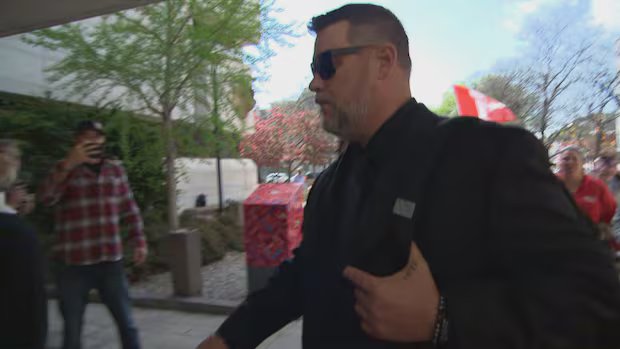

Listen to this article
Estimated 3 minutes
The audio version of this article is generated by AI-based technology. Mispronunciations can occur. We are working with our partners to continually review and improve the results.
Pat King, a key figure in the 2022 convoy protests, will be re-sentenced after the Ontario Court of Appeal sided with Crown prosecutors who argued his original punishment was too lenient.
The Crown appealed after a trial judge convicted King on five criminal charges but acquitted him of intimidation and obstructing police.
In a decision released Friday, the Court of Appeal overturned the acquittal on intimidation, entered a conviction on that charge, and ordered a new sentencing hearing later this year at the Ontario Superior Court.
At that time, King will face fresh sentencing submissions, which will determine a new sentence that reflects both the original convictions and the added intimidation conviction.
“His purpose was to use the pressure that was being exerted against area residents to compel the Government of Canada to abstain from exercising its lawful authority to pursue the COVID-19 policies it considered to be in the public interest, and to instead change these policies to satisfy Mr. King,” the court wrote.
King was originally sentenced in February 2025 to a three-month conditional sentence, to be served under house arrest, followed by probation.
He also received credit for 161 days spent in pretrial custody after his arrest in connection with the protests that gridlocked downtown Ottawa.
‘Targeted attack on Ottawa residents’
A three-judge appeal panel concluded King played a central role in what it described as “a co-ordinated, targeted attack on Ottawa residents aimed at coercing change through highly disruptive criminal conduct.”
The judges said there was “overwhelming evidence” that even before protesters and trucks arrived in Ottawa, King intended to occupy the downtown core by gridlocking streets and causing distress to residents, businesses and workers through continual horn honking and other disruptive tactics.
“Mr. King not only incited these activities, he instructed his followers to resist police and ignore court-ordered injunctions,” the decision said.
Since coming to Ottawa for the protests known as the Freedom Convoy, King has continued to use his social media presence to speak about his court appearances, the convoy and other grievances as a way to raise money for his legal bills.
Reading the decision live to viewers on Friday, a tearful King was resigned to now serving time behind bars, saying he would do so “with his head held high.”
He claimed he did not have the funds to continue fighting the case.
“You got what you wanted, so to all those who were people crying about how we disrupted you, you got it, congratulations,” he said to about 27,000 viewers.
At King’s original sentencing, Crown prosecutors sought a sentence of 10 years in prison. King’s lawyers argued for a sentence of three years’ probation, taking into account the time he had already served in custody.
The appeal court said King’s new sentence should “reflect a full appreciation of the public impact of the offences, as well as the scope, duration and persistence of Mr. King’s actions.”
The appeal ruling could have broader implications for other Freedom Convoy cases. Tamara Lich and Chris Barber are also awaiting decisions from the Ontario Court of Appeal on their convictions and sentences.