dailynewsnblog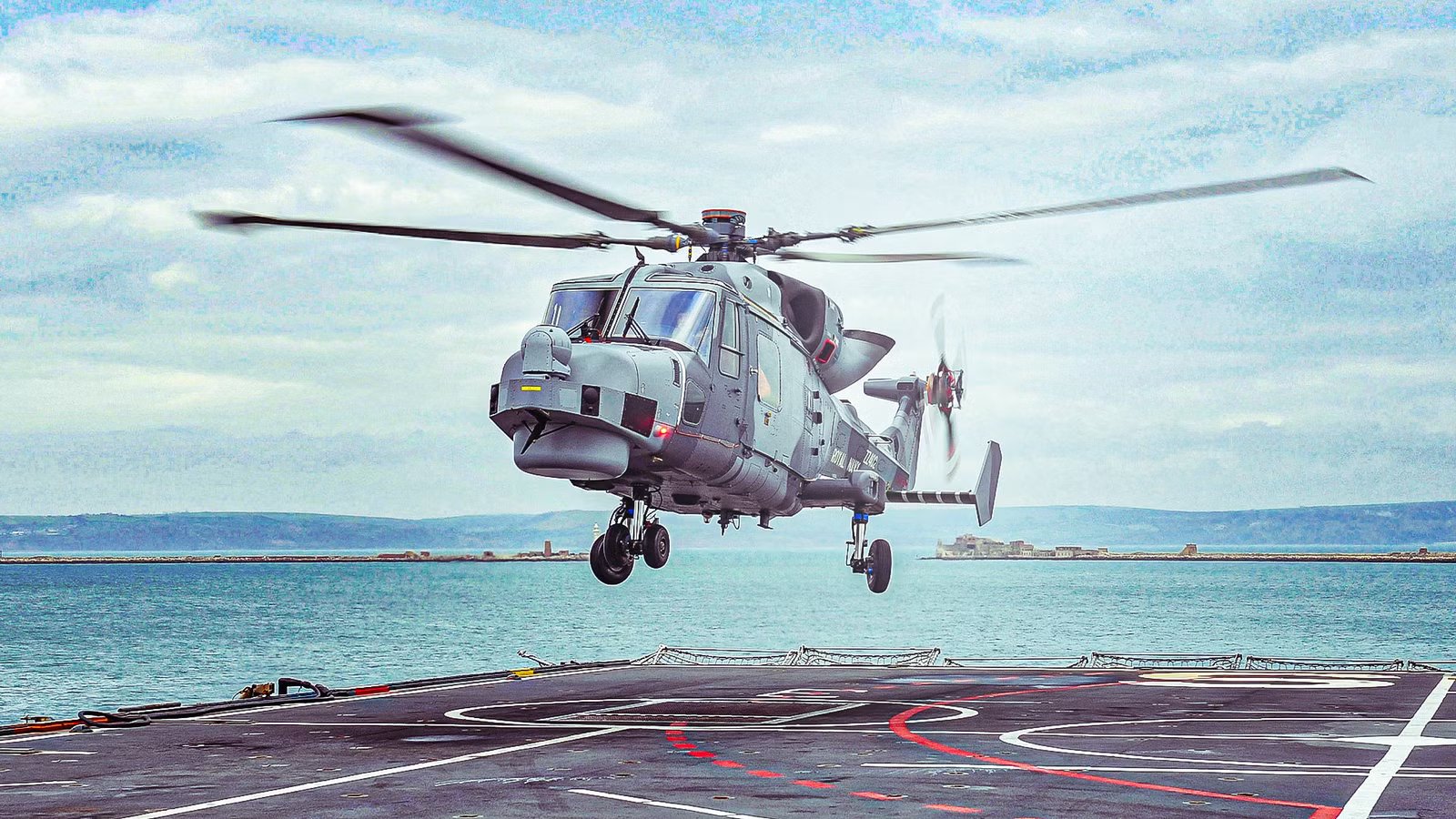
The rapid proliferation of low-cost uncrewed aerial systems like man-portable drones in the 21st century has made piloted helicopters highly vulnerable on the modern battlefield. Since the Russian invasion of Ukraine in 2022, the ongoing conflict has illustrated the potency of exceptionally low-cost drones against conventional rotary-wing combat airframes. The United Kingdom has taken notice, and the Ministry of Defence has decided to retire the Wildcat AH1 helicopters starting next year in favor of similar tactical drones.
The caveat is that the replacement for the Wildcat will not fly until 2030. In the meantime, the British Army will rely solely on the  Boeing AH-64E Apache helicopters, which have been recently upgraded in order to fill the gap in capability caused by a lower total number of helos.
The MOD has invested £5 billion in drones and autonomous systems to succeed the Wildcat, which has only been in service since 2014. Until the British Army’s new Leonardo AW149s arrive, the sustainment budget slated for the Wildcats is set to be reallocated to the general war-fighting readiness and next-generation weapons programs.
The UK’s New Rotary Wing Strategy

Under the NMH program, the UK will procure the AW149 as a supplementary utility helicopter to replace the Puma support helicopters, which have been in service for years. This will actually not position them as a direct successor to the Wildcat, which has served as a battlefield reconnaissance platform. That mission set will be entirely taken over by inexpensive, uncrewed airframes, which have higher survivability and zero risk to human aircrew. Those low-cost UAS will be backed up by the Apache’s firepower.
Instead of operating a helo like the Wildcat, the Army Air Corps will rely on its newly upgraded AH-64E attack helos flying alongside a new fleet of high-tech surveillance autonomous systems to find and network targets. This philosophy follows the same fleet restructuring in development with virtually all of the Air Forces around the world in terms of tactical aviation. Instead of being applied to fighter jets and bombers with loyal wingman drones, the doctrine is simply being applied to low-level combat aviation.
The Apache serves as a kind of battlefield node or ‘mothership’ to low-cost army drones in the same way that a Lockheed Martin F-35 Lightning II stealth fighter does for a collaborative combat aircraft. The Apache is widely regarded as the best attack helo ever built, with survivability and firepower that far exceeds any other comparable rotary wing airframe. This positions it perfectly to take on the role as a kind of ‘quarterback’ for the future of Army Aviation in the UK.
The Vulnerability Of ‘Exquisite’ Helos To Drone Warfare

The United Kingdom took lessons learned from observations of massive Russian losses in the face of a Ukrainian drone swarm that defeated numerous conventional attack helos. Despite these fearsome rotary-wing attack platforms being a major threat to the North Atlantic Treaty Organization’s armies for years, they have been rendered essentially useless in the ongoing conflict. These ‘tank busting’ helos were once feared by armor and infantry alike, but are now far removed from the front line.
Similarly, a harsh lesson was shown by the heavy losses of premier airframes and massive expenditure of costly missile inventories by the United States and Israel during Operation Epic Fury. Both the Ukrainian military and Iran’s Armed Forces showed that they could effectively put up a powerful resistance to conventional air power using far cheaper mass-produced UAS in a variety of battlefield roles.
The data gathered from Ukraine and the intense drone swarms of Operation Epic Fury forced the UK government to publish its highly altered Defence Investment Plan. The Ministry of Defence concluded that keeping a small, boutique fleet of 34 Army Wildcat helicopters was an obsolete concept. If a near-peer war broke out, those helicopters would either be shot down within the first 48 hours by frontline air defenses or destroyed on the tarmac by a swarm of kamikaze drones.
Drone Dominance On The Battlefield Of Tomorrow

The Army is replacing its crewed scout helicopters with an interconnected ‘recce-strike’ fighting ecosystem where distinct drone projects take over different layers of the Wildcat’s battlefield roles. According to ADS Advance, Project Nyx will bring online 24 autonomous aircraft to operate as wingmen for the British Army Apaches. They will carry electronic warfare suites, sensors, and precision weapons, absorbing the risk of enemy air defenses so human Apache pilots can strike from safety.
Instead of a Wildcat crew scouting ahead and marking targets, the Nyx heavy combat drones will push into heavily defended enemy territory. Project Corvus is running in parallel to procure tactical uncrewed aircraft to fulfill the intelligence, surveillance, target acquisition, and reconnaissance mission, abbreviated as ‘ISTAR.’ Two dozen of these are also expected to be delivered by 2029. They will feature advanced radar and electro-optical sensors to scan large areas of frontline territory persistently without risk to human pilots.
Next up is Project TIQUILA. Lockheed Martin Skunk Works is collaborating with the Army to build more than 250 man-portable mini drones that can be distributed to frontline infantry brigades. One example is the ‘Eagle,’ or the Stalker VXE30. This vertical takeoff fixed-wing drone is nearly silent in flight and has a combat endurance of eight hours for 37 miles (60 km).
There is also the ‘Kestrel,’ or Indago 4, being developed under TIQUILA. It is a much smaller four-kilogram quadcopter. Similar to a commercial drone, this can be unfolded and deployed from a backpack by any soldier to provide an instant aerial surveillance aircraft.
Catch what other flight trackers miss
Emergency squawks, holds, NOTAMs — live signals, no signup.
Open tracker
Catch what other flight trackers miss
Emergency squawks, holds, NOTAMs — live signals, no signup.
Open tracker
Making The Army Ten Times More Lethal

Task Force Rapstone of the British Army is working to develop loitering munitions, such as one-way ‘suicide’ drones and first-person view interceptor UAS under the same umbrella. The stated goal of this unit is to make the UK’s ground troops ‘ten times more lethal.’ These small UAS will complement the Project TIQUILA aircraft to provide expendable firepower that can take out enemy armor, infantry, artillery, or even low-flying helos.
The data-centric support apparatus that will integrate all of these new platforms under a joint network is being created through two parallel programs that will combine to create a ‘combat cloud.’ Project Asgard is working to make the unified cloud network, while Project Zodiac aims to develop the digital backbone that supports it. Zodiac will unify the ISTAR data network into a single digital ‘picture’ of the battlespace that can be used by leaders at every level of the battlefield chain of command.
Zodiac will automatically layer radar data, drone feeds, and satellite imagery, as well as other sensor inputs through artificial intelligence that merges them into a single real-time map of the front line. Project Asgard will enable the software network that takes this information and translates it into a kinetic weapon strike. Again, using machine learning, Asgard will recommend which asset is best to respond to each threat as identified by Zodiac. Each system uses AI but has a human commander in the loop to dramatically reduce response times, but not fully automate battlefield decision-making.
The Royal Navy Charts Its Own Course

The retirement that has been declared for the Wildcat airframe only applies to those in service with the British Army. The Royal Navy has elected to retain its Helicopter Maritime Attack Mark 2 variant for unique mission sets which it still requires as a core capability. While search and rescue is not its primary mission, naval aviation relies heavily on helos to support the carrier and other surface vessels for a wide range of secondary mission sets. The HMA2 can better fulfill a SAR role thanks to its cabin, which can recover a sailor unlike a small drone.
There is no uncrewed platform that can take over the anti-submarine and anti-ship warfare role fulfilled by the Wildcat. The Royal Navy operates a fleet of 28 Wildcat HMA2s, which differ significantly from the Army’s retired variants. They feature an under-nose Leonardo Seaspray 7000E Active Electronically Scanned Array radar, a specialized salt-water-resistant folding tail, and heavy deck-locking gear for landing on pitching ship decks during rough seas.
The RN only recently declared full operational capability for the new Martlet missile to be carried by the Wildcat, which is optimized for targeting fast attack craft. Simultaneously, the Sea Venom high subsonic anti-ship missile has achieved initial operating capability under a parallel development program through the Future Anti-Surface-Guided Weapon program. A single Wildcat can carry four of these missiles designed to disable or destroy ships as large as a corvette or patrol vessel.
The future of the Wildcat is secure with the RN for now, even as new UAS come online, as it will be adapted for manned-unmanned teaming, or MUM-T. Remotely piloted aircraft are unlikely to be made with the capability to carry Stingray lightweight torpedoes in the near future or serve as an aerial platform for Royal Marine snipers during counterterrorism shipboardings at sea. The Fleet Air Arm is pursuing development of fixed-wing drones to form a hybrid air wing under Project Vanquish, which means that in the 2030s, the Wildcat may finally end up on the chopping block.