dailynewsnblog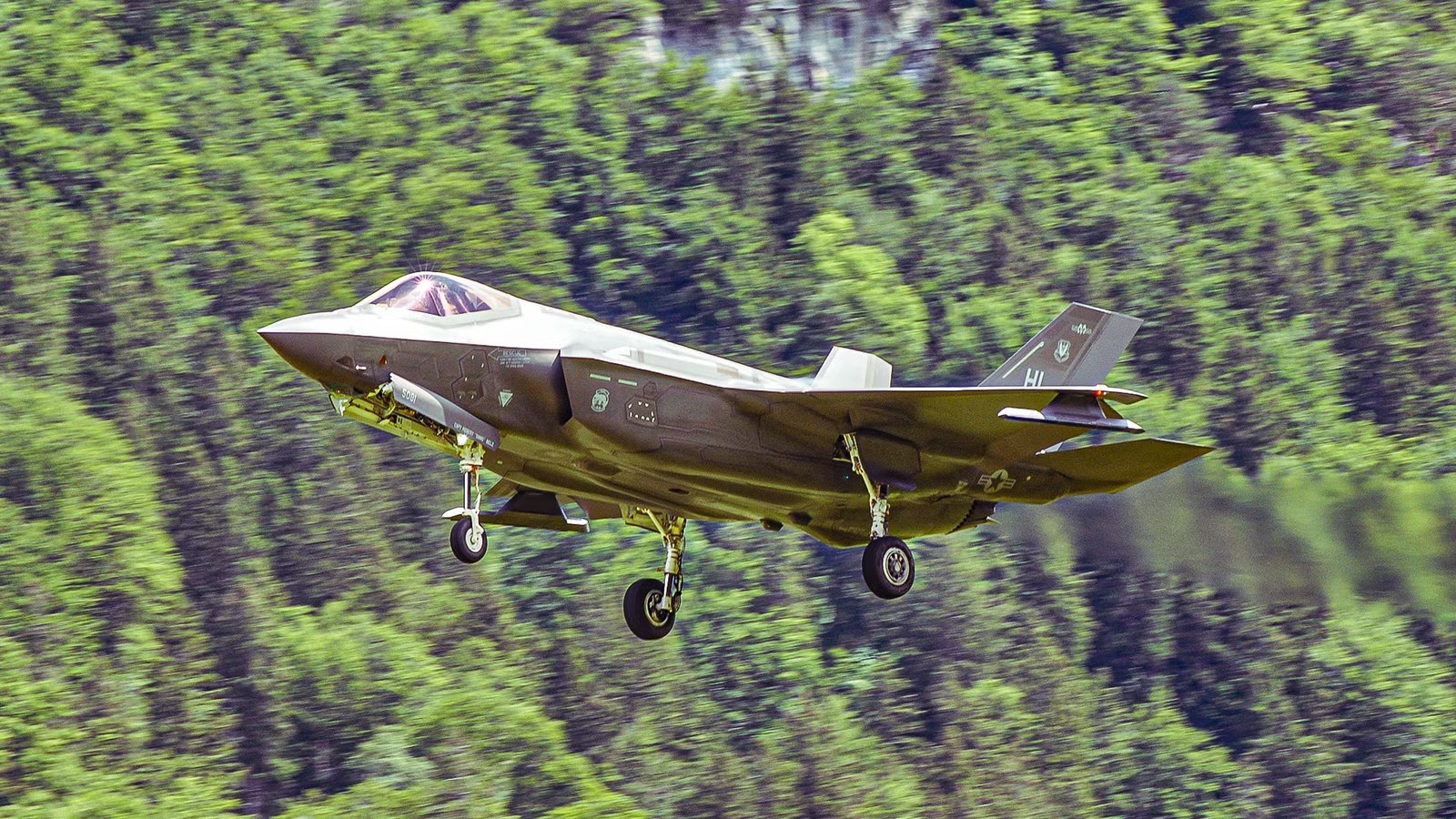
The crunch on America’s strategic missile stockpile put Switzerland in a tough position in 2025 when the United States informed Swiss leaders that it would be pausing Raytheon Patriot missile deliveries. Washington declared that the supply chain diversion was necessary to prioritize shipments to Ukraine and replenish the domestic arsenal. The Swiss government halted payments under its foreign military sales contract that funds the Patriot program; however, the US simply withdrew the outstanding balance from cash earmarked for Swiss fighter jets.
Instead of creating a leverage point in negotiations to resume Patriot deliveries, the Swiss aircraft supply chain was now in jeopardy. Switzerland is in the process of transitioning its fleet from the  Boeing F/A-18 Hornet to the Lockheed Martin F-35A Lightning II. Switzerland had paid up front in 2021 to secure its position on the production line, but amid the missile dispute, the US now demanded additional payments.
American officials not only demanded that the Swiss repay the funds withdrawn for Patriot missiles, but also increase the total based on rising production costs, inflation, and supply chain pressures. The US now claims that the contract’s original fixed price could not be enforced and is demanding an additional $760 million to $1.5 billion. Instead of paying higher fees, Switzerland cut its order book by 20%, dropping from 36 Joint Strike Fighters to 30.
Catch 22: Swiss Fighters Stuck On Fine Print

Under the terms and conditions of the FMS agreements between the US and Switzerland, Washington had the authority to take funding from any pool of Swiss defense program funds. Because the contract allows the US to shift resources if one project runs short on cash, Washington legally bypassed the freeze. It redirected well over 100 million Swiss francs, or $126 million. Since these events, Swiss lawmakers have openly debated the reliability of Washington as a security partner and considered European alternatives for future defense needs.
The Swiss government was bound by a strict, voter-approved budget ceiling, and doubts were beginning to arise concerning the quality of the F-35 as well as the level of control that the US held over the jets after delivery. The combined friction of the FMS fund redirection, delivery delays, and soaring jet costs has strained US-Swiss defense relations. Urs Loher, head of the Swiss Armaments Agency Armasuisse, described the situation as “very unsatisfactory,” according to Blue News.
Loher was quoted by Swiss Info as saying: “The risk was too great for us. We’ll take whatever we can get.”
To avoid risking the delivery of the F-35s or spare parts for their existing F/A-18 fleet, the Swiss Defense Ministry had to quietly transfer tens of millions in advance to plug the resulting budget hole. The financial strain of the FMS pricing dispute forced the Swiss government to fundamentally restructure its Air2030 modernization plans. Adding to Swiss frustration, a US Government Accountability Office report confirmed that the early Swiss aircraft will be delivered in a truncated Block 4 software configuration.
The Unknown Cost: A Strained Alliance

The F-35 program and US-Swiss defense relations have significantly deteriorated, evolving from a strict procurement disagreement into an ongoing diplomatic crisis. Over the first half of 2026, the dispute reached a critical tipping point, resulting in official order reductions, massive advanced Swiss outlays, and public threats from Bern to terminate parts of its defense contracts. In April, Swiss Defense Minister Martin Pfister announced that Switzerland is actively negotiating a potential termination of the entire Patriot missile contract.
Despite the political gridlock, the physical program has forged ahead out of sheer contractual necessity. The first Swiss F-35A entered main assembly at Lockheed Martin’s Marietta, Georgia, plant. Full Block 4 modernization will not be ready until 2031 at the earliest, creating a massive capability gap as older Swiss fleets age. The initial batch of aircraft will be deployed to Ebbing Air National Guard Base in Arkansas for pilot training, with physical arrivals in Switzerland delayed until 2028.
Despite cutting aircraft, the programmatic costs continue to swell. In June 2026, the Swiss Council of States approved an additional credit of $505 million. Swiss pilots will begin training on the first eight aircraft at Ebbing starting in mid-2027. Following the delivery of the first platform, the remaining airframes are slated to undergo final assembly and checkout at the European production line in Cameri, Italy. Because the timelines have become so volatile, the Swiss government has had to scramble to extend the life of its aging fleet of Hornets.
Saving Hornets: Bern’s Backup Plan

Switzerland’s F/A-18 Hornet Service Life Extension Program has become an expensive, high-stakes anchor for air defense following changes to the F-35 procurement. To free up emergency cash internally and protect the baseline F-35 purchase, Switzerland had to scale back the depth of its Hornet upgrades. While 30 planes were initially included in the full scope of retrofits, 15 will receive more limited upgrades to save costs.
The structural refurbishments were completed across all 30 aircraft. Still, with ongoing uncertainty over the F-35 delivery dates, Switzerland will also study the extreme measure of stretching the F/A-18 fleet beyond 2030 and past the 6,000-hour structural safety limit. They are also expecting to continue flying the decades-old Northrop F-5 Tigers until the end of 2030.
The Swiss Air Force flies high-G, tight-turning air-policing missions through narrow alpine valleys, making structural work non-negotiable. The issue is that only 15 of the 30 Swiss Hornets received the intended radar updates, modern flight-management software, and secure communications overhauls. This created a split fleet. Half of the Swiss Hornets possess airframes certified to fly structurally into the 2030s but carry outdated radar and electronic warfare systems, leaving them highly vulnerable if deployed in modern battle space.
Charting A Course Forward

The Swiss Federal Council officially stated that any future purchases to bring the fleet back up to its originally required 36 aircraft will be evaluated independently of aircraft type. Instead of buying more JSFs, Switzerland is considering a mixed fleet by pairing the 30 F-35s with 4.5-Gen European-made aircraft. Drones could provide a low-cost means of filling the capability gap alongside F-35s. In terms of crewed platforms, the top contenders are the Eurofighter, Rafale, and Gripen.
Airbus previously offered Switzerland a robust industrial package to accompany an order for the Eurofighter Typhoon. The Typhoon excels at high-altitude, high-speed interception, which fits the Swiss alpine air-policing mandate perfectly. Pairing it with the F-35 would reduce Swiss reliance on a single US supply chain.
Dassault’s Rafale was a top contender in the original evaluation that led to the F-35 selection as successor to the Hornet. Because Switzerland shares a border and close diplomatic ties with France, choosing the Rafale for a second batch would simplify training and logistics. Dassault makes both a land-based and carrier-capable variant, and the Rafale F4 is built as the ultimate omnirole fighter jet capable of exceptional air-to-air and air-to-ground performance.
Though Saab pulled out of the original flight tests because the Gripen E wasn’t fully operational at the time, it remains the ultimate ‘budget-friendly’ 4.5-Gen option. Its operating cost per flight hour is a fraction of the F-35’s, making it an ideal candidate for basic peacetime air policing. The Royal Canadian Air Force has also been considering the Gripen E as an alternative, while Canada is still struggling to decide whether it will fulfill its original order for 88 F-35s due to diplomatic disputes between Ottawa and Washington, as Bern experienced.
Alternatives Airframes For The Swiss Air Force

The ultimate alternative would be to follow suit with some other European Air Forces that have decided to skip fifth-generation fighter technology altogether and go straight to sixth-generation stealth jets. Although the trilateral Future Combat Air System program fell through between Germany, France, and Spain, there is an alternative. The Global Combat Air Program is progressing in partnership with the United Kingdom, Italy, and Japan. Germany is considering joining the FCAS, relegated to a combat cloud and advanced drone development program.
The aircraft is expected to be on par with the Next Generation Air Dominance aircraft, or the Boeing F-47. Canada and even India are also considering joining the GCAP program at various levels of investment. The primary roadblock to Switzerland joining the multinational program is likely the price point.
GCAP, also known as the BAE Tempest, could be as expensive as $300 million if it were to cost a similar amount as its American equivalent. The price of an F-35A is around $90 million for the US Air Force, but that doesn’t include the add-on cost for support that FMS customers pay, which can increase the flyaway cost by as much as 50%.
That would still be half or less of a GCAP, assuming it is priced comparably to the F-47. That may not be realistic for Bern. However, if they are only planning to procure a half dozen jets on a case-by-case basis, then the value of a small ‘exquisite’ sub-fleet with European support would significantly elevate Swiss air power. Still, the capabilities of a collaborative combat aircraft, also known as a loyal wingman drone, are likely a better fit if the Swiss Air Force chooses an advanced platform rather than a 4.5-Gen fighter jet.